Thug

August 1, 2021

by Steve Stofka

Following the Civil War, the Democratic Party welcomed a new breed of thug organized under the name of the Ku Klux Klan. Clad in white hoods and bed sheets, they looked like characters in a Punch and Judy show. Using fear, torture and fire they attacked black people in the South. They used intimidation and poll taxes to discourage blacks from participating in their own government. The Democratic Party hugged the thugs.

In 1954, the Supreme Court decided the Brown v. Board of Education case (Oyez, 2021) and held that segregated schools were not equal. In 1956, a Clinton, TN school was the first high school to attempt integration. The sons and grandsons of the KKK thugs can be seen throwing rocks at black girls trying to go to school (LOC, 2004).

Ten years later, former Texas Senator and now President Lyndon Johnson signed the Civil Rights Act and the Fair Housing Act to help give black people an equal opportunity to participate in politics, and the liberty to compete in the economy without prejudice. He tried to kick the thugs out of the Democratic Party and that bugged the thugs.

Dubbed the “Southern Strategy” Presidential candidate Richard Nixon welcomed them to the Republican Party. Instead of throwing rocks, Nixon proposed vouchers and other taxpayer funds that would help white parents in working class neighborhoods send their children to white only schools (Brown, 2004, 191-2). It was to be called “school choice.” In 1971, Nixon even proposed a Constitutional Amendment to reverse a Supreme Court decision to integrate schools.

“The Democrats don’t care about working people anymore,” became the refrain of voters who switched their allegiance from the Democratic to the Republican Party. In the 1980s President Reagan led a conservative movement that nurtured an intellectual thuggery. The actor Michael Douglas’ rallying cry of “Greed is good!” in the 1987 movie Wall Street portrayed this new-style thug. A 40-something Donald Trump, coddled from birth and protected by bodyguards and lawyers, liked the brashness. He portrayed brash.

Thirty years later Mr. Trump was brash enough to take on a phalanx of Republican Presidential candidates. He was a thug with a mug and spoke to the thugs in the party, saying any damn thing he wanted to because he was a smug thug. Thugs throw rocks at little girls. They grab women’s privates with impunity because they are not bound by the rules of decency. Mr. Trump promised his supporters a wall to keep out the Others. His supporters’ kids wouldn’t have to go to school with those Other kids. When he became President, he appointed an Education Secretary who championed school choice, and for four years he kept trying to build his Big Beautiful wall.

After he lost the election, the thug did not shrug. Rather, he remembered a line from actor Jimmy Cagney, “You dirty rat,” and complained, “Those thugs bugged the polls.” He called his supporters to the White House on January 6th  to take out the dirty rats who had stolen the election from him, including his own Vice-President, Mike Pence. The Presidency was his territory, see, and those Other guys was muscling in on his territory. Mr. Trump called on his supporters to take back the territory and they broke open the doors to Congress.  

Convinced that democracy produces populist thugs like Mr. Trump, the Founding Fathers set up a republic to insulate the institutions of law and government from public passions. After much argument and compromise, they would not let people even vote directly for their own President. Today we elect members of an Electoral College who elect the President. Two years after the drafting of the Constitution in 1787, the French people stormed the Bastille in Paris and ten years of Revolutionary fervor and terror followed. Answering critics, Alexander Hamilton and James Madison pointed to the anarchy that erupted in France as a demonstration that people could not be trusted with the power of a fully democratic state. January 6th was yet another reminder of that truth.

//////////////

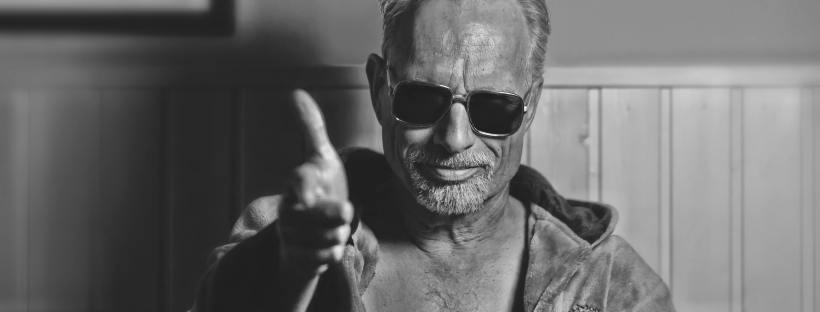
Photo by Martin Zaenkert on Unsplash

Brown, F. (2004). Nixon’s “Southern strategy” and forces against Brown. The Journal of Negro Education, 73(3), 191. doi:10.2307/4129605

Library of Congress (LOC). (2004, November 13). Brown v. board at Fifty: “with an Even hand” the aftermath. Retrieved July 31, 2021, from http://www.loc.gov/exhibits/brown/brown-aftermath.html#obj121C

Oyez. (2021). Brown v. Board of Education. Retrieved July 31, 2021, from https://www.oyez.org/cases/1940-1955/347us483

A Tug of War

June 7, 2020

by Steve Stofka

Is grandma your enemy? An uncomfortable thought. Different generations have different concerns. Funding a solution to one generation’s problem may take resources from other generations. Grandma wants to protect her Social Security and Medicare. Grandma votes her interests.

The introduction of Social Security eighty years ago marked an extraordinary shift in federal policy. For the first time in the history of this country the government took money from one set of people – those who were younger and working – and gave it to other people. This transfer was not a reward for military service – an old soldier pension – but a reward for getting old.  

During the Great Depression thousands of banks failed and millions of people lost their savings. That crisis called for a solution. Instead of addressing the problem, FDR and a super-majority of congressional Democrats created a permanent program that transferred money from people raising families to retired people. No military or community service required. The combined tax contribution to fund the program was 2%. It is now more than six times that.

In 1965, Democrats again enjoyed a super-majority in Congress and a Democratic President. Never waste a super-majority. There are no checks and balances. They passed the Medicare program, funded by a tax on working families who were ineligible for benefits under the program. In every election, old people vote to keep their benefits, and are the largest demographic of voters (Census Bureau, 2019). 

Younger voters change addresses more often. In dense urban areas with multiple voting districts, they are more likely to have out of date voter registration. Voters in rural districts remain in the same voting district when they move a few miles. Rural voters are predominantly older, white and conservative. In the first half of the 20th Century, rural populations migrated from the farm to the city. Rural voters controlled political power in many states because one rural vote counted far more than one urban vote. In two decisions in the 1960s, the Supreme Court interpreted the Constitution to mean one person, one vote (Mosvick, 2020).

As the children of farmers continued to move away in the last half of the century, rural voters adopted other strategies to control electoral power. Less funding for polling places in urban areas, claims of voter fraud, lifetime restrictions against voting by convicted felons, and locating prisons in rural areas where the prisoners are included in the county’s population, but the prisoners cannot vote. Groups like Judicial Watch initiate hundreds of lawsuits in Democratic leaning counties to invalidate the registrations of many voters (Lacy, 2020).

In 1965, a year after passage of the Civil Rights Act, President Johnson hoped that the newly instituted Medicare program would help stem the defection of Southern voters from the Democratic Party. It didn’t. The Party had successfully stifled the voting power of black people in the south for a century. The 13th, 14th and 15th Amendments which gave black people voting power and citizenship status had been forced on the Southern states after their defeat in the Civil War. Feeling that President Johnson and the party had betrayed them, voters sought a champion who could protect white voting power. 

Richard Nixon became their champion by default. In the 1968 race, the Republican candidate employed a “ southern strategy” that spoke to white voters worried that the recently passed Civil Rights Act would give blacks too much electoral power. In the spring, riots and demonstrations broke out after Martin Luther King’s assassination. At the Democratic Convention that summer, bloody conflicts broke out between Chicago police and anti-Vietnam War demonstrators. Nixon promised to be a law and order President, protecting the “old order,” older Americans and the white rural domination that had been the calling card of the Democratic Party in the South. When leading Democratic candidate Robert Kennedy was assassinated that summer, the party was too disorganized to mount a challenge to Nixon. He won by a convincing margin in the electoral college, but bested Hubert Humphrey by only ½% of the popular vote (Wikipedia, 2020). 9 million voters chose Independent Party candidate George Wallace, who appealed to disaffected conservative Democratic voters in the South (PBS, n.d.).

Some of us have supremacist attitudes, some of us condemn those attitudes. Some of us feel threatened at the sight of a black man and call the police. Some of us understand Black Lives Matter; others don’t. We all understand our point of view a lot better than our neighbor’s. We all want to be believed more than believe.

We grant police the sanctioned use of force but we require temperance in their use of it. Clearly, there are many officers who do not have a tempered behavior. The lie is that it is a few bad apples. Smart phones have become common only in the past decade and there are hundreds of videos of officers acting without restraint. In another ten years, there will be thousands.

 One person, one vote. This country has been engaged in a tug of war since its founding. Regional and generational interests pitted against each other. Rural against urban. Businesses vs workers. City governments vs. workers. States vs. citizens. Decide which end of the rope you are on and pull. Grandma grabs the rope. In every election, a lot of money and effort is spent to prevent people from voting. If you don’t vote you are doing those on the other end of the rope a favor and they thank you.

////////////////////////////

Notes:

Photo by Arnaud Jaegers on Unsplash

Census Bureau. (2019, July 16). Behind the 2018 U.S. Midterm Election Turnout. Retrieved from https://www.census.gov/library/stories/2019/04/behind-2018-united-states-midterm-election-turnout.html

Lacy, A. (2020, May 28). Right-Wing Groups Aims to Purge 800,000 Voters in Pennsylvania. Retrieved from https://theintercept.com/2020/05/28/pennsylvania-voter-rolls-purge-judicial-watch/

Mosvick, N. (2020, March 26). On this day, Supreme Court reviews redistricting. Retrieved from https://constitutioncenter.org/interactive-constitution/blog/on-this-day-supreme-court-reviews-redistricting.  Also, see Stahl, 2015.

PBS. (n.d.). Thematic Window: The Election of 1968. Retrieved from https://www.pbs.org/johngardner/chapters/5a.html

 Stahl, J. (2015, December 7). Baker v. Carr: The Supreme Court gets involved in redistricting. Retrieved from https://constitutioncenter.org/blog/baker-v-carr-the-supreme-court-gets-involved-in-redistricting

Wikipedia. (2020, June 06). 1968 United States presidential election. Retrieved from https://en.wikipedia.org/wiki/1968_United_States_presidential_election