
How We Choose

October 27, 2024

By Stephen Stofka

This week’s letter is about our vote, our political perceptions and institutions. This past week, an NPR reporter asked an undecided voter in Pennsylvania which candidate they were leaning to. The voter responded that he did not like the way the Biden administration had handled inflation. Since Harris was part of that administration, he was leaning toward Trump. The NPR reporter did not present the voter with the information that it was Fed Chairman Jerome Powell, appointed by Trump, who had been chiefly responsible for the government’s response to inflation. Would this new information have an effect on the voter’s thinking? Would the voter hold Trump partly responsible for the surge of inflation during the pandemic recovery? That dialog was never developed. I have noticed that reporters from the British Broadcasting Corporation (BBC) develop a more proactive dialog with those they interview. The resulting interviews are more lively and informative than those conducted by reporters in U.S. news media.

Candidates in presidential elections frame issues to elevate them from the temporary to the eternal. In The Commanding Heights, Daniel Yergin and Joseph Stanislaw (1998) tell the story of Samuel Insull, a tycoon in the electricity industry during the 1920s, who wanted to build a sprawling infrastructure that would supply electricity to every home and business in America. His empire collapsed during the Depression and investors lost 99% of their capital. Franklin Roosevelt (FDR) ran on a campaign that included a promise “’to get’ the Insulls” (p. 47). FDR had elevated a case of speculation and overreach into an eternal battle where the rich preyed on the poor. His administration pursued the tycoon as he sought refuge in various European countries. Finally, Greece extradited the man back to the U.S. where he stood trial for fraud. Prosecutors could not convince a jury that Insull was guilty of anything more than ambition. His investors were mostly professionals, people who hoped to capitalize on that ambition. The jury speedily exonerated Insull.

One voter in Pennsylvania explained to the same NPR reporter that he needed to sit down and study the issues. Political campaigns must craft an issue complicated by dense details and conflicting principles into a clear and simple tale that appeals to the emotions and morals of voters. There are four aspects of most issues: the practical, the moral, the intellectual and the emotional. Repeated studies of patients whose right and left brains have been separated by accident or surgery indicate that each of these aspects is processed by different parts of our brain. To reduce our “brain load” we use shortcuts in our reasoning process to guide us through a jungle of complexity. I will note that Nelson et al. (2013) found little biological evidence for the idea that the processing of various tasks are localized to either half of the brain.

Steckler et al. (2017) found that many of us determine an action’s morality based on intention rather than outcome. Their research indicated that we process those types of moral judgments with our right brain. Many researchers have concluded that emotional responses are mainly generated in the right brain (Gainotti, 2019). Sorting through the practical details and isolating the principles involved in an issue involve the left side of the brain. We don’t carry a handy little tool in our pocket to consider these various aspects to get to the heart of the matter. After a long day at work, it is tiring just to think about the more complex issues. To keep it simple, political campaigns play to just one aspect, but not to the practical details where the momentum of a campaign narrative can get lost.

Political campaigns are sales campaigns. Central to sales practice is the KISS principle – Keep it simple, Stupid. The lessons of history are too nuanced and contradictory for a sales campaign. Candidates try to hypnotize voters with one or two shiny issues. They target the right brain which has a prominent role in emotional and moral judgments. They make up details to support their emotional or moral argument. Anything to stoke outrage, anger and moral condemnation. Simple and short lies with little or no evidence work the best. Scapegoat a minority group. Immigrants eating pets. Jews sacrificing Christian children. Catholic voters wanting to make Catholicism the national religion. In southern states, many black men were lynched after a hasty accusation of  raping a white woman.

Voters are beset with distortions from opposing campaigns. Most of the evidence for or against a candidate overwhelms many voters so they concentrate on a few key details. They rely on their own party affiliation, a few key media sources, a family member or a friend. Campaign rules do not prohibit lying and candidates have little to gain from nuance or truth. A Congressional Research Service analysis found that 36% of current House members and 51% of Senate members are lawyers. They have learned how to shape facts and issues into a convincing argument.

America was founded by the wealthy to be a plutocratic republic with the trappings of a democracy. To preserve a plutocratic Constitution, the founders made it difficult to amend the rules. The Electoral College was designed to check the popular will. The rules of the Senate and House concentrate power in a small elite of party leaders and committee chairs. In a plutocracy, the wealthy find it easier to influence a small number of legislators holding the reins of public policy. Election campaigns in America are longer and more expensive than in any other democracy. An Open Secrets analysis found that total spending in the 2020 election surpassed $14 billion, doubling the money spent in the 2016 election. Much of that money comes from wealthy patrons who wish to align public policy to their priorities and principles. Candidates are the messengers of the rich, conveying a message from the upper echelon of our society to the rest of us. That hypnotic message is your vote matters.

///////////////////

Photo by Victoriano Izquierdo on Unsplash

Keywords: Electoral College, Constitution, vote

Gainotti, G. (2019). The role of the right hemisphere in emotional and behavioral disorders of patients with frontotemporal lobar degeneration: An updated review. Frontiers in Aging Neuroscience, 11. https://doi.org/10.3389/fnagi.2019.00055

Nielsen, J. A., Zielinski, B. A., Ferguson, M. A., Lainhart, J. E., & Anderson, J. S. (2013). An evaluation of the left-brain vs. right-brain hypothesis with resting state functional connectivity magnetic resonance imaging. PLoS ONE, 8(8). https://doi.org/10.1371/journal.pone.0071275

Steckler, C. M., Hamlin, J. K., Miller, M. B., King, D., & Kingstone, A. (2017). Moral judgement by the disconnected left and right cerebral hemispheres: A Split-Brain Investigation. Royal Society Open Science, 4(7), 170172. https://doi.org/10.1098/rsos.170172. Available

Yergin, D., & Stanislaw, J. (1998). The commanding heights: The battle between government and the marketplace that is remaking the modern world. Simon & Schuster.
Casting a Vote

October 20, 2024

By Stephen Stofka

This week’s letter takes an economic perspective on our vote. Economists classify goods into four categories: private, toll, public and pooled. Two characteristics distinguish the four categories: whether a good is rivalrous and excludable. A quart of milk is rivalrous. My consumption of that quart precludes someone else from consuming it. We typically exclude goods by attaching a price to them. National defense is a non-excludable good because it is not possible to prevent a person from enjoying the benefits of national defense.

A private good is both rivalrous and excludable. A toll good is non-rivalrous but excludable. A toll highway is a clear example. One person’s use of the road does not prevent another person from using it. The entries to the highway are usually controlled in some way so that people have to pay to use the highway. A public good is non-rivalrous and non-excludable. Again, national defense is a clear example of this type of good. The last category are pooled goods which are rivalrous but non-excludable. Ocean fishing is an example. One person’s catch reduces the number of fish in the ocean so that the good is rivalrous. There is no practical way to limit or exclude access to the ocean. These classifications can help economists analyze the dynamics of a particular market (Fulton & Gray, 2007).

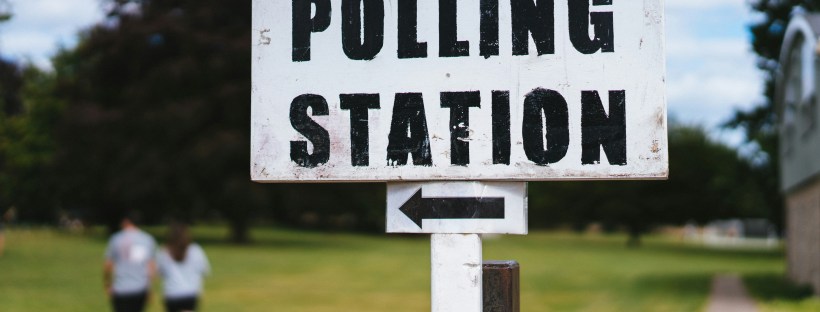
Given that background, what type of good is a vote? There are two aspects here: the vote itself, and the mechanics of voting. The vote itself is a toll good, excludable but non-rivalrous. One person casting a vote does not effectively reduce another person’s ability to vote. However, the mechanical act of voting in person is rivalrous. There are time restrictions when polling stations are open and only one person can use a voting machine at a time. Mail in voting removes the time restrictions of polling stations. Early voting expands time restrictions. Both give voters more freedom and convenience. Donald Trump and his allies in the Republican Party want to abolish mail in voting and restrict early voting to control access more effectively to the vote.

How does that work? Voters in rural and suburban areas, who are more likely to vote Republican, typically have fewer registered voters per polling place than voters in dense urban areas. In the 2016 election, the Election Assistance Commission reported that half of jurisdictions had fewer than 1000 registered voters per polling place. A quarter of jurisdictions reported twice that many voters per polling place (p. 4). Voters in those districts do not have equal access to the polling stations where they can cast their vote. Mail in voting and early voting help to equalize the mechanical effort of casting a vote.

Presidential elections in the U.S. are conducted in a variety of ways in the 10,000 voting districts in the 50 states. In a 2010 article in the Election Law Journal, Spencer and Markovits (2010) noted a few examples to show the breadth of that variety. In Wisconsin and Michigan, each local district controls their own election procedures. In Oklahoma and Washington, elections are managed by officials who are all state employees. The Election Assistance Commission reported nearly a 117,000 polling places in the 2016 election.

Many people might be surprised to learn that there is no right to vote contained in the language of the Constitution. In the 2004 Presidential election, voters in Ohio, Pennsylvania and Florida endured long lines to cast their vote. In some urban precincts in Ohio, voters waited ten hours to vote, and the long wait was especially prevalent in predominantly black districts (Powell & Stevin, 2004). The following year, Illinois, Ohio and Utah passed laws permitting early voting. Today early voting is permitted in all but three states – Mississippi, Alabama and New Hampshire. (See this map at CBS News). Many “red” states in the south permit early voting to all voters but restrict mail-in ballots. Thirty-seven states permit both early voting and mail-in ballots.

For decades, mail-in ballots were often used by Republican voters. Stalwart Trump supporters like Senator Ron Johnson of Wisconsin supported early voting. Trump and his allies now want to roll back state efforts to improve access to the vote. Why? Trump believes that early voting cost him the 2020 election. Winning is Trump’s only principle. Any election rule that advantages his supporters and disadvantages his opponents is a winning strategy. The Brennan Center for Justice tracks changes to election law in the states. Since the last election, states have passed more measures that expand access to voting than restrict access. Should Trump win the election this year, he will champion election integrity as a pretense to roll back laws that expand access to voting. Winning – and staying out of jail – is all that matters.

///////////////////

Fulton, Murray, and Richard Gray. 2007. Toll Goods and Agricultural Policy Saskatoon, SK: Canadian Agricultural Innovation Research Network. issue brief.

Powell, M., & Stevin, P. (2004, December 15). Several factors contributed to “Lost” voters in Ohio. Washington Post.

Spencer, Douglas M., and Zachary S. Markovits. 2010. “Long Lines at Polling Stations? Observations from an Election Day Field Study.” Election Law Journal: Rules, Politics, and Policy 9(1): 3–17. doi: 10.1089/elj.2009.0046. Available at: https://www.liebertpub.com/doi/epdf/10.1089/elj.2009.0046. The authors cite a field study of polling stations in California, a state with a strong Democratic majority. The study found that 11% of registered voters who did not vote in the 2008 election, indicated long lines as the primary reason for their not voting.

Two Natures

October 13, 2024

By Stephen Stofka

This week’s letter continues my look at the two types of Golden Age voters. Last week’s post was about those who look to the past as more – fill in the blank here. On the TV show All in the Family, Archie Bunker was a comic representation of this type of thinking. The lyrics of the show’s theme song Those Were the Days echoed a nostalgia for an earlier time in American history.

This week’s subject is the second type of voter, those who believe that people can construct a better society. In the extreme, that better society is a utopian Golden Age. Nineteenth century writers called this type of person perfectibilians, who believe that man’s imperfect or corrupt nature can be perfected. They believe that creating institutions and institutional rules which encourage sharing, equality and community can help perfect flawed human nature and improve society. Out with selfishness and exploitation. In with charitable spirit, equity and respect.

Hesiod, the 6th century BCE Greek poet, recounted the myth of the Isles of the Blessed, islands in the Atlantic where reincarnated people lived in an idyllic state. Thomas More placed his Utopia, published in 1516, on an island off the mainland in the New World. More detailed the institutional practices that sustained this utopian society: a society based on agriculture with small democratic urban areas. There existed a welfare state with no private property, but each household had one or two slaves. More’s acceptance of slavery in his vision of utopia distances a modern reader. And the excess population on this idyllic island? They were shipped off to the mainland. Who made those decisions? More’s utopian vision sounded more like a version of hell.

More’s work was fiction. Some hope and believe that human society can improve toward a utopia that lies in the future. Reformers in the 19th century, known as Ricardian Socialists, advocated for reforms that they hoped would correct the social ills that emerged or erupted during the Industrial Revolution. These included poorly paid and overworked people crowded into dense urban areas. Children worked long hours and suffered horrible injuries from dangerous machinery. The reformers sought a more equitable system that distributed the surplus of economic activity and trade to worker cooperatives, not capitalists.

John Stuart Mill (1806-1873) Mill favored the idea of worker’s coops and profit sharing rather than Communism, which he thought did not account for individual differences of talent and effort (Roncaglia, 2005, p. 240). More radical reformers known as Utopian Socialists sought the abolition of private property entirely. Robert Owen was a Scottish financier who set up the utopian community of New Harmony, Indiana in 1826 – 1828. It was a kibbutz style working community with no private property and the workers shared profits. Owen believed that if poor workers were productive, they might improve their habits (Heilbroner, 1997, p. 112). The experiment failed and Owens suffered severe financial losses.

Karl Marx (1818 – 1883) was the most prominent of these utopian reformers. Murray Rothbard, an Austrian economist, considered Marx primarily as a millennial Communist. Watch out, big revolution ahead and the purging of the old ways. Then, the new order and a flourishing of human society.  

Flourishing good. Everybody likes flourishing. Revolution and other cataclysms bad. Some voters are resistant to change or reform because existing arrangements suit them. Last November, I wrote about the many subsidies and tax expenditures that benefit some at the expense of others. Improved society? Check. I’m all for that. Lose my subsidy? Get your hand out of my pocket, comrade. In his 1965 book The logic of collective action public goods and the theory of groups, Mancur Olson (2012) argued that people cling to their benefits, especially when the benefits go to a small number of individuals or companies, but the costs are spread out among all taxpayers. Because the cost to each taxpayer is small, there is less incentive to advocate for reform.

In the United States, the reformers of the Progressive Era advocated more practical and less radical reforms that instituted conditions we take for granted today. These included women’s suffrage, more humane working conditions, laws against child labor, and a civil service system based on merit rather than cronyism and corruption. The Sherman Anti-Trust act and other business reforms curbed the power and growth of vertical monopolies (see notes below) like the Standard Oil Company. In 1914, the Federal Trade Commission was established to prevent price fixing and other forms of collusion between businesses that distorted the free market.

Can human nature be reformed? To those who believe that people are inherently corrupt, there is a flaw in the perfectibilian strategy. There will always need to be regulators to constantly monitor human behavior in the marketplace and our shared social spaces. That puts too much concentration of power in the hands of government regulators. Because regulators are people, they will by nature be corrupt, pursing their own self-interests, their inherent drive for control. Who will regulate the regulators? Who will reform the reformers?

The price system promotes a competition between individual self-interests. In a transaction between John and Mary, John’s corruptible nature is pitted against Mary’s corruptible nature. Out of that contest of self-interest, a benefit to both people emerges. This is the marvel of the price system. Unlike the price system, a regulatory system lacks natural checks and balances. Governments can pass a law that induces people to act more charitably, for instance, but government cannot mandate that people be more charitable. Some people have a more charitable spirit than others. On the other hand, the Greek philosopher Aristotle believed that acting in a virtuous manner would promote a more virtuous character. If a government forces people to act more charitably, will they develop a more charitable character?

Two types. Two visions. One looks to the past. One looks to the future. Simple, isn’t it? Unfortunately, many voters have a complicated set of perspectives and tendencies that defies simple analysis. We might be a blend of nostalgic and perfectibilian. Are people inherently corrupt, seeking to serve their own parochial interests rather than the greater good? What do you believe?

/////////////////////

Photo by Joel Filipe on Unsplash

Keywords: progressive, human nature, prices, regulation

Heilbroner, R. L. (1999). The Worldly Philosophers the Lives, Times, and Ideas of the Great Economic Thinkers (7th ed.). New York: Simon and Schuster.

Heilbroner, R. L. (1997). Teachings from the worldly philosophy. New York, NY: Norton & Company.

Olson, M. (2012). The logic of collective action public goods and the theory of groups. Harvard University Press.

Roncaglia, A. (2005). The wealth of ideas: A history of economic thought. Cambridge: Cambridge Univ. Press.

Vertical monopoly: one company owns or controls the various stages of extraction, refining and production, for instance.

A Golden Age

By Stephen Stofka

October 6, 2024

This week’s letter is about Golden Age voters. There are two types:

  1. those who think that the past was better than the current age,
  2. those who believe that the future will be better than the current age

The first type are deteriorationists. The more common term is pessimists. The second type is what 19th century writers called perfectibilians, or perfectionists. I will discuss the first type in this week’s letter and continue with the  second type in next week’s letter.

The concept of a Golden Age is a framework of interpretation. What’s that? Imagine two voters who witness an event, like the TV coverage of the attempted assassination of former President Donald Trump. Let’s say that both voters have a similar recognition of the event, meaning that both voters acknowledge that the event happened. (Many times, voters do not share this critical first step, acknowledging that an event happened). Interpretation assigns context to an impression, the raw sensory data we receive, to provide an understanding of the event.

An impression like a sight or sound may happen in an instant. Through technology we can slow that instant down to a sequence of still pictures or an audio playback. It is here that we may reassess our initial impression. Director and writer Michael Antonioni explored this theme in his 1966 movie Blow Up (Spoiler alert in the notes).  In baseball, umpires may overturn a called out when slow motion instant replay reveals that the runner’s foot touched the base a microsecond before the baseball entered the baseman’s mitt.

Interpretation is the active construction of a story surrounding the impression. The sound of several sharp cracks in the air. That’s the impression. Fireworks or gunshots? That’s the story. We think it was fireworks and we relax. Then we hear screams following the sharp cracks. Fireworks or gunshots? The sequence of impressions causes us to change the story. We reinterpret the initial sounds as gunshots and look for cover. Many of can reach consensus over an immediate and short sequence of impressions. We are less likely to tell similar stories when there is a complicated sequence of events over time.

Three weeks ago, I wrote about the shortcuts we take to make decisions. Daniel Kahneman wrote an entire book Thinking Fast and Slow about our use of these heuristics. As related events unfold, our interpretations of events becomes a Tower of Babel, the Biblical origin story for the thousands of languages that humans have evolved. As interpretations multiply, interpretive frameworks help to coalesce the many into the few. Some frameworks like conspiracy theories satisfy our innate drive to understand the cause of a particular event like 9-11 or the assassination of President John F. Kennedy. Central to many conspiracy theories are intention, design and collaboration. They do not include randomness, hubris and human folly.

Many popular love songs longingly remember a Golden Age in a couple’s relationship. Some older people look back with nostalgia on the 1950s as a time of American values and prosperity. The earliest writings of human history imagine an idyllic era in the past. A paradise was corrupted by humans and the result is a fallen world. In the 8th century BCE, the Greek poet Hesiod imagined human history as a succession of ages of decline after a Golden Age. Egyptian literature tells of a paradise where gods and humans lived together. Some accounts imagine an idyllic paradise ruined by a single human act. The Bible tells the story of a Garden of Eden where all wants were satisfied until Eve was tempted to eat from the Tree of Knowledge of Good and Evil. Her hubris and disobedience caused God to evict her and Adam from the garden paradise. The Greek myth of Pandora’s box echoes that theme. When Pandora disobeys and opens a box she is told not to open, all known evils are unleashed upon the world.

Some voters interpret current events within this context. There was a time in the past when certain values were cherished and practiced by many good people, they believe. New ideas have taken hold of the country’s institutions and corrupted people’s virtues. Someone gains prominence and power by promising to restore the country to a more virtuous or prosperous state. A key word is again. In 1979, Khomeini returned from exile to restore Islamic virtue and practice to Iran. In 1933, Adolph Hitler promised to restore dignity to the German people and restore the lands held by the Germanic tribes in antiquity. In 2016, Donald Trump promised to restore traditional American virtues and lead an army of supporters to make America great again. Three very different people and circumstances who used the appeal of again.

For this type of voter, restore and again are key words. They rally supporters of policies regarding hot button issues like abortion. Example: in 2016, Donald Trump had the support of legislators and religious groups who wanted to restore the abortion issue to the states. These key words help join a group of voters who share a similar outlook. Next week, I will look at those voters who look to the future as they interpret current events.

//////////////////////////

Photo by Denise Jans on Unsplash

Spoiler alert!!!! – In the 1966 movie Blow Up, an expanded photo of a scene in a park reveals a murder taking place in the background.