The Magical Beast

February 23, 2025

by Stephen Stofka

This is second in a series on centralized power. I decided to use a more conventional narrative rather than the debate format of previous posts. Research on this topic upset my “apple cart” of preconceptions regarding spending, taxes, and Republican support for some social programs. I survived.

Proponents of smaller government aim to restrain the growth of government spending by reducing tax revenue. In a 1981 Address to the Nation shortly after taking office, President Ronald Reagan first proposed the idea. If Congress would not cut back spending, then reducing tax revenues would force them to cut spending. As many political leaders did, Reagan assumed that the public would not tolerate the nation running large fiscal deficits. For most of the eight years he was in office, government spending stayed fairly constant at about 22% of GDP and the federal deficit remained at the same percent of GDP as during Jimmy Carter’s term. After 9-11, the public’s tolerance for deficits grew. The feckless Bush administration promised that Iraqi oil production would pay for the costs of invading the country. In 2003, the Republican Congress passed tax cuts and Bush won reelection despite the many failures of the Iraqi invasion. This time, he did so without the help of the conservative justices on the Supreme Court. It was the last time a Republican would win the popular vote until the election of Donald Trump in 2024.

A 2006 analysis by Christina and David Romer found little support for the Starve the Beast hypothesis and suggested that lowering taxes may, in fact, increase spending. In a 2006 paper, William Niskanen, former head of the Cato Institute, found that spending and tax revenues moved in opposite directions. One of the pathways for this phenomenon may be that taxpayers come to disconnect the two forces, taxes and spending, and don’t hold politicians responsible. For a politician, cutting taxes is a popular brand but they keep their seats by “bringing home the bacon” for their constituents. A farming community does not want to see decreases in crop subsidies or favorable tax breaks. Voters magnify the burden of spending cuts, feeling as though they are shouldering more of the burden than other voter groups.

In his second term, Donald Trump has adopted a different approach – kill the beast. Readers of William Golding’s Lord of the Flies will remember the scene where a mob mentality overtakes a group of shipwrecked boys and they start a feverish chant after a hunt, “Kill the pig, spill its blood.” The cuts that Musk and his DOGE team are making on the federal work force resemble less the precision of a surgeon and more the frantic swinging of a knife in the dark. They have targeted recent hires with few job protections and paid little attention to what those workers do. In their zeal to kill or wound the bloated government – the beast – they have laid off nuclear safety and food safety workers,  infectious disease specialists and IRS workers near the height of tax filing season. Both Musk and Trump are among the wealthy elite. Neither is dependent on a tax refund.

In his recently published book Why Nothing Works: Who Killed Progress—and How to Bring It Back, Marc J. Dunkelman recounts the expansion of the federal government, starting with the Progressive movement that began under Theodore Roosevelt’s administration over a hundred years ago. The movement embodies two instincts that are in constant tension, a “progressive schism” whose roots began when the nation was founded (pg. 22). Alexander Hamilton favored a strong central government whose institutions could facilitate the commerce and defense of the new American republic. Thomas Jefferson believed that the integrity and character of the new nation depended on the yeoman farmer, who must be protected from the power of government. Jefferson was horrified by the abuses of a strong British government headed by a monarch.

Progressives want to expand the reach of government – the Hamiltonian instinct – but are fearful of the power of government – the Jeffersonian instinct. The struggle between these two sentiments frustrates the aims of the Progressive movement. Progressives’ “cultural aversion to power renders government incompetent, and incompetent government undermines progressivism’s political appeal” (pg. 15).

For more than a century conservatives in both political parties have tried to check the ambitions of the progressives and the expansion of the federal government. For almost a century following the civil war, southern Democrats fought to preserve their political dominance and cultural institutions from the imposition of reformist norms by “northern elites.” There is still a strong antipathy to federal power but most of us have adapted to and enjoy federal institutions created by progressive legislation. Millions of Americans enjoy our national parks and monuments but over a century ago, local groups protested federal interference in the management of lands within state boundaries like Yellowstone Park, Glacier National Park and Grand Canyon National Park.

We no longer argue over child labor laws introduced by progressives in the early 20th century. Though popular today, conservative groups fought against the Social Security program when it was first introduced in the 1930s. Congressional Republicans, however, were largely unopposed, according to this 1966 interview with George Bigge. Opposition to “socialized medicine” stymied proponents of a Medicare type system first proposed in 1942. In the 1950s, President Eisenhower initially supported a health plan financed through the Social Security system but dropped his endorsement over objections that the program was a slippery slope to socialized medicine (Source). Wilbur Mills, the powerful Chairman of the House Ways and Means Committee, overcame Republican opposition to the Medicare program by introducing a Part B system for physician payments that would be voluntary. Many of us make an uneasy truce with federal power when those policies produce a net gain for our well-being, or there are limits to federal mandates.

This week, Donald Trump completed the first month of his second presidential term with a whirlwind of federal job cuts and controversial remarks. The first ninety days of a presidential term are said to be the honeymoon period when public opinion is still forming but recent polls by Quinnipiac University and CNN indicate that initial favorable sentiment has soured. More respondents disapprove of Trump’s policies than approve. Trump has promised to downsize both spending and taxes but preserve the Social Security and Medicare programs. Both programs are popular, as many voters feel that people have earned the benefits after a lifetime of paying taxes. The taxes, or dues, come first; the benefits come later.

There are no dues for the Medicaid program which provides health care insurance for low-income households. The federal government and states share the costs of this program in varying degrees, with the federal government picking up the majority of the costs. The Republican majority in the House has proposed $880 billion in cuts to the Medicaid program and Trump has expressed support for the cuts, surprising some Republican lawmakers and Trump’s own staff.

Trump acts with the impulsiveness of a 14-year-old boy. In an earlier age, the public wanted a stable hand in control of a vast nuclear arsenal. Thirty years after the end of the Cold War, voters seemed less concerned with Trump’s erratic behavior. Some excuse it as a negotiating ploy; others see it as a tactical maneuver. In Washington, where everyone has a “loaded weapon,” so to speak, Trump presents a moving target. Others see the policy moves as sheer incompetence. Over a thousand employees at the National Park Service were laid off and seasonal hiring was frozen (Source). Oops. Seasonal employees fight forest fires and clean bathrooms at National Parks. The Trump administration did an about face and promised to hire even more seasonal employees than the Biden administration did (Source). The daily two-step is a boon for news organizations and pundits. Lots of copy. Not a dull moment in the 24-hour news cycle.

Advocates may clamor for the death of the beast – the government – but many of the functions that the beast provides are popular. In 1963, the folk group Peter, Paul and Mary released the song Puff, the Magic Dragon. Although Puff was an eternal creature, his friend Jackie Paper eventually lost interest in Puff as he grew up. After his friend abandoned him, Puff lost all his vigor and retreated into his cave by the sea. Some wish that the federal government would do the same. Lobbyist Grover Norquist wished that government would become so small that “we can drown it in a bathtub” (Source). Unlike Jackie Paper, the majority of the public has not outgrown its affection for government programs or its belief in the magic of government power.

//////////////////

Image by ChatGPT at the suggestion “draw a picture of a multi-colored dragon on the shore of the ocean with a cliff behind him.”


A Debate on Presidential Power

February 16, 2025

by Stephen Stofka

This is part of a series on centralized power. This week’s debate is about the power of the President relative to the other branches of the federal government. The debates are voiced by Abel, a Wilsonian with a faith that government can ameliorate social and economic injustices to improve society’s welfare, and Cain, who believes that individual autonomy, the free market and the price system promote the greatest good.

Abel began the conversation. “Our country is founded on the principle of federalism, a sharing of power between the states and a centralized government in Washington. In that central authority are three branches that balance and check each other’s ambitions for power. It looks like Trump is challenging those restraints.”

Cain shrugged. “The Speaker of the House doesn’t seem worried. The Congress hasn’t been able to get anything done. It’s been almost thirty years since Congress completed a full budget (Source – pdf). The executive branch is stuck with the burden of implementing years of legislative compromises. It is entirely appropriate that the President clean up the mess.”

Abel shook his head in disbelief. “Trump is taking control of the purse, a power given to Congress by the Constitution. Doesn’t it worry you that a Democratic president could simply undo any laws passed by a Republican legislature?”

Cain looked puzzled. “If the President gets out of line, the Constitution gives Congress the power to impeach the President.”

Abel laughed. “Trump has already been impeached twice. Never in the history of this country has the Senate convicted a President. Impeachment is an empty threat. After the Supreme Court’s decision to grant the President immunity from criminal prosecution, the President can act like a king.”

Cain frowned. “FDR expanded the scope of the executive when he took office in 1933. Did your group sound the alarm then? Did you cry ‘Constitutional crisis’ when Roosevelt threatened to pack the Supreme Court to get his way? No, your group stood by silently as Roosevelt upended 150 years of tradition. This President is trying to undo that shameful legacy, to return this country to its founding roots.”

Abel showed his disdain. “He is undoing a century of building government institutions that help people, that protect people from the power of large corporations. This is not the America of the 18th century.”

Cain argued, “They are inefficient government institutions that swear allegiance not to the people they serve but Washington lobbyists and their own internal processes. We have a spending crisis. The Constitution gives the President the executive power. Alexander Hamilton argued for a strong executive and President Trump embodies Hamilton’s vision.”

Abel sighed. “You’re talking about the unitary executive theory. Advocates for that theory take Hamilton out of context. He wanted to convince those in the state legislatures that the strong executive in the proposed Constitution was preferred to the weak plural executive that had been defined in the Articles of Confederation. Hamilton was not advocating for a President with all the powers of a king. The country had fought seven bloody years to rid themselves of a king.”

Cain shook his head. “Look, Washington and Jefferson set the example. They were strong Presidents who sat at the top of the executive hierarchy. They didn’t ask Congress for permission. They defined their role as the chief executive of the laws.”

Abel interrupted. “Ok, but the executive branch was small in the early 19th century. Employees worked at the whim of the President. As the country grew, there needed to be more stability in the executive work force. Congress wanted more control or supervision of the various departments. After all, it is Congress who writes the laws. Congress represents the people. The President is the people’s agent, executing the laws that the representatives of the people have passed.”

Cain held up his hand. “Look, you’re describing a clerk, not the leader of a country. Hamilton was arguing for a leader with enough power to meet threats from other countries led by monarchs with absolute power.”

Abel argued, “That was another century when even the mightiest rulers had relatively little firepower at their command. We have invented weapons that are too destructive to put at any person’s command. There have to be checks and balances within the executive just as there are within the legislative and judicial branches.”

Cain shook his head. “The more destructive the weapons, the more we need a strong leader with the authority and power to act decisively to answer any threats from other countries.”

Abel frowned. “There has to be checks and balances within each branch. That’s especially true for the executive. All previous empires have fallen because one person gained too much power. Rome, Persia, Egypt, and Byzantium come to mind. There are too many temptations. A President with control of the Bureau of Labor Statistics would be able to adjust the monthly unemployment numbers or inflation report to make his administration look good. Argentina did this for seven years (Source). China, Venezuela and Hungary do it. He could disallow the counting of some of the population by the Census Bureau to reduce some grant funding for states who did not vote for him.

Cain scoffed. “There are checks and balances between Congress and the Executive. If a President were to ‘cook the books,’ that information would be leaked. The Congress could impeach the President.”

Abel’s expression was stern. “When the founders wrote the impeachment rules, they envisioned a system without political parties. In a party system, the President is the leader of the party. Impeachment is not a check. If the House is the same party as the President, they dare not bring their leader up on impeachment charges. A Democratic-led House would not impeach Andrew Jackson in 1833. All the anti-Jacksonian majority in the Senate could do was censure Jackson.”

 Cain argued, “In 1868, the Republican-led House impeached Andrew Johnson.”

Abel shook his head. “Johnson was a Democrat who ran with Lincoln on a third-party ticket called the Union Party (Source).”

Cain’s tone of voice was conceding. “Ok, maybe impeachment is not the ideal check on a President. But they pay attention to popular opinion. If the public is outraged, they will complain to their representatives. Presidents care about public opinion.”

Abel showed a wry smile. “George Bush’s poll numbers fell as low as 25% (Source). What did that accomplish? There is an entire phalanx of advisors who shield the President from disheartening news. A President lives in an information bubble designed to protect his self-confidence.”

Cain argued, “Well, there are no checks on the Supreme Court. They have lifetime tenure and the last one to be impeached was in 1805 (Source). They control their own agenda. The House and Senate make up their own rules (Source) and have no internal Constitutional checks. In the Senate, the Majority Leader controls all the floor time. If he doesn’t want some legislation brought to the floor, it isn’t considered. The President should have the same authority over officials in the executive branch. He should be able to direct them on how he wants the law executed. His decisions should not be subject to review by a court.”

Abel frowned. “You’re describing the unitary executive theory again. It grants the President most of the powers of a king. We know that Hamilton, Jefferson, Madison and the other founders did not want a king. This country rejected rule by the whim of one person, the king. We are a nation of laws, not whims. Trump and Musk are two rich crackpots who dance to the music of their own whims. The wolves in Russia and China are licking their chops. By the time Trump is done, this country will be weaker.”

Cain scoffed. “This country was already weak. That’s what the President is trying to fix. The country has $36 trillion dollars in debt. We’re spending more on interest than we do on defense. We play mister nice guy, letting other countries take advantage of our charity, then vote against our interests in the U.N. DOGE is going to trim the discretionary items in the budget then look to implement fraud controls in mandatory spending programs like Medicare and Medicaid. Trump has shown he’s a tough negotiator.”

Abel laughed. “Trump changes his mind from day to day, from week to week. It’s a sign of weakness that Putin and Xi will take advantage of.”

Cain shook his head. “The President dances like Muhammed Ali in the ring. That’s what we need. A fighter who keeps other countries hesitant to make any aggressive moves. That’s the road to a cautious peace.”

Abel sighed. “It’s only a few weeks since Trump took office. He will leave a trail of chaos and carnage and half of the people in this country won’t hold him responsible.”

Cain laughed. “And the other half of the country thinks he’s the devil. That says more about all of us than it does President Trump. We’ll talk next week.”

//////////////////

Image by ChatGPT

The scene is set in a grand hall with tall columns, chandeliers, and intricate tapestries. A majestic king is seated on a grand throne, dressed in luxurious royal robes adorned with gold and jewels. Several people kneel before him in deep reverence, wearing medieval-style clothing.

The Carousel of Political Appointees

February 9, 2025

by Stephen Stofka

This Super Bowl weekend, I’ll take a short break from the debate series and take a brief look at the Federal workforce. Next week I hope to have a debate on the Central Power of the Federal Government.

Since Donald Trump took the oath of office on January 20th, he has enlisted Elon Musk to head an effort to trim the civilian federal workforce (CFW). These employees do not include the men and women serving in the Armed Forces. Musk leads an unofficial department called the Department of Government Efficiency (DOGE) designated by President Trump to root out “waste, fraud and abuse.” Several lawsuits have challenged the authority and methods of DOGE to make personnel decisions. Several DOGE employees have access to personal credit and medical information but have not passed a background check (Source). This is a fluid situation sparking controversies each day. I wanted to understand the structure of the CFW as a context for this evolving story.

CFW employees fall into one of two categories: competitive service workers who must pass examinations to be hired and advance within the organization, and political appointees who are excepted from such requirements. The former are permanent or career employees and serve under several Presidential administrations regardless of the party of the President. This system promotes stability within a shifting political environment and was a response to the former system of patronage. The latter are temporary employees and leave the CFW when a new President takes office. Within each classification, there are several subcategories. For interested readers, I will list the various classes of employees in the notes.

Last summer the Partnership for Public Service published an analysis of 2023 data from the Office of Personnel and Management (OPM), the HR agency of the of the federal government (Source). There were over two million permanent full-time employees in the CFW, an increase of 140,000, or 7% from 2019 levels. OPM lists the current level of the CFW at 2.2 million (Source). The majority of the increase was in response to the Bipartisan Infrastructure Law passed in 2021, the first year of the Biden administration, when the Democrats held a “trifecta,” all three branches of government. The law benefited both red and blue states but has been criticized for the embarrassing flaws in its implementation.

The bill contained $42 billion to expand internet access, particularly to rural areas. Nothing has been connected yet. Over $7 billion was earmarked for electric vehicle charging stations but fewer than fifty have been built. To provide some comparison, consider the case of a Denver suburb that hired HDR, a private company, to complete a full renovation of a county library, expand the building and construct four charging stations (Source). HDR completed the project in three years, roughly the same time period since the passage of the 2021 law. Federal projects are plagued with a cumbersome process that makes delays inevitable and diminishes public confidence in the competence of the federal government. When President Trump and Elon Musk claim that they can fix the problem, their supporters believe them.

President Trump would like to undo much of what his predecessor, President Biden, accomplished. Trump could argue that he is simply resizing the CFW to pre-pandemic levels. According to the Partnership for Public Service, 71% of the CFW is defense or national security related. Twenty-one percent of federal employees are in the Department of Veterans Affairs (Source). Cuts to those programs will be unpopular with MAGA supporters and Republican lawmakers. Fifteen percent are medical personnel, some hired during the Covid crisis, and might become a target for dismissal. Many of those provide medical service to active military and veterans. USAID and the EPA have long been targets of Republican condemnation. Trump says he wants to close USAID. The EPA could be next. In response to several lawsuits, the courts will have to decide whether the executive branch has any authority to eliminate a department or agency created by Congress.

Excluding Postal Service workers, there are 2.2 million employees in the CFW (Source). Only 9000 are political appointees and listed in the OPM’s Plum Book (Source). President Trump wants to follow through on an executive order he signed just before the 2020 election that was rescinded by Biden (Source). That order envisioned a plan to convert 50,000 federal employees into a new type of political appointee called Schedule F that would be loyal to Trump’s policies (Source).  

In his first term, Trump became convinced that career civil service employees were sabotaging the policies of his administration. Political appointees carrying out the policies of then President Trump were frustrated by the delaying tactics of career employees who may not have agreed with those policies (Source). Many career employees have done their jobs for both Democratic and Republican administrations. They would claim that they are loyal to the law, not to any one President. Although Trump took an oath to uphold and faithfully execute the laws, his loyalty is to his opinion and vision, not the law. He follows the tradition of President Nixon, who believed that the three branches of government are not co-equal. Nixon regarded his interpretation of the law as the law.

The appointment system is bit complicated but is designed to balance power and interests. President Trump is used to running a family business and does not like checks and balances because they diminish his power. On the other hand, voters elected the President, and he should be able to have some confidence in the personnel who execute public policy. Career civil service employees are a welcome alternative to the patronage system that existed in the 19th and early part of the 20th century. However, a large class of employees with virtual tenure can become insulated from the public will. Those employees can develop a culture that is resistant to policy changes. Within the context of a CFW of more than two million employees, shifting the status of 50,000 employees can seem modest to some. Does the executive have the authority? Will the courts and Congress stand by while the executive alters a workforce structure constructed by Congress?

///////////////////

Image by ChatGPT

The first type of position are presidential appointees with Senate confirmation (PAS). These positions promote a balance of power between Senators and the President.

The second type of position are Presidential appointees that do not need Senate confirmation. This gives the President the autonomy to build an executive team that will implement the policies he wants. These make up 5% of appointees.

The Senior Executive SES-NA and SES-GEN appointees make up half of the SES class and almost half of all 9000 appointees. The other half of SES employees are filled by career appointees on a competitive basis to ensure some impartiality.

The Schedule C (SC or SL) positions allow agency heads to place key policymakers with some expertise in an agency but only after approval by the Office of Personnel Management, a check on political discretion (Source).

The Schedule C (XS) statutory positions legislated by Congress strike a balance of Presidential discretion and Congressional policymaking. Most of these positions are in agencies with financial functions or international jurisdictions like USAID. They are GS-15 or lower and Congress has exempted them from competitive hiring (Source).

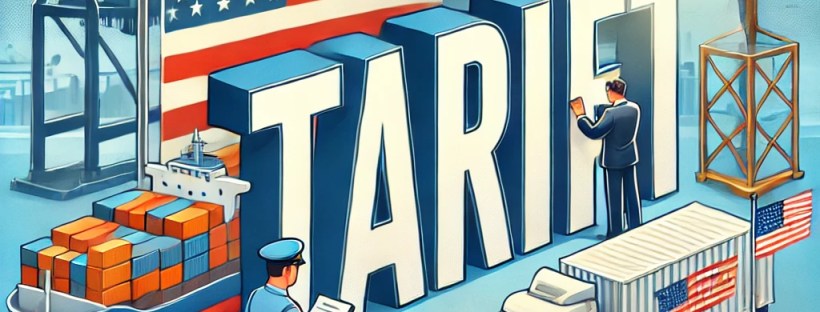
A Debate on Tariffs

by Stephen Stofka

This is 12th in a series of debates on various issues. The debates are voiced by Abel, a Wilsonian with a faith that government can ameliorate social and economic injustices to improve society’s welfare, and Cain, who believes that individual autonomy, the free market and the price system promote the greatest good.

This week, Abel began the conversation. “Toward the end of our conversation last week, you mentioned the shift of voter sentiment toward the right.”

Cain nodded, “Yes, the New York Times analyzed the change in election results from the 2020 election and it showed a shift toward the Republican Party in most counties (Source – NY Times).”

Abel interrupted, “Voters shifted left in the 2020 election. For the past twenty years, sentiment seesaws left and right with each election. Voters are so evenly divided that a slight shift can have a dramatic effect on party control of government.”

Cain argued, “This time is different. The voters want change. The neoliberal wing of the Republican Party has been discredited and driven out after two failed wars and a permissive trade policy that boosted China’s economy at the expense of American jobs. Gary Gerstle (2022, pg. 2) writes that it was the financial crisis that triggered the fall of the neoliberal order. President Trump is trying to undo the mistakes of that neoliberal ideology.”

Abel frowned. “I’ve read that book. Gerstle also noted that neoliberal policies were responsible for a lowering of the barriers to free trade (pg. 5). Tariffs and borders, for example. Trump is on a mission to rebuild those barriers. That will only hurt trade and weaken American business and consumers.”

Cain shook his head. “Open borders allowed for the smuggling of drugs and people across our southern and northern borders. The costs of open borders outweigh the benefits.”

Abel sighed. “25% tariffs on imports from Mexico and Canada are going to fuel inflation and hurt consumers. Both countries have said they will retaliate. We export a lot of grains to Canada. That will hurt our farmers.”

Cain argued, “In 2002, President Bush raised tariffs on steel and aluminum imports to as much as 30%. A year later, after complaints to the WTO, Bush ended the tariffs. Trump is made of stronger stuff. These countries are not doing enough to curb drug and people smuggling. It may not be an explicit violation of trade rules, but it violates the spirit of those rules.”

Abel replied, “Bush did that to save jobs in the steel industry. Instead of stemming the flow of jobs to other countries, the tariffs caused the loss of 200,000 manufacturing jobs (Source). Trump’s tariffs are going to raise unemployment and cost consumers.”

Cain rolled his eyes. “We’re not going to agree on this. We have got to restore our nation’s manufacturing capacity and the supply chains that support production that is vital to our security. China controls a lot of essential minerals used in the production of electronics. They are actively pursuing alliances with African countries to lock up essential mineral resources. This is economic warfare, and we have to take measures to defend ourselves.”

Abel frowned. “Tariffs lead to trade wars. Trump is acting like he has a mandate. He won with the lowest margin of the popular vote in the past four decades – just 1.5%. He didn’t even get a majority of the votes (Source). In 2016, he got fewer votes than Hillary Clinton. Contrast that with Obama, who had a 7.2% margin of victory in 2008, and Biden who won by 4.5% in 2020. Voters for Trump are going to wake up and find that they have been screwed.”

Cain argued, “Democrats always use the popular vote as a measure of voter approval. States with a less concentrated population provide the resources that are vital to the economy and security of this country. Those states supply the food, the beef, the fuel that people in urban areas rely on. It’s an economic symbiosis. The producers and workers in rural areas should not be put at a disadvantage simply because their production requires more land. The Electoral College balances the inequities that result from a popular vote.”

Abel scratched his chin. “Tariffs are going to hurt the rural producers and workers that voted for Trump. Those red rural states already depend on the coastal blue states for federal benefits like farm and oil subsidies, Medicaid and welfare and they resent it. They imagine that Trump will revitalize rural economies so that they are more like it was in the 1950s when relative wages were higher. It was the unions who bargained for those higher wages and benefits. Without unions in the private sector, wages in rural counties will remain low.”

Cain raised an eyebrow. “Unions abused their power and companies became less competitive. Unions sometimes enforced rules among their members with violence or intimidation in the workplace (Source). They invite free riding. ‘Shirkers’ are paid at the same rate as productive employees. It’s bad for morale and makes workers less productive as a whole. An employee in a union has two bosses – the shop steward and the employer. The employer wants the employee to work at their best. The shop steward might want an employee to slow down so as not to raise the employer’s expectations.”

Abel cocked his head slightly. “Free riding is a collective action problem that is not unique to labor unions. They empowered workers in negotiations with large companies who wielded extraordinary power in the labor market. In some counties, a company was a monopsony, the main source of employment for everyone in that region.”

Cain argued, “The government is the largest employer in the country employing over 23 million at various levels (Source). Walmart, the largest private employer, has just over 2 million workers (Source). Unions have taken over the public sector.”

Abel interrupted. “Let me stop you there. The BLS just released their annual survey of union membership. It’s less than a third in the public sector (Source).”

Cain nodded. “OK, perhaps I overstated the percentage. Still, public sector membership is five times what it is in the private sector. Unions may give workers more bargaining power, higher wages and more benefits. Who pays for all that? Taxpayers. Our public schools are not teaching essential reading and math skills. Fewer police officers on the street. Potholes go unfilled. What are taxpayers getting for their money? Screwed.”

Abel scoffed. “Elementary school teachers generally make less than the average wage in their local economy. In Denver, an elementary school teacher averages almost $54,000 (Source). The average in private industry is more than $80,000 (Source).”

Cain argued, “Ok, so maybe elementary school teachers in Denver are underpaid. Their main funding source is local property taxes. In the whole metro area though, federal government employees make $2128 a week (Source). That’s far above the average weekly wage of $1721 in the private sector (Source).”

Abel shrugged a shoulder. “Look, Denver is a regional hub. There is a higher proportion of tech employees in the federal workforce in Denver than the private sector. State government employees make just $2 more than the average (Source).”

Cain frowned. “If the mix of jobs and talent was similar to the private sector, then their union is not very effective at negotiating pay.”

Abel showed some impatience. “Your group doesn’t like unions. I get that. Incorporation is a collaboration of capital for investor profits. A union is a collaboration of workers for better pay and working conditions. Capitalism has been so successful because it turns the free riding problem into an advantage.”

Cain laughed. “You’re saying something good about capitalism? Go on.”

Abel smiled. “Small investors, holders of common stock in a company, enjoy the same return on their capital as the giant hedge fund who may own a substantial stake in the company. Because they have so much at stake, large investors take an active role in monitoring or directing management decisions. The small investors freeride on those efforts.”

Cain nodded. “That’s an interesting perspective. I still don’t think that unions are needed to negotiate for workers. Worker productivity and demand will support higher wages.”

Abel sighed. “In theory. This is the real world, not a freshman class in economics. If capital can collaborate to gain bargaining power, workers must collaborate to match that power.”

Cain motioned his impatience. “We started out talking about tariffs and now we’re talking about unions.”

Abel laughed. “We are exploring different perspectives. We will never come to an agreement unless we try to understand each other’s positions on these issues.”

Cain nodded. “See you next week then.”   

///////////////////

Image by ChatGPT

Gerstle, G. (2022). The rise and fall of the neoliberal order America and the world in the free market era. Oxford University Press.

The American Federation of Government Employees represents 800,000 of two million federal employees (Source). The American Federation of State, County and Municipal Employees represents more than 1.3 million workers (Source).