A Debate On Rent Control

November 24, 2024

by Stephen Stofka

This is part of a continuing series of debates on economic and political issues. Substack users can find last week’s debate on climate change here. WordPress and other  users can visit my web site innocentinvestor.com here. Wishing everyone a good Thanksgiving this next week.

This week’s letter is about the price system, continuing an imagined conversation that began with last week’s letter. What is a price? Is it a measure? If so, it is not a good one because prices keep changing from year to year. Let’s imagine a haircut from the same stylist that costs 5% more in 2024 than in 2023. Did the quality of the haircut change? No. the service delivered is the same but not the price. So, what is price? It must be a good in and of itself – a commodity like wheat. A good that “evaporates” like water in the sun. The CPI calculator at the Bureau of Labor Statistics indicates that a $1 in 2024 buys what $0.50 did in 1995. Any interest earned on savings has barely compensated for the loss of buying power (see notes).

And now the conversation between Abel and Cain continues:

After the usual pleasantries, Abel said, “Last week I pointed out market failures where the price system in a free market does not control a negative externality like pollution. Another flaw in the pricing system is its inability to cope with social justice issues. Your group favors policies that emphasize growth. You claim that more growth will benefit everyone, including minorities. What about rent control? Land can’t grow. In densely populated cities like New York, the only way to grow the housing market is to build up. Zoning policies restrict the height of many residential areas, and the current residents prefer it that way.”

Cain replied, “Rent control is a price control and our group does not favor price controls in any form. They distort the supply and demand dynamics of a market. Rent control encourages landlords to make only those repairs which will avoid regulatory fines from housing authorities. The quality of the housing stock declines and that only contributes to the problem. Housing authorities must devote more resources to inspect properties, handle tenant complaints and regulate landlords.”

Abel interrupted, “So what’s your suggestion? In crowded markets like New York, the housing supply is too rigid, so it doesn’t shift to meet demand like in a supply demand model. If prices were allowed to find an equilibrium on their own, many working people would be priced out of the market. They would have to move further away from the city and drive long distances to get to work. This would choke an already overtaxed traffic and transit system. What’s your group’s answer? Let people move to another state? The tri-state area has already become a giant metropolis because families have tried that solution. The problem persists.”

Cain nodded. “Yes, there are choke points where circumstances or political interests constrict supply. The first question politicians should ask is ‘How can we adapt the price system to help manage this particular market?’ If we look at improperly maintained housing as a pollutant, perhaps policymakers could use a permit system or tradeable credits, the same system that has been successful with some pollutants.”

Abel asked, “How would that work? Make available a number of permits to not maintain housing units to safe health and safety standards? Housing can’t be turned into a lab experiment.”

Cain responded, “Each city may devise different pricing solutions. Some may work better than others, allowing competing policy frameworks to be tested in different circumstances. The point is that regulations and rent control should not be the first tool that policymakers reach for.”

Abel asked, “Has anyone used an incentive-based strategy using the price system to tackle the problem of affordable housing in a dense urban area?”

Cain replied, “Not that I am aware of.”

Abel argued, “Proves my point. Some issues cannot be resolved through the price system. People tolerate many inconveniences in a big city because there are many factors that induce them to stay.” Abel ticked them off on each finger, “Jobs, family, public transportation and infrastructure, civic associations with people having similar interests, schools for the kids, sports teams, the availability of internet, public institutions like libraries, internet, parks, museums.”

When Abel paused to take a breath, Cain interjected, “I get your point. A home of some sort in a city gives people access to amenities that are not available in a rural district with 2,000 residents. People want availability to all that stuff and pay as little as possible.”

Abel interrupted, “Are you saying that working people who spend half of their income on a place to live in New York City are freeloaders? It’s the upper income people that employ them who are freeloading. The rich are getting labor at an affordable rate. If working people could charge enough to cover their living expenses, they would get paid a lot more than they do.”

Cain argued, “It’s the rich people who are paying most of the state and local taxes that pays for all those amenities. The rich are subsidizing these institutions that the working class take advantage of.”

Abel said, “The median rent in the Bronx is 60% higher than the national average, according to an analysis by Zumper. The average monthly rent for a 2-BR apartment is almost $3500 and the  Bronx is one of the more affordable of the five counties in New York City. The national median annual wage for warehouse workers is $38,000, according to the BLS. That’s almost $3200 a month. A couple working two blue collar jobs would be spending more than half their gross income on rent. A prudent percentage is 30%, or less than a third of gross income. If New York City policymakers were to require employers to pay 60% above the national average, those warehouse workers would make almost $61,000 a year, or $5100 a month. Two incomes at that wage would total over $10,000 and that $3500 median rent in the Bronx would be about 34% of income.”

Cain dismissed Abel’s argument. “Those New York City employers wouldn’t be able to compete with other companies in surrounding regions with lower costs. They would leave or go out of business. There would be fewer warehouse jobs. That couple would have to compete with others for blue collar jobs. The increased supply of labor competing for jobs would further lower the market wage and make the couple dependent on social welfare programs. The city would have less tax revenue because those warehouse employers have left the city. Less property tax, less income tax, less tax on business income. The city could not afford to pay more benefits and might declare bankruptcy like it did in the mid 1970’s. A complex negative feedback loop. Policymakers who tinker with natural market forces only make the problem worse.”

Abel objected, “If that couple followed the signal of those market forces, they would move to a lower cost area in a nearby state. There would be fewer workers in New York City, driving up wages. As the couple tried to find work, they would drive wages down further in that nearby state. Those lower costs would enable employers to reduce their prices and put the New York City companies out of business.”

Cain responded, “In order to survive, those New York companies would also leave the city. Anyway, capital relocates faster than people. As soon as policymakers announced a law mandating that employers pay premium wages, a lot of blue-collar companies would relocate out of the city. Our blue-collar couple would be out of a job. Just as with a previous scenario, the couple would be dependent on the government for aid. The price system promotes independence.”

Abel protested, “Paying higher rents than the national average does not promote worker independence. A dense housing market is a seller’s market, a landlord’s market. Without some laws in place to protect renters, they would be entirely at the mercy of landlords. Market prices in a dense housing market like New York only promote independence for those with capital and access to capital like landlords.”

Cain shook his head. “Once again, your group and mine can’t agree. Your group blames capitalists for everything.”

Abel replied, “That’s overstating our objections. Capitalists promote a dynamic economy that responds to changing circumstances. But capitalists can’t operate only in the framework of the pricing system. In some markets, price dynamics often make the problem worse. As Keynes and other economists have shown, an unguided free market system can settle at equilibrium points that are below the productive capacity of a nation’s people and businesses. There is no automatic mechanism to move an economy to an optimal equilibrium of productivity.”

Cain turned to go. “Well, our group disagrees. The free-market system promotes growth, and it is growth that generates a productive equilibrium.”

Abel replied, “I know your group believes that, but belief doesn’t make it so. The housing market in New York City is just one example of market failure, the inability of prices to allocate resources. It is one of many.”

Cain replied, “Maybe we should talk about market failures next time we meet. Behind every market failure is a policy failure, believe me.”

Abel responded, “See you next time.”

///////////////////

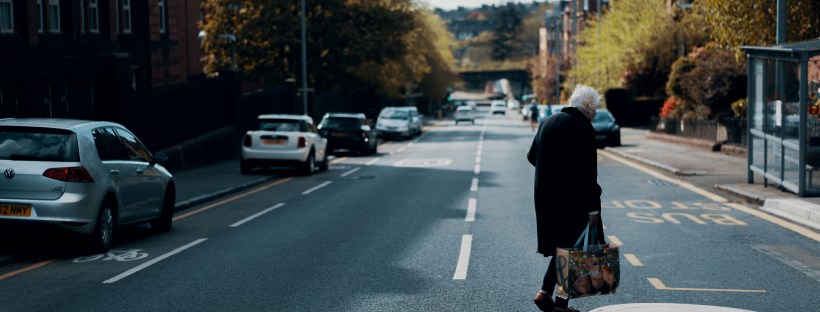
Photo by Shehan Rodrigo on Unsplash

Buying power note: Inflation has averaged 2.76% annually since 1995. The interest on a 1-year Treasury note (FRED Series DGS1) is similar to a 36-month CD rate and has averaged 2.6%.

The Maze of Our Arguments

November 17, 2024

By Stephen Stofka

This is a bit longer than usual but in a conversational format. I will also leave copies of the in-text links in the notes at the end. The sources do not require a subscription.

This week’s letter is about our arguments. Some policies are implemented but the disagreements on the underlying issues are not resolved. The debate often detours through a maze of assumptions and perspectives, identities and loyalties before it can reach the main issue. Resistance and resentment simmer like the underground coal-seam fire in Centralia, PA that has been burning for six decades.

At the Constitutional Convention in 1787, delegates could not resolve the issue of slavery, and the southern states threatened to walk. The financial condition of the confederacy of thirteen colonies was desperate, making the new nation vulnerable to attack and encroachment by France and Spain. In a compromise, the delegates agreed to make the importation of slaves illegal after twenty years, but booted the issue down the road. For seventy years after the Constitution was ratified, the southern states periodically threatened to secede, and various compromises averted a crisis without resolving the issue. The 1820 Missouri Compromise was a key piece of legislation that kept the nation together. In 1857, the Supreme Court issued its Dred Scott decision which overturned the Missouri Compromise and public sentiment accepted the inevitability of civil war.

Climate change is not as emotional a topic as slavery or abortion, which I wrote about here. I will imagine a discussion between two groups of people who set policy for all the people in the country. Speaking for the first group is a person named Abel who claims that certain types of human activity are having a pronounced and growing effect on the climate. To counter these damaging effects, Abel’s group proposes regulating some activities and adopting different methods that will lower the impact of human activity on the climate. Cain, a spokesperson for the second group, is averse to most regulation of economic activity and argues that Abel’s claims and theories are a hoax. Any changes in climate are probably temporary and driven by natural physical variations that people can not influence.  

Abel offered to present the evidence for his claim, but Cain dismissed the offer. Cain turned to page 156 of Nassim Taleb’s Fooled by Randomness and handed the book to Abel, who read the highlighted passage, “I can use data to disprove a proposition, never to prove one. I can use history to refute a conjecture, never to affirm it.”

Abel responded, “In An Enquiry Concerning Human Understanding, the 18th century philosopher David Hume wrote that we could not state with absolute certainty that the sun would rise tomorrow or that it would not rise. Knowledge gained from experience can only move to greater certainty or uncertainty. Each year’s climate data moves us closer to certainty that  human activity is a significant contributor to climate change.”

Cain argued, “Our group requires incontrovertible proof, not just an increased certainty. Scientists were certain the climate was cooling in the late 1970s.”

Abel responded, “That is a myth that climate change deniers have used for decades to refute climate change. Peterson et al (2008) unraveled the making of that myth. J. M. Mitchell published his cooling hypothesis in 1963. When others checked his data, they found that his conclusions were based on weather station data in the northern hemisphere only. When researchers included data from the southern hemisphere, the conclusion was the opposite. The planet was warming.”

Cain interjected, “Scientists also claimed that world oil production had reached its peak in the 1960s, a theory known as Peak Oil.

Abel responded, “Let me finish the rest of the story. In the 1970s, popular magazines like Newsweek promoted both theories as “news peg” headlines to attract readers’ interest. Controversy sells. There was already a broad consensus in the scientific community that the warming effect of man-made greenhouse gases were dominating any cooling effect from aerosols and natural factors. Prominent scientists like Carl Sagan presented that conclusion to Congress in 1985. In 1990, when the IPCC issued it’s first assessment of the global climate changes, it had already found a measurable increase in temperatures.”  

Cain argued, “Look, technologies change and new data causes scientists to revise their opinions. The same could happen with climate change. There’s no sense in imposing regulations that disrupt economic activity as long as there is a chance that scientists could be wrong.”

Abel responded, “Your group casually dismisses sixty years of scientific data and increasingly accurate predictions. Hume pointed out that there is always a chance that any claim is wrong. We have to act on probabilities, not absolute certainty. Your group adopts the reasoning of jurors in a criminal trial who reach a conviction only if there is no reasonable doubt. Our claim is more like a civil trial where jurors reach a conclusion based on a preponderance of the evidence. Each year provides more evidence that human activity is having a significant effect on the global climate.”

Cain replied, “Well, some of your group’s proposals seem criminal to me so yes, we require evidence that is beyond a reasonable doubt. Our group is suspicious of policy proposals that affect our economic lives. We believe that the price system provides the best environment for voluntary cooperation. Prices emerge from the decisions and preferences of everyone.”

Abel nodded. “Science works like the price system, only slower. There’s a supply of research and data, and a demand for solutions and understanding. Scholars publish their research. They put their data and conclusions on the market, so to speak. The research community digests that data and methodology, points out flaws and presents alternative conclusions. Theories improve just like the products we buy.”

Cain objected, “Unlike the price system, there is no equilibrium point.”

Abel responded, “Yes, there is. Some consumers and suppliers of fossil fuels want research that concludes that there is little evidence for anthropogenic climate change. These groups fund organizations that hire researchers to publish position papers to that effect. Demand and supply meet, but the quality of the supply of research is lowered.”

Cain objected again. “These are reputable scientists presenting their conclusions. Look, even if there was some credible evidence that the use of fossil fuels was having an effect on the climate, our group favors price incentives, not regulations. Carrots, not whips.”

Abel countered, “The free market and price system doesn’t cope with negative externalities like pollution. Do you acknowledge that?”

Cain nodded. “Yes, but we think those externalities can be priced as well. The polluters can compensate others for the nuisance or trade among themselves for permits to pollute.”

Abel replied, “But that requires some government agency to set the prices or the allotment of permits.”

Cain nodded. “It’s not a perfect world. More regulations that affect economic outcomes only incentivize people and companies to find loopholes to avoid the regulations. Government agencies must not only regulate an economic activity like pollution from manufacturing, but they have to play watchdog to catch the actors trying to avoid the regulations. Regulatory agencies are not an efficient way to accomplish a goal.”

Abel asked, “What about social and economic justice issues? How can the price system cope with them? Let’s say some business owner thinks that all black people are inferior workers, so he offers black applicants half the wage he offers white workers. How does the price system handle discrimination?”

Cain shook his head. “Our group does not endorse discrimination of any type. We question whether it is the job of a government agency, particularly a federal agency, to try to correct those attitudes and behaviors. We support policies that encourage economic growth. More growth will promote employment which will create more bargaining power for workers. Employers will have to compete to hire workers. Black workers will have a greater choice of jobs and can refuse to work at a lower wage. Employers will end their discriminatory practices because it hurts their businesses.”

Able argued, “Using Taleb’s reasoning, any  instance where the price system does not end discrimination would be cause enough to invalidate your conjecture. If the price system coordinates human activity and resources so well, why are there subsidies for suppliers and price controls for consumers?”

Cain shrugged. “Politics corrupts the price system. In a perfect republic, there would be no subsidies or price controls.”

Abel said, “You speak of the price system as though it were a natural force like gravity.”

Cain nodded. “It is a natural force of human interaction. Einstein said that gravity was the curvature of spacetime. The phrase ‘matter tells spacetime how to curve, and curved spacetime tells matter how to move’ captures an important element of his theory of relativity. Without political interference, suppliers and consumers tell prices how to curve and that curvature affects the decisions and behavior of both suppliers and consumers.”

Abel replied, “The price system provides incentives for a limited number of transactions or exchanges between people. There are economic activities where one party inflicts damage on another party and may not be aware of it. Pollution can affect people far from the source of the pollution as happened with acid rain. Decades ago, the amount of sulfur emissions from smokestacks near New York City were affecting farmers and wildlife in upstate New York. Climate change contributes to a global problem, making it more difficult to regulate with any price system. Human industrial activity contributes to the carbon dioxide blanket surrounding the planet. That blanket inhibits the release of solar energy from the earth’s lower atmosphere, causing ocean and air temperatures to rise. Heat seeks an equilibrium so that warming affects the convection of energy around the planet.”

Cain scoffed. “Your group is saying that a family driving a car powered with gasoline is affecting some people living in remote Kamchatka. Come on, there are limits to responsibility.”

Abel replied, “The family driving the car is affecting their own climate as well. The power plant in Kamchatka is affecting U.S. families. Climate change surpasses national borders. It’s the butterfly effect, an idea that mathematician and meteorologist Ed Lorenz proposed. How the beating of a butterfly wing could contribute to an initial state that eventually produced a tornado.”     

Cain objected, “Butterfly effect or not, we can’t be regulating every little action that people do because it might contribute to some problem. In the Fable of the Bees, Bernard Mandeville imagined a society that collapsed after it prohibited all vices. We just have to accept that living bears some risks and unpleasant things. We can’t craft a perfect society. The price system promotes a natural system of checks and balances. Is it perfect? No, but it is better than a bunch of bureaucrats micromanaging our economic activities.”

Abel sighed. “Your group’s solution is to do nothing. If the world goes to hell, so be it?”

Cain replied, “We struggle to solve our own problems. Coordinating human behavior is difficult. The price system is a coordinating mechanism. Sure, it has flaws, but it is more democratic than any autocratic system of regulation. Even if human activity were causing the planet to warm up, how would we get other countries to comply? We can’t force everyone to think like we do.”

Abel asked, “There doesn’t seem to be any area of compromise on this, is there?”

Cain smiled. “A solution will emerge. Don’t worry. For two centuries at least, technological prowess has raised living standards and our life expectancy.”

Abel objected, “The cumulative effect of our technological prowess is causing the problem. How can it solve a problem that it is contributing to?”

Cain turned to leave. “You have no faith in human ingenuity and motivation. That is the real problem.”

Abel replied, “You put too much faith in the price system. That is an even bigger problem. Let’s discuss that next time.”

The debate may begin on climate change but often shifts towards each group’s assumptions and perspectives on an issue. Each group pays more attention to others in their group than arguments from the other side. The signers to the Declaration of Independence argued over the list of British offenses or usurpations included in the Declaration. They had only minor changes to the noble sentiments expressed in the opening paragraphs that we cherish today. The arguments against rebellion? Loyalist sentiments, as they were called, were stamped out. In the northern colonies, some of the Loyalists were driven out and their property confiscated. Force is the final arbiter of failed attempts to compromise.

/////////////////////

Photo by Susan Q Yin on Unsplash

A 16-minute excerpt of Carl Sagan’s presentation before a Republican led Senate committee in 1985.

Anti-Loyalist sentiment

Fable of the Bees

The butterfly effect

acid rain

curvature of spacetime

Peak Oil

natural physical variations that contribute to climate change.

The Dred Scott decision and the inevitability of civil war. Roger Taney, the Chief Justice and author of the court’s majority opinion, was initially nominated by President Andrew Jackson to be Secretary of the Treasury. Taney was the first cabinet nominee to be rejected by the Senate. Jackson then nominated Taney for the position of associate justice of the Supreme Court and met rejection again. Later, Jackson nominated Taney for Chief Justice, and the Senate confirmed him after much debate.

An underground coal-seam fire in Centralia, Pennsylvania burning since at least 1962.

Peterson, T. C., Connolley, W. M., & Fleck, J. (2008). The myth of the 1970s Global Cooling Scientific Consensus. Bulletin of the American Meteorological Society, 89(9), 1325–1338. https://doi.org/10.1175/2008bams2370.1

Fortunate Son

November 10, 2024

By Stephen Stofka

The country has elected a fortunate son for the second time. Throughout his life, Donald has enjoyed the protection of a phalanx of lawyers who have kept him out of jail. A recent decision by the country’s highest court will give him immunity for another four years. His physical condition and cognitive health are declining so rapidly that he likely will not serve out his full term. His much younger Vice-President J.D. Vance will become President and possibly the leader of the MAGA movement for another eight years.

Another take. Former President Donald J. Trump has made the greatest political comeback in the history of this country. Millions of supporters donated money to his legal efforts to defend the integrity of the vote and challenge voter fraud by the Democratic Party. Despite persistent persecution by Democratic prosecutors, Mr. Trump has emerged victorious. In the days leading up to the election, the former President  held many rallies, demonstrating the vitality of a candidate twenty years younger.

Yet another take – a just the facts, ma’am perspective. Presidents with low approval ratings, including Trump in 2020, do not win reelection. This election’s results repeated that trend. James Carville, Clinton’s campaign manager in the 1992 race, coined the famous phrase “It’s the economy, stupid.” Voters showed more concern about inflation and immigration than Trump’s character and demeanor. Voters are especially sensitive to inflation because they feel helpless, and people do not like feeling helpless.

The misery index is the sum of the unemployment rate and the inflation rate. A comfortable reading is about 7%. In 1980, the index was 20% and Jimmy Carter lost his bid for re-election. Bill Clinton and George W. Bush won re-election with misery readings of 8%, and Obama won the 2012 election when the misery index was near 10%. In the fall of this year, the index was below 7%. Perhaps the misery index is not a consistent predictor.

Which is your take on the election results? Each second of our day we download terabytes of information into our brains. We filter out much of that data, then arrange what remains into a version of the world that is uniquely ours. Then we interpret that stimuli, integrating it into our memories along well-worn neural pathways. In that integration process, we reconstruct the world again, discarding the information that conflicts with our previous experience, beliefs and values. We shape what we experience, and our experience shapes us. We may be traveling with others on a train through time, but we have a unique vantage point as we look out the window.

In her book Lost in Math, physicist Sabine Hossenfelder writes, “If a thousand people read a book, they read a thousand different books.” Each voter creates a unique election story. Media analysts focus on different elements of an election, creating their own version of the contest, weaving a narrative of cause and effect. In the telling of the election, we should remember Nassim Taleb’s caution, in Fooled by Randomness, that “past events will always look less random than they were.” Since we are rational creatures, we are both frightened and fooled by randomness. In an evenly divided electorate where a few thousand votes in several key counties can make a difference,  random events can decide the outcome. A snowstorm in a key state in the days before an election, the path of a bullet at an election rally, a decision by a federal judge.

The percentages of the Presidential election votes were no different than 140 million voters flipping a fair coin.. Heads equals a vote from Trump. Tails was a vote for Harris. Did any individual voter flip a coin? Possibly, but unlikely. As a collective, our individual actions can simulate random behavior. Randomness can make us feel helpless, so we act as though our actions have purpose. We act aggressively or assume a false bravado in the face of random mortal danger. Watch the clip from the Deer Hunter where the prisoners are made to play Russian Roulette.

Those who struggle through life may vote for the calm bravado of someone privileged. Ronald Reagan was known as the Teflon President. The public did not hold him responsible for several controversies and scandals that occurred during his eight years in the White House. In 1981 to 1982, the country suffered the worst recession since the Great Depression fifty years earlier. During the 1983 Lebanese civil war, Reagan ignored warnings that the U.S. Marines barrack in Beirut would be vulnerable to attack. The October 23rd bombing resulted in the loss of 241 lives, most of them Marines. . In his 1984 bid for re-election, Reagan won all but one state, a resounding vote of public approval. In 1986, the Iran-Contra scandal, a secretive trade of arms for hostages with Iran, occupied public attention but Reagan escaped any responsibility or public indignation.

Forty years later Donald Trump can wear that moniker, the Teflon President. A slim majority of voters overlooked his many scandals, his felony conviction, and his chaotic management style during the pandemic and most of his first term. Although the Republican Party’s name remains the same, Trump and his followers have erased the legacy of Reagan. The party’s former symbol, an elephant, has been replaced by a red MAGA hat. It has become a party dedicated not to any consistent set of principles but to one person, a fortunate son.

//////////////////

Photo by Danilo Batista on Unsplash

Keywords: misery index, election, recession, inflation

The Soul of a Debate

November 3, 2024

By Stephen Stofka

This week’s letter is about the principles and history of the debate on abortion, an issue that could be pivotal for Democrats in this week’s election results. Like many contentious policies, many of us have strong opinions on the subject. We have identified the central principle of the issue and brook no compromise on that principle. Such issues generate persistent conflict because we identify different principles and construct incompatible resolutions. The aim of this essay is not to change anyone’s mind on the topic because I don’t think that is possible.

Many laws banning abortion were passed at a time when women had no autonomy – not the right to own property or vote. They were subjects of men. Their chief function was to support and aid men, to bear and rear the offspring of men. To be subject to this demeaning legacy once again deeply offends many women.

The laws and religious doctrines on abortion were all created by men who showed more concern for their offspring than the women who bore that offspring. Greek philosophers and early Church fathers formulated their speculations and doctrines without any knowledge of genetics or embryology. Central to their debate on the matter was the question: when does a fetus become a human and acquire some guarantee of life in a society? The Greek philosopher Aristotle reasoned that all living things had a soul. “The soul is the cause and source of the living body,” he wrote, so that what distinguishes the living from the non-living was ensoulment, acquiring the presence of a soul. What distinguished human beings from other living things was the development of a rational soul within a woman’s womb, but Aristotle was unclear on the timing of that transition.

For early Church fathers, the bible did not resolve the question. Many people think that the Bible specifies the quickening when the fetus first stirs in the womb. However, the word quickening in the Bible is an animating event, not a specific time in gestation. The Bible gives no direct timeline when the soul enters the body. If the Bible is the word of God, as some believe, then God is concerned with many issues but not ensoulment or abortion.

Jerome of Stridon (c. 344 – 420) was an early Christian priest and historian who first translated the Bible into Latin. He professed a belief or doctrine called creationism. At conception, God created a new soul for each person. In Summa Theologica, the influential Catholic philosopher Thomas Aquinas (1225 – 1274) reiterated that doctrine. Aquinas also reacquainted Christian readers in Europe with the recently “rediscovered” works of Aristotle. In de Potentia, he wrote about Aristotle’s distinction between a primitive vegetal soul and a rational soul. During the Renaissance these philosophical speculations provoked controversy in the Church which Pope Pius IX resolved in 1869 with an encyclical declaring that ensoulment happened at conception.

Many 19th century state laws that ban abortion are based on the belief contained in that encyclical. The resulting policies treated an embryo’s life as though the embryo were human. Texas is one of 13 states that ban abortion outright. All of the former Confederate states effectively ban abortion, either outright or by imposing severe gestational limits when many women may not know they are pregnant. Before Jane Roe won her suit against Texas in the Supreme Court in 1973, the Texas penal code governing abortion was based on Texas laws passed beginning in 1854, when blacks and women were excluded from voting. Blacks were regarded as chattel to be bought and sold like farm animals. Few women could own property, and none could vote.

In Roe v. Wade, the Supreme Court established a balancing of state interests between “protecting the health of pregnant women and the ‘potentiality of human life’” (Oyez link here). That balance changes during the progression of a pregnancy. Jane Roe claimed a right to privacy inherent in the First, Fourth, Fifth, Ninth, and Fourteenth Amendments but the court’s decision founded its decision on a woman’s right to privacy implied in the 14th Amendment. The Roe opinion placed bounds on a state’s interest that were loosened during the term of pregnancy:

“In the first trimester of pregnancy, the state may not regulate the abortion decision; only the pregnant woman and her attending physician can make that decision. In the second trimester, the state may impose regulations on abortion that are reasonably related to maternal health. In the third trimester, once the fetus reaches the point of “viability,” a state may regulate abortions or prohibit them entirely, so long as the laws contain exceptions for cases when abortion is necessary to save the life or health of the mother.”

At that time, a fetus was not viable until the 26th week, the end of the second trimester. Medical knowledge and technical development have lowered the threshold of fetal viability to 23 or 24 weeks in developed countries.

In the 2022 Dobbs v Jackson opinion, the court’s majority overturned the precedent established in Roe and a subsequent case called Planned Parenthood v. Casey.  In Dobbs, the majority found that the only implicit rights – not those expressly stated in the Constitution – that any American has are those “rooted in the Nation’s history and tradition”  and necessary to the “concept of ordered liberty” (text of majority opinion here and see notes below on ordered liberty). The phrase is copied from a 1997 Supreme Court decision asserting that the 14th Amendment did not imply a right to assisted suicide. The circumstances and principles of a person nearing death and living outside a womb bear little resemblance to those of an embryo totally dependent on its mother for its life functions. The balancing test in the court’s Roe decision recognized a state interest in preserving life but imposed bounds on that state interest. In her dissent, Justice Elena Kagan wrote, “Today, the Court discards that balance.” In doing so, the Dobbs opinion discarded the bounds on the power of the state established in Roe.

In the 165 years since the Civil War, the Constitution was reconstructed by the 14th, 15th, 17th, 19th, 24th and 26th Amendments, expanding the democratic franchise from a select few males to most adults. Are women to be governed by laws specific to them in which they had no voice or representation?

////////////////////////

Photo by Alexander Grey on Unsplash

Keywords: abortion, ensoulment, soul, viability, quickening

Ordered liberty is a theme of the conservative 18th century British politician Edmund Burke. In an age when only a small portion of the population could read, a select elite did the ordering of the liberties of the rest of the citizens.

How We Choose

October 27, 2024

By Stephen Stofka

This week’s letter is about our vote, our political perceptions and institutions. This past week, an NPR reporter asked an undecided voter in Pennsylvania which candidate they were leaning to. The voter responded that he did not like the way the Biden administration had handled inflation. Since Harris was part of that administration, he was leaning toward Trump. The NPR reporter did not present the voter with the information that it was Fed Chairman Jerome Powell, appointed by Trump, who had been chiefly responsible for the government’s response to inflation. Would this new information have an effect on the voter’s thinking? Would the voter hold Trump partly responsible for the surge of inflation during the pandemic recovery? That dialog was never developed. I have noticed that reporters from the British Broadcasting Corporation (BBC) develop a more proactive dialog with those they interview. The resulting interviews are more lively and informative than those conducted by reporters in U.S. news media.

Candidates in presidential elections frame issues to elevate them from the temporary to the eternal. In The Commanding Heights, Daniel Yergin and Joseph Stanislaw (1998) tell the story of Samuel Insull, a tycoon in the electricity industry during the 1920s, who wanted to build a sprawling infrastructure that would supply electricity to every home and business in America. His empire collapsed during the Depression and investors lost 99% of their capital. Franklin Roosevelt (FDR) ran on a campaign that included a promise “’to get’ the Insulls” (p. 47). FDR had elevated a case of speculation and overreach into an eternal battle where the rich preyed on the poor. His administration pursued the tycoon as he sought refuge in various European countries. Finally, Greece extradited the man back to the U.S. where he stood trial for fraud. Prosecutors could not convince a jury that Insull was guilty of anything more than ambition. His investors were mostly professionals, people who hoped to capitalize on that ambition. The jury speedily exonerated Insull.

One voter in Pennsylvania explained to the same NPR reporter that he needed to sit down and study the issues. Political campaigns must craft an issue complicated by dense details and conflicting principles into a clear and simple tale that appeals to the emotions and morals of voters. There are four aspects of most issues: the practical, the moral, the intellectual and the emotional. Repeated studies of patients whose right and left brains have been separated by accident or surgery indicate that each of these aspects is processed by different parts of our brain. To reduce our “brain load” we use shortcuts in our reasoning process to guide us through a jungle of complexity. I will note that Nelson et al. (2013) found little biological evidence for the idea that the processing of various tasks are localized to either half of the brain.

Steckler et al. (2017) found that many of us determine an action’s morality based on intention rather than outcome. Their research indicated that we process those types of moral judgments with our right brain. Many researchers have concluded that emotional responses are mainly generated in the right brain (Gainotti, 2019). Sorting through the practical details and isolating the principles involved in an issue involve the left side of the brain. We don’t carry a handy little tool in our pocket to consider these various aspects to get to the heart of the matter. After a long day at work, it is tiring just to think about the more complex issues. To keep it simple, political campaigns play to just one aspect, but not to the practical details where the momentum of a campaign narrative can get lost.

Political campaigns are sales campaigns. Central to sales practice is the KISS principle – Keep it simple, Stupid. The lessons of history are too nuanced and contradictory for a sales campaign. Candidates try to hypnotize voters with one or two shiny issues. They target the right brain which has a prominent role in emotional and moral judgments. They make up details to support their emotional or moral argument. Anything to stoke outrage, anger and moral condemnation. Simple and short lies with little or no evidence work the best. Scapegoat a minority group. Immigrants eating pets. Jews sacrificing Christian children. Catholic voters wanting to make Catholicism the national religion. In southern states, many black men were lynched after a hasty accusation of  raping a white woman.

Voters are beset with distortions from opposing campaigns. Most of the evidence for or against a candidate overwhelms many voters so they concentrate on a few key details. They rely on their own party affiliation, a few key media sources, a family member or a friend. Campaign rules do not prohibit lying and candidates have little to gain from nuance or truth. A Congressional Research Service analysis found that 36% of current House members and 51% of Senate members are lawyers. They have learned how to shape facts and issues into a convincing argument.

America was founded by the wealthy to be a plutocratic republic with the trappings of a democracy. To preserve a plutocratic Constitution, the founders made it difficult to amend the rules. The Electoral College was designed to check the popular will. The rules of the Senate and House concentrate power in a small elite of party leaders and committee chairs. In a plutocracy, the wealthy find it easier to influence a small number of legislators holding the reins of public policy. Election campaigns in America are longer and more expensive than in any other democracy. An Open Secrets analysis found that total spending in the 2020 election surpassed $14 billion, doubling the money spent in the 2016 election. Much of that money comes from wealthy patrons who wish to align public policy to their priorities and principles. Candidates are the messengers of the rich, conveying a message from the upper echelon of our society to the rest of us. That hypnotic message is your vote matters.

///////////////////

Photo by Victoriano Izquierdo on Unsplash

Keywords: Electoral College, Constitution, vote

Gainotti, G. (2019). The role of the right hemisphere in emotional and behavioral disorders of patients with frontotemporal lobar degeneration: An updated review. Frontiers in Aging Neuroscience, 11. https://doi.org/10.3389/fnagi.2019.00055

Nielsen, J. A., Zielinski, B. A., Ferguson, M. A., Lainhart, J. E., & Anderson, J. S. (2013). An evaluation of the left-brain vs. right-brain hypothesis with resting state functional connectivity magnetic resonance imaging. PLoS ONE, 8(8). https://doi.org/10.1371/journal.pone.0071275

Steckler, C. M., Hamlin, J. K., Miller, M. B., King, D., & Kingstone, A. (2017). Moral judgement by the disconnected left and right cerebral hemispheres: A Split-Brain Investigation. Royal Society Open Science, 4(7), 170172. https://doi.org/10.1098/rsos.170172. Available

Yergin, D., & Stanislaw, J. (1998). The commanding heights: The battle between government and the marketplace that is remaking the modern world. Simon & Schuster.

Casting a Vote

October 20, 2024

By Stephen Stofka

This week’s letter takes an economic perspective on our vote. Economists classify goods into four categories: private, toll, public and pooled. Two characteristics distinguish the four categories: whether a good is rivalrous and excludable. A quart of milk is rivalrous. My consumption of that quart precludes someone else from consuming it. We typically exclude goods by attaching a price to them. National defense is a non-excludable good because it is not possible to prevent a person from enjoying the benefits of national defense.

A private good is both rivalrous and excludable. A toll good is non-rivalrous but excludable. A toll highway is a clear example. One person’s use of the road does not prevent another person from using it. The entries to the highway are usually controlled in some way so that people have to pay to use the highway. A public good is non-rivalrous and non-excludable. Again, national defense is a clear example of this type of good. The last category are pooled goods which are rivalrous but non-excludable. Ocean fishing is an example. One person’s catch reduces the number of fish in the ocean so that the good is rivalrous. There is no practical way to limit or exclude access to the ocean. These classifications can help economists analyze the dynamics of a particular market (Fulton & Gray, 2007).

Given that background, what type of good is a vote? There are two aspects here: the vote itself, and the mechanics of voting. The vote itself is a toll good, excludable but non-rivalrous. One person casting a vote does not effectively reduce another person’s ability to vote. However, the mechanical act of voting in person is rivalrous. There are time restrictions when polling stations are open and only one person can use a voting machine at a time. Mail in voting removes the time restrictions of polling stations. Early voting expands time restrictions. Both give voters more freedom and convenience. Donald Trump and his allies in the Republican Party want to abolish mail in voting and restrict early voting to control access more effectively to the vote.

How does that work? Voters in rural and suburban areas, who are more likely to vote Republican, typically have fewer registered voters per polling place than voters in dense urban areas. In the 2016 election, the Election Assistance Commission reported that half of jurisdictions had fewer than 1000 registered voters per polling place. A quarter of jurisdictions reported twice that many voters per polling place (p. 4). Voters in those districts do not have equal access to the polling stations where they can cast their vote. Mail in voting and early voting help to equalize the mechanical effort of casting a vote.

Presidential elections in the U.S. are conducted in a variety of ways in the 10,000 voting districts in the 50 states. In a 2010 article in the Election Law Journal, Spencer and Markovits (2010) noted a few examples to show the breadth of that variety. In Wisconsin and Michigan, each local district controls their own election procedures. In Oklahoma and Washington, elections are managed by officials who are all state employees. The Election Assistance Commission reported nearly a 117,000 polling places in the 2016 election.

Many people might be surprised to learn that there is no right to vote contained in the language of the Constitution. In the 2004 Presidential election, voters in Ohio, Pennsylvania and Florida endured long lines to cast their vote. In some urban precincts in Ohio, voters waited ten hours to vote, and the long wait was especially prevalent in predominantly black districts (Powell & Stevin, 2004). The following year, Illinois, Ohio and Utah passed laws permitting early voting. Today early voting is permitted in all but three states – Mississippi, Alabama and New Hampshire. (See this map at CBS News). Many “red” states in the south permit early voting to all voters but restrict mail-in ballots. Thirty-seven states permit both early voting and mail-in ballots.

For decades, mail-in ballots were often used by Republican voters. Stalwart Trump supporters like Senator Ron Johnson of Wisconsin supported early voting. Trump and his allies now want to roll back state efforts to improve access to the vote. Why? Trump believes that early voting cost him the 2020 election. Winning is Trump’s only principle. Any election rule that advantages his supporters and disadvantages his opponents is a winning strategy. The Brennan Center for Justice tracks changes to election law in the states. Since the last election, states have passed more measures that expand access to voting than restrict access. Should Trump win the election this year, he will champion election integrity as a pretense to roll back laws that expand access to voting. Winning – and staying out of jail – is all that matters.

///////////////////

Fulton, Murray, and Richard Gray. 2007. Toll Goods and Agricultural Policy Saskatoon, SK: Canadian Agricultural Innovation Research Network. issue brief.

Powell, M., & Stevin, P. (2004, December 15). Several factors contributed to “Lost” voters in Ohio. Washington Post.

Spencer, Douglas M., and Zachary S. Markovits. 2010. “Long Lines at Polling Stations? Observations from an Election Day Field Study.” Election Law Journal: Rules, Politics, and Policy 9(1): 3–17. doi: 10.1089/elj.2009.0046. Available at: https://www.liebertpub.com/doi/epdf/10.1089/elj.2009.0046. The authors cite a field study of polling stations in California, a state with a strong Democratic majority. The study found that 11% of registered voters who did not vote in the 2008 election, indicated long lines as the primary reason for their not voting.

Two Natures

October 13, 2024

By Stephen Stofka

This week’s letter continues my look at the two types of Golden Age voters. Last week’s post was about those who look to the past as more – fill in the blank here. On the TV show All in the Family, Archie Bunker was a comic representation of this type of thinking. The lyrics of the show’s theme song Those Were the Days echoed a nostalgia for an earlier time in American history.

This week’s subject is the second type of voter, those who believe that people can construct a better society. In the extreme, that better society is a utopian Golden Age. Nineteenth century writers called this type of person perfectibilians, who believe that man’s imperfect or corrupt nature can be perfected. They believe that creating institutions and institutional rules which encourage sharing, equality and community can help perfect flawed human nature and improve society. Out with selfishness and exploitation. In with charitable spirit, equity and respect.

Hesiod, the 6th century BCE Greek poet, recounted the myth of the Isles of the Blessed, islands in the Atlantic where reincarnated people lived in an idyllic state. Thomas More placed his Utopia, published in 1516, on an island off the mainland in the New World. More detailed the institutional practices that sustained this utopian society: a society based on agriculture with small democratic urban areas. There existed a welfare state with no private property, but each household had one or two slaves. More’s acceptance of slavery in his vision of utopia distances a modern reader. And the excess population on this idyllic island? They were shipped off to the mainland. Who made those decisions? More’s utopian vision sounded more like a version of hell.

More’s work was fiction. Some hope and believe that human society can improve toward a utopia that lies in the future. Reformers in the 19th century, known as Ricardian Socialists, advocated for reforms that they hoped would correct the social ills that emerged or erupted during the Industrial Revolution. These included poorly paid and overworked people crowded into dense urban areas. Children worked long hours and suffered horrible injuries from dangerous machinery. The reformers sought a more equitable system that distributed the surplus of economic activity and trade to worker cooperatives, not capitalists.

John Stuart Mill (1806-1873) Mill favored the idea of worker’s coops and profit sharing rather than Communism, which he thought did not account for individual differences of talent and effort (Roncaglia, 2005, p. 240). More radical reformers known as Utopian Socialists sought the abolition of private property entirely. Robert Owen was a Scottish financier who set up the utopian community of New Harmony, Indiana in 1826 – 1828. It was a kibbutz style working community with no private property and the workers shared profits. Owen believed that if poor workers were productive, they might improve their habits (Heilbroner, 1997, p. 112). The experiment failed and Owens suffered severe financial losses.

Karl Marx (1818 – 1883) was the most prominent of these utopian reformers. Murray Rothbard, an Austrian economist, considered Marx primarily as a millennial Communist. Watch out, big revolution ahead and the purging of the old ways. Then, the new order and a flourishing of human society.  

Flourishing good. Everybody likes flourishing. Revolution and other cataclysms bad. Some voters are resistant to change or reform because existing arrangements suit them. Last November, I wrote about the many subsidies and tax expenditures that benefit some at the expense of others. Improved society? Check. I’m all for that. Lose my subsidy? Get your hand out of my pocket, comrade. In his 1965 book The logic of collective action public goods and the theory of groups, Mancur Olson (2012) argued that people cling to their benefits, especially when the benefits go to a small number of individuals or companies, but the costs are spread out among all taxpayers. Because the cost to each taxpayer is small, there is less incentive to advocate for reform.

In the United States, the reformers of the Progressive Era advocated more practical and less radical reforms that instituted conditions we take for granted today. These included women’s suffrage, more humane working conditions, laws against child labor, and a civil service system based on merit rather than cronyism and corruption. The Sherman Anti-Trust act and other business reforms curbed the power and growth of vertical monopolies (see notes below) like the Standard Oil Company. In 1914, the Federal Trade Commission was established to prevent price fixing and other forms of collusion between businesses that distorted the free market.

Can human nature be reformed? To those who believe that people are inherently corrupt, there is a flaw in the perfectibilian strategy. There will always need to be regulators to constantly monitor human behavior in the marketplace and our shared social spaces. That puts too much concentration of power in the hands of government regulators. Because regulators are people, they will by nature be corrupt, pursing their own self-interests, their inherent drive for control. Who will regulate the regulators? Who will reform the reformers?

The price system promotes a competition between individual self-interests. In a transaction between John and Mary, John’s corruptible nature is pitted against Mary’s corruptible nature. Out of that contest of self-interest, a benefit to both people emerges. This is the marvel of the price system. Unlike the price system, a regulatory system lacks natural checks and balances. Governments can pass a law that induces people to act more charitably, for instance, but government cannot mandate that people be more charitable. Some people have a more charitable spirit than others. On the other hand, the Greek philosopher Aristotle believed that acting in a virtuous manner would promote a more virtuous character. If a government forces people to act more charitably, will they develop a more charitable character?

Two types. Two visions. One looks to the past. One looks to the future. Simple, isn’t it? Unfortunately, many voters have a complicated set of perspectives and tendencies that defies simple analysis. We might be a blend of nostalgic and perfectibilian. Are people inherently corrupt, seeking to serve their own parochial interests rather than the greater good? What do you believe?

/////////////////////

Photo by Joel Filipe on Unsplash

Keywords: progressive, human nature, prices, regulation

Heilbroner, R. L. (1999). The Worldly Philosophers the Lives, Times, and Ideas of the Great Economic Thinkers (7th ed.). New York: Simon and Schuster.

Heilbroner, R. L. (1997). Teachings from the worldly philosophy. New York, NY: Norton & Company.

Olson, M. (2012). The logic of collective action public goods and the theory of groups. Harvard University Press.

Roncaglia, A. (2005). The wealth of ideas: A history of economic thought. Cambridge: Cambridge Univ. Press.

Vertical monopoly: one company owns or controls the various stages of extraction, refining and production, for instance.

A Golden Age

By Stephen Stofka

October 6, 2024

This week’s letter is about Golden Age voters. There are two types:

  1. those who think that the past was better than the current age,
  2. those who believe that the future will be better than the current age

The first type are deteriorationists. The more common term is pessimists. The second type is what 19th century writers called perfectibilians, or perfectionists. I will discuss the first type in this week’s letter and continue with the  second type in next week’s letter.

The concept of a Golden Age is a framework of interpretation. What’s that? Imagine two voters who witness an event, like the TV coverage of the attempted assassination of former President Donald Trump. Let’s say that both voters have a similar recognition of the event, meaning that both voters acknowledge that the event happened. (Many times, voters do not share this critical first step, acknowledging that an event happened). Interpretation assigns context to an impression, the raw sensory data we receive, to provide an understanding of the event.

An impression like a sight or sound may happen in an instant. Through technology we can slow that instant down to a sequence of still pictures or an audio playback. It is here that we may reassess our initial impression. Director and writer Michael Antonioni explored this theme in his 1966 movie Blow Up (Spoiler alert in the notes).  In baseball, umpires may overturn a called out when slow motion instant replay reveals that the runner’s foot touched the base a microsecond before the baseball entered the baseman’s mitt.

Interpretation is the active construction of a story surrounding the impression. The sound of several sharp cracks in the air. That’s the impression. Fireworks or gunshots? That’s the story. We think it was fireworks and we relax. Then we hear screams following the sharp cracks. Fireworks or gunshots? The sequence of impressions causes us to change the story. We reinterpret the initial sounds as gunshots and look for cover. Many of can reach consensus over an immediate and short sequence of impressions. We are less likely to tell similar stories when there is a complicated sequence of events over time.

Three weeks ago, I wrote about the shortcuts we take to make decisions. Daniel Kahneman wrote an entire book Thinking Fast and Slow about our use of these heuristics. As related events unfold, our interpretations of events becomes a Tower of Babel, the Biblical origin story for the thousands of languages that humans have evolved. As interpretations multiply, interpretive frameworks help to coalesce the many into the few. Some frameworks like conspiracy theories satisfy our innate drive to understand the cause of a particular event like 9-11 or the assassination of President John F. Kennedy. Central to many conspiracy theories are intention, design and collaboration. They do not include randomness, hubris and human folly.

Many popular love songs longingly remember a Golden Age in a couple’s relationship. Some older people look back with nostalgia on the 1950s as a time of American values and prosperity. The earliest writings of human history imagine an idyllic era in the past. A paradise was corrupted by humans and the result is a fallen world. In the 8th century BCE, the Greek poet Hesiod imagined human history as a succession of ages of decline after a Golden Age. Egyptian literature tells of a paradise where gods and humans lived together. Some accounts imagine an idyllic paradise ruined by a single human act. The Bible tells the story of a Garden of Eden where all wants were satisfied until Eve was tempted to eat from the Tree of Knowledge of Good and Evil. Her hubris and disobedience caused God to evict her and Adam from the garden paradise. The Greek myth of Pandora’s box echoes that theme. When Pandora disobeys and opens a box she is told not to open, all known evils are unleashed upon the world.

Some voters interpret current events within this context. There was a time in the past when certain values were cherished and practiced by many good people, they believe. New ideas have taken hold of the country’s institutions and corrupted people’s virtues. Someone gains prominence and power by promising to restore the country to a more virtuous or prosperous state. A key word is again. In 1979, Khomeini returned from exile to restore Islamic virtue and practice to Iran. In 1933, Adolph Hitler promised to restore dignity to the German people and restore the lands held by the Germanic tribes in antiquity. In 2016, Donald Trump promised to restore traditional American virtues and lead an army of supporters to make America great again. Three very different people and circumstances who used the appeal of again.

For this type of voter, restore and again are key words. They rally supporters of policies regarding hot button issues like abortion. Example: in 2016, Donald Trump had the support of legislators and religious groups who wanted to restore the abortion issue to the states. These key words help join a group of voters who share a similar outlook. Next week, I will look at those voters who look to the future as they interpret current events.

//////////////////////////

Photo by Denise Jans on Unsplash

Spoiler alert!!!! – In the 1966 movie Blow Up, an expanded photo of a scene in a park reveals a murder taking place in the background.

The Tragedy of the Rational Voter

September 29, 2024

By Stephen Stofka

This week’s letter is about voting. Many voters believe that their election choices are rational, based on their values, principles and self-interest. Some economists and political scientists think that our rationality is bounded. We make decisions using heuristics – a “good enough” approach that saves us time and effort. Election choices are guided by self-identification, by tradition, by allegiances. We make irrational decisions but in predictable ways because our choices are anchored by our cultural beliefs, our emotional reactions and cognitive assessment (Pindyck & Rubinfeld, 2017, 261).

Some people are single-issue voters, whose vote is guided by one policy or principle. Their choice of political party may rest on a belief in more government or less government, on more or less taxes, on more or less access to abortion, on more or less tolerance of immigration. The political parties do not want to resolve these hot issues because they drive voters to the polls.

A person’s election choice may be guided more by principal than financial self-interest. A lower income voter might pay little federal income tax but thinks the progressive income tax system is unfair. They vote for a party that promises to make the tax system less progressive even if it means that they may have fewer federal benefits or pay higher taxes. A voter’s choice of presidential party may rest on a local issue like property taxes or zoning regulations. National parties do not control zoning regulations, but they do signal a set of attitudes. Those attitudes help build a coalition of voters who share that perspective.

Let’s imagine that you, dear reader, are not the sort to take shortcuts. Election choices have consequences for an individual’s savings. Remove your Republican or Democratic hat and don the hat of a financial manager who has a fiduciary duty to their savings. If you have watched the TV series Clarkson’s Farm, now in its third season on Amazon Prime, you are aware that Jeremy Clarkson, the owner of the farm, has an experimental spirit and an ambitious imagination. Charlie Ireland, the farm’s land agent, offers a sobering contrast to Jeremy’s enthusiasm. Charlie is familiar with the prices of farm commodities and the average costs to produce those commodities. Charlie can do arithmetic in his head. Jeremy uses a hand-held calculator. Charlie presents Jeremy with a forecast of the disappointing (often) profits that will emerge from the many hours of hard work on a farm. Put on Charlie’s hat. Your goal is to present the facts to yourself, the owner of a farm called your portfolio.

Does the party affiliation of the president have an effect on the returns of the SP500 index? A financial forecast relies on historical data and cannot account for future events. The likelihood of more or less portfolio gain might have no consequence but it is helpful to be prepared. During a 4-year term, what are the expected average yearly gains in a stock index like the SP500? I will start with the presidency of Bill Clinton who began his two-term presidency in January 1993. The worth of a portfolio is what it can buy so I will use an inflation-adjusted index.

Two Democratic presidents, Clinton and Obama, had the highest annual gains. Both Obama and Biden began their terms under severe economic duress after a previous Republican administration. Clinton faced an economy with lackluster employment growth less than 1% following a mild recession two years before he took office. Trump had the third highest annual gains, helped by a relief rally at the prospect that his chaotic term was ending. In the three months after the 2020 election, the index gained 8.25%, an annualized gain of 33%. Now remove the accountant hat and don the voter hat. Does any of this information change your mind? Probably not.

Do you vote for the party that will lower your taxes? Don your accountant hat again and look for the average effective income tax rate. That’s the income taxes paid as a percentage of adjusted gross income. As the table below shows, the effective rate is about 15 – 16% in normal years. A crisis year like the invasion of Iraq, the financial crisis and the pandemic cuts the effective rate by 10%. Incomes and capital gains are reduced. All three crises occurred under a Republican president.

Real life is not a Hollywood script. The evidence is not decisive. We should put our accountants’ hat in the file drawer on election day and use our customary shortcuts. Some voters make one of two alternative choices. Out of disinterest or disgust, some don’t vote. In a presidential election, some undervote, choosing candidates down the ticket but leaving their choice for president blank. The Election Audit Commission (pdf here) notes that an election official may have to inspect a ballot in case automated software cannot read a voter’s mark. Here’s a picture showing the many different ways voters have marked their choices (p. 13).

In the 2012 election, 1% of voters left their presidential choice unmarked, according to a USA Today analysis. In 2016, it was almost double that percentage – 1.9%. Recent polls indicate a tight race between Trump and Harris. As happened in 2016, a small number of voters in several key states could decide the election. In the 2000 Presidential election, several hundred Floridian voters mistakenly marked Buchanan for president instead of Gore. Some realized their mistake, crossed out their initial mark and voted for Gore. This resulted in an overvote for two candidates on the same ballot. In many cases, this voided the voter’s choice entirely.

Over $14 billion was spent in the 2020 election campaign, according to Open Secrets. In a nation of millions of voters, it is irrational that a few thousand voters or less should decide an election. Last week, I referred to John Bates Clark, a 19th century economist, who asked why a small surplus of wheat in the northwest should determine the price of the entire wheat harvest. In a “winner-take-all” fashion, 48 states award all their electoral votes to the candidate who gets the most votes. A few thousand votes may decide all the electoral votes in a state. Why should a person make a rational choice when an idiotic election system neutralizes their careful deliberation?

//////////////////////

Photo by Giorgio Trovato on Unsplash

Pindyck, R. S., & Rubinfeld, D. L. (2017). Microeconomics. Pearson Education Limited.

What is Value?

September 22, 2024

By Stephen Stofka

This week’s letter is about value. Is there a true value and how is it determined? Does the value of something depend on its usefulness or is it an unchanging abstract quality? What is the difference between true or intrinsic value and exchange value? What is the diamond-water paradox? Is there a true price P* of exchangeable goods, or a true price of money, the interest rate r*? Is there such a thing as a fair wage? Whenever government sets a price for something, it does so to correct a perceived distortion in the market price for that good. Governments pass rent control policies to set the price of housing, or establish a minimum wage. A central bank sets a benchmark interest rate that determines the price of borrowed money. Is there an intrinsic value to tradeable goods?

In Chapter 4 of The Wealth of Nations, published in 1776, Adam Smith (1723 – 1790) discussed the two different meanings of the word value: value in use, and value in exchange. Like others of his time, Smith limited his concern to the value and price of commodities, not the scarce artisanal goods that only the wealthy could afford. “Nothing is more useful than water: but it  will purchase scarce anything…A diamond, on the contrary, has scarce any value in use; but a very great quantity of other goods may frequently be had in exchange for it.” Smith sought the “real measure of this exchangeable value” as well as the components of this real measure that he called the “natural price.” Lastly, how did circumstances affect the market price so that it differed from the natural price? This investigation, he warned the reader, would require three chapters of the book to fully explore. “I am always willing to run some hazard of being tedious in order to be sure that I am perspicuous,” he wrote, begging the reader’s patience.

Smith determined that the exchange value of a commodity is the “toil and trouble of acquiring it.” If Mary wants to exchange commodity A for commodity B, then the exchange value of A is the toil and trouble it will save Mary to get or make B. When Smith concluded that “Labour is the real measure of the exchangeable value of all commodities,” he is referring to the labor saved by the buyers of a commodity. The natural price of a good, Smith later concluded, was the average of many different individual valuations within a region, varying by both region and country.

Smith’s theory of value differed from an earlier writer, Richard Cantillon (1680 – 1734) whose Essay on the Nature of Commerce was not published until 1754, a decade before the publication of Smith’s Wealth of Nations. “Land is the source … from whence all wealth is produced,” Cantillon wrote, voicing a view held by a prominent school of philosophers, the Physiocrats, although he was not a member of that school. The basis of wealth was agricultural, the difference between what was produced and the sum of the inputs. The fertility of the land provided that difference in value. Cantillon believed that “there is never a variation in intrinsic values” but that a mismatch between supply and demand can cause market prices to differ from their intrinsic value. In well-organized societies where production and consumption are more constant, Cantillon observed that there were only small variations between the market price and the intrinsic value.

David Ricardo, John B. Say and Karl Marx promoted economic theories where goods had both an intrinsic and market value, based on the labor needed to produce the goods. The debate over intrinsic value was an arbitrary set of definitions that could not be resolved. Finally, the Marginalist school of economists in the late 19th century rejected the idea of an intrinsic value as an economic concept. It was a speculative concept of philosophers and political scientists, not economists. There was no intrinsic value to a worker’s wage other than the marginal product of that labor. To an employer, the value of that labor input is only as much as the change in the output.

In The Distribution of Wealth published in 1899, John Bates Clark challenged the idea of marginal productivity as the basis for a worker’s wage. The problem was that the surplus supply of goods and labor played a key part in determining the value of the entire supply of that good. In Chapter 7 Clark noted that the price of all the wheat grown by farmers in the northwest United States was determined by the price of whatever surplus wheat there might be when all the wheat reached the marketplace. Why should the marginal surplus determine the price of an entire crop? In Chapter 8, he wrote that a worker’s wage was not based on a worker’s marginal productivity but the marginal loss to the employer if an employee left or wasn’t there. Clark called it a zone of indifference and within that zone were expendable workers. Should the wages of expendable workers become the standard for the wages of other workers, he asked.

The Marginalist economists separated Political Economy into two fields of study, describing transactional relations with mathematics to bring greater precision, clarity and scientific discipline to the study of economics. They disregarded what are called allocational inefficiencies,  flaws in the pricing system that distorted the distribution of goods and services. History, past policy, demographics and the local environment form a less flexible landscape that does not adjust to price signals in some markets. Governments try to correct those flaws, only to introduce other distortions into the pricing system that can be worse than those of a free market.

The real estate market in New York City is an example. In a free market, developers would respond to market demand, buying up single family homes, and “scraping” them to build two-plex and four-plex residences. Zoning regulations championed by local politicians and supported by existing homeowners interfere with that free market dynamic. Next week I will review the distortions that such zoning regulations and rent control introduce to the housing market.

////////////////

Photo by Evergreens & Dandelions on Unsplash

Clark, J. B. (1965). The distribution of wealth: A theory of wages, interest and profit. Augustus M. Kelley. There are several Kindle versions of this work for about $1 at Amazon.

Keywords: marginalist, Labor Theory of Value, fair wage, rent control