December 13, 2020
by Steve Stofka
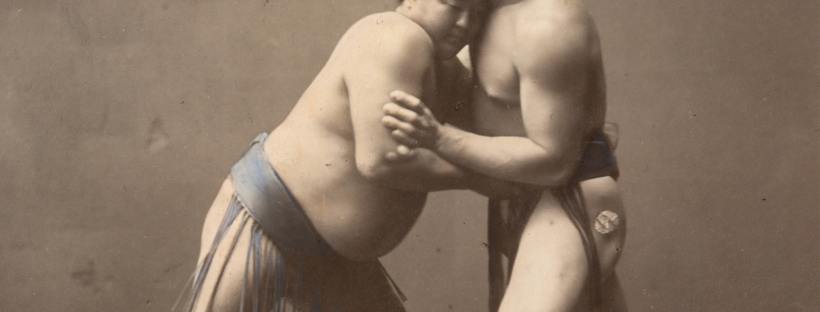
As I read and listen to arguments on both sides of an issue, they fall into two categories: the ontological and the utilitarian. Those terms make our arguments sound erudite and rational. In the wrestling match of ideas and opinions, we need shorter names that will fit on a wrestler’s robe: the Onts and the Utis. This fight has been going on a long time.
If you are an Ont, you argue about the nature of things. Most of the time, you try to gain the upper hand in defining an issue. If someone is new to this country and is hungry or homeless, you might argue that people who have just arrived here are not entitled to government benefits. They may be human beings, but you narrowly describe them as free riders, something which is of great interest to Onts, who see everyone else’s free riding, but not their own.
The Ont does not think city governments should tolerate homeless people on downtown streets. Onts have characterized homeless people as drug addicts and self-indulgent people who should get a job or sit in jail making license plates. Homeless people command a lot of city services, particularly visits to the local emergency room. Taxes support the well-being of free riders, a divisive issue with Onts.
Onts are concerned about moral hazard, the inducement to take on more risk when a person doesn’t have to suffer the consequences. If an Ont gave a homeless person some money, that person would probably spend it on drugs, putting themselves further at risk. The Ont is doing a noble act by not encouraging the ruinous behavior of a homeless person.
If you are a Uti, you think that the practical solution is the right solution in an imperfect world. You care about the homeless person because you care about yourself and can’t stand the thought that you live in a society that would permit such human tragedy. Do you go downtown and hand out some of your savings to those homeless people to show you care? Well, maybe that wouldn’t be practical, you tell yourself.
A Uti recognizes moral hazard but doesn’t crusade against it the way that an Ont does. People put themselves at risk because they don’t bear the consequences of their risky behavior. Yes, we’d like to minimize that, but we don’t want to put others at even more risk because the community ultimately bears the consequences of their risky behavior.
A Uti lives in the real world, an imperfect version of the imagined utopia of the Ont. Yes, things are supposed to work a certain way, but “frictions” – messy entanglements – interfere with the perfect. The Uti wields his scythe, cutting the harvest while the Ont hoists his pickaxe and joins the crusade against the unholy.
A thousand years ago, Pope Urban II called on Christians in Europe to free the Holy Land from the Muslim infidels. The Pope appears on his balcony above the faithful crowds at the Vatican. At his rallies, President Trump emerges from his big plane and speaks to the devoted crowd. Think of President Trump wearing a pope hat embroidered with “MMGA” – Make Me Great Again.
Like the crusades of old, 136 Congressmen joined the army behind Texas’ attempt to get the Supreme Court to nullify the electoral votes of four battleground states. The court told them to turn in their pickaxes and go home. An Ont clings to their conviction that their solution is right even when it is not practical. If challenged, an Ont redefines the issue.
The practical problem that an Ont wants to solve is how to be right on every issue. The Ont is a Uti in disguise. The Uti use an Ont maneuver when they define the practical solution as the right solution in an imperfect world.
When both wrestlers in any argument take their robes off, it is difficult to tell them apart. As the two wrestlers circle each other, bystanders cheer on their favorite fighter but it is the bystanders who get hurt in a tangle between two political heavyweights. Media companies profit hugely; we are both the unpaid performers and the spectators of the political and cultural circus.
Who knew that philosophy could be so much fun?
/////////////////
Photo by The New York Public Library on Unsplash
 Innocent Investor