January 4, 2026
By Stephen Stofka
If I am late for my bus because of a brief delay leaving home, will I miss the bus and be late for work? That depends on many factors. The bus might be a few minutes behind schedule. The driver could have been late to start his run because he forgot something at the terminal. Road construction or an accident might have delayed the bus before it got to my stop. Let’s say that the bus is on time. I miss my bus, I’m late to work and my boss is displeased, but I am not to blame if I live in a deterministic world. The things that didn’t happen are as much to blame for my being late as the things that did happen. The boss cares only that I navigate the public transit system so that I arrive on time. I am responsible for a certain outcome, being on time for work. We are using different philosophies to assess my lateness.
Last week I took a walk in the idea space that lies between libertarian free will and fatalism. This week I want to explore the domain of moral responsibility and see how the two connect. Libertarians postulate a self, a soul, some kind of animating force in each of us that makes choices in a free and rational manner. The choice is not necessarily when the outcome occurs. Take the case of drunk driver. At the time he hit a pedestrian or bicyclist, his senses and judgment were impaired. If he freely chose to drink and to the point of intoxication, then he is morally responsible. If someone spiked his drink or gave him a drug without him knowing it, then he is probably not responsible.
On the opposite end of that idea space is fatalism, the idea that all that occurs is destined by fate, some uberforce that is the agent of that destiny. John Calvin (1509 – 1564) preached that God knew whether a person was saved before they were even born. Calvin is classified as a theological determinist. To me that feels like fatalism, that people are not responsible for their actions, but Calvin insisted that choices did matter and that people were morally responsible for their actions. If God is omniscient, omnitemporal and omnipresent, then all of reality is a replay.
In a 2014 blog post, James N. Anderson uses the term divine determinism and explores several varieties of determinism and how Calvinism differs from fatalism. A fatalist would argue that something will happen regardless of what we do. Calvin argues that we are the means through which something occurs. God knows the future and allows it to happen although he could change it if he wanted to. Perhaps he did change it. We will never know. I think Calvin might liken God to an author who determines the path of his characters toward the ending of a novel. The characters in the novel are the means through which the author arrives at the ending. If we are characters in a divine novel, I think our moral responsibility is limited.
The philosopher Frederick Nietzsche rejected both free will and moral responsibility. The first was invented and the second was a form of self-hatred. He was a determinist who believed that instincts, upbringing and physiology were the root cause of our actions. In a 1930 New York Times op-ed, Albert Einstein expressed a belief in a strict causal determinism. In the opening line, he wrote “Everything that men do or think concerns the satisfaction of the needs they feel or the escape from pain” (Source). In his 2023 book Determined: A Science of Life without Free Will, neuroscientist Robert Sapolsky argued the case against the concept of free will, echoing Nietzsche and Einstein but with much more neurological evidence (Source). He analyzes free will from a neurological perspective, at the level of electrical signals crossing the axon-dendrite junction of nerve cells. This reductionist view seemed too mechanistic to me but the book contains many surprising research findings.
I will review the two varieties of determinism, hard and soft. Sapolsky included these at the start of his book. The first is that the world is deterministic and there is no free will. Sapolsky calls this hard incompatibilism, as in incompatible with free will. In last week’s post, I referred to this as hard determinism. Sapolsky advocates this position. A second type of determinism is compatible with free will, what I called soft determinism. Most philosophers and legal scholars are of this type, according to Sapolsky.
Sapolsky also discusses the intersection of free will and moral responsibility. The most popular position holds that there is free will and moral responsibility. Some claim that there is no free will and therefore, no moral responsibility. Sapolsky favors this position and distinguished moral responsibility from legal responsibility. There is a practical use of punishment as a deterrent to future unwanted behavior. Another intersection also claims no free will but people can be held morally responsible for their actions. The last position is an outlier and admits free will but not moral responsibility.
Does finding a solution to any problem depend on knowing the cause of the problem? We may intuit a solution without pinning down a cause. In his book The Matter With Things: Our Brains, Our Delusions and the Unmaking of the World, British psychiatrist Iain McGilchrist quoted the famous mathematician Carl Friedrich Gauss “I have had my results for a long time; but I do not know yet how I am to arrive at them.” In The Matter With Things and a previous book The Master and His Emissary, McGilchrist examined the roles that each side of our brain plays as we navigate the world (Source). If each side of our brain perceives and engages with the world differently, where does moral responsibility lie?
The right brain understands events and facts within context and experience, a practical wisdom similar to Aristotle’s phronesis. The left brain does not. It extracts those events and facts from their context in order to form a model, a theory of the world. It is the right brain that applies those theories to the different contexts we encounter each day. The left side processes text; the right side comprehends the meaning and context of the text. While there are similar patterns in perception and decision making among individuals, the synergy between the two sides of our brain is creative and unique to each individual. Choices flow from perception. McGilchrist rejects biological determinism.
So much of what we experience is a web of complex causes. Outcomes may depend on our frame of reference. Here’s an example. In normal time, a photo finish in a horse race might look like a tie. Before the introduction of high speed cameras, human judges decided the winner. Sometimes there were arguments over the winner and some races were declared a “dead heat,” or tie. In 1937, the Del Mar Thoroughbred Club in Hollywood featured a slit camera pointed at the finish line and was able to describe the finish in fractions of a second (Source). The causes of the horse’s win are too numerous to count. In reviewing film of the race, some might point to a hesitation or a slip as the losing horse rounded the final curve. Was it the condition of the track or the horse’s competitive spirit or its mood? A complete identification of a multi-causal event is improbable, if not impossible.
Instituting a standard of legal responsibility must incorporate complex causality and our decision making in the face of that complexity. In our legal system, instances of injustice are more frequent than we would like to admit. Governments decide legal responsibility but individuals and private institutions decide moral responsibility. Advocacy groups lobby lawmakers to make their sense of moral responsibility the legal standard for everyone. If someone is to blame, some government body should impose a punishment as a deterrent. If there is praise, that behavior should be rewarded.
Philosophers, ethicists and legal scholars might express a coherent philosophy of free will, determinism or fatalism, but we often utilize versions of all three philosophies in our daily lives. Many of us inhabit the space between two pure concepts. There are degrees of free will and moral responsibility that we adapt to varying circumstances. We offer excuses to evade the blame for an incident, but hold others responsible if they have had an impact on our well being, particularly if that impact is negative.
The 19th century poet Walt Whitman embraced the complexity of our contradictions, beliefs and experiences when he wrote in Song of Myself, “I am large, I contain multitudes.” Do you believe that we have free will? Is there justice in holding people morally accountable for their actions? I hope to see you next week.
//////////////////////
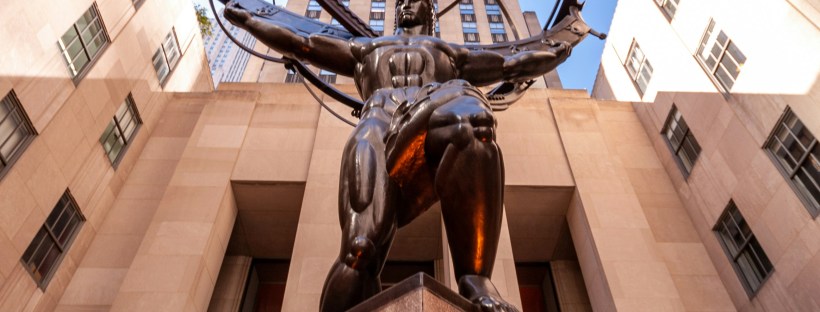
Photo by David Vives on Unsplash

 Innocent Investor