Cause and Effect

May 26, 2024

by Stephen Stofka

This week’s letter is about the causes of inflation. Inflation can be easily described as a mismatch between supply and demand but that is a tautology that does not explain how the mismatch occurred. For hundreds of years, scholars and academics have identified various components of inflation’s causal web but identifying a primary cause has inspired enthusiastic debate. In the past century, economists have built sophisticated mathematical models which failed to predict a subsequent episode of inflation or predicted an inflation that did not occur. Economic models predicted that large government support during the financial crisis fifteen years ago would lead to higher inflation. It did not. Some economists were surprised at the extent and strength of the inflationary surge following the pandemic. In hindsight, turning off the world’s economic supply engine for even a short time was likely to have a strong effect on prices.

In The Power of Gold, Peter Bernstein (2000) recounts the causes that sixteenth century scholars gave for the persistent inflation in Europe during the 1500s. Those factors included “the decline of agriculture, ruinous taxation, depopulation, market manipulation, high labor costs, vagrancy, luxury and the machination of businessmen” (p. 191). Five hundred years later, most factors are relevant today in an altered form. With more sophisticated analytical tools, economists have developed a better understanding of these causal influences but that understanding has not led to better inflation forecasting. These factors can be grouped into those that affect supply or demand. Missing from that list was war, a common cause of inflation that distorts both supply and demand.

Prior to the severe cooling of the Little Ice Age in the 1600s, England and northwest Europe experienced a cooler climate that affected harvests. In an economy that relied mostly on agriculture, a poor harvest, or decline in agriculture was a supply constraint that pushed up prices. The demand / supply relationship is a fraction that helps explain a change in price. A lower supply, the denominator in that fraction, equals a higher price. Repeated waves of the plague and other general pandemics led to a depopulation that reduced the work force and pushed up the subsistence wages paid to workers. Employment in the U.K. has still not recovered from pre-pandemic levels, contributing to slightly higher inflation in the U.K. compared to the U.S.

High labor costs are the essence of a cost-push theory of inflation. When there is not enough supply of labor, workers are able to command higher wages. In many businesses, labor is an employer’s highest cost. Because employers markup all production costs, that markup increases the rise in prices. If employees get an extra $1 wage and the employer marks it up 50% to cover operating expenses, required taxes, fixed investment and profit, then the price will rise $1.50. The additional wage income will increase demand, resulting in a wage-price spiral that further exacerbates inflation. Any policy that reduces the supply of labor can be included in a cost-push theory of inflation.

Vagrancy, or homelessness, was a new phenomenon in the 16th century as Europe emerged from the feudal system in which workers were bound to the properties they cultivated. Policies that tolerated idleness of any sort reduced the work force and gave workers more bargaining power. Scholars of that century would be puzzled by modern day unemployment insurance which “rewards” workers for idleness. The mathematics of probability and risk that makes any insurance program feasible was barely in its infancy. By the late 17th century, Blaise Pascal and Pierre de Fermat had developed probability analysis, giving pools of underwriters gathered in coffee houses near London’s Royal Exchange the mathematical tools to sell insurance policies on many risky events (Bernstein, 1996, 63, 90).

Ruinous taxation consisted of import taxes and the debasement of hard metal currencies by the sovereign as a substitute for taxation. Import taxes on necessary commodities increased production costs, creating a cost-push effect. To repay debts incurred during war campaigns, rulers debased the currency by mixing base metals with gold or silver. In the 4th century B.C., Dionysius of Syracuse in Sicily had all the coins in his kingdom restamped to double their value so he could pay his debts (Bernstein, 2000, 48). Monetarists claim that an excess supply of money is the root cause of inflation. The economist Milton Friedman, never one to equivocate, stated flatly that inflation was “always and everywhere a monetary phenomenon.” In the Wealth of Nations, Smith (1776; 2009) noted that gold discoveries in the Americas had driven prices higher in England. A higher supply of money of any form will increase demand so this root cause is a subset of demand-pull theories of inflation.

Popular and scholarly opinion often points an accusing finger at the business class, whose conspiratorial machinations are thought to be responsible for rising prices. Historian Barbara Tuchman (1978, 163-165) described the power that merchants had acquired as the Third Estate under feudalism in 14th century France. Because many merchants were free citizens of a town and not subject to the rule of a noble, they enjoyed wealth and privileges like that of nobles, and at the expense of the workers who regarded them with scorn and envy. In Part 1, Chapter 10 of the Wealth of Nations, Smith wrote “People of the same trade seldom meet together, even for merriment and diversion, but the conversation ends in a conspiracy against the public, or in some contrivance to raise prices.” Responding to the global inflation following the Covid-19 pandemic, some op-ed writers and Twitter threads were convinced that collusion by business interests was the primary cause of the inflation.

The reasoning and analysis by thinkers of centuries past did not include the role of expectations in fostering and feeding inflation. Expectations are a key part of some prominent models because supply and demand operate on different time scales. The companies that make up the supply chain must anticipate the level of demand for a product or service before the demand manifests. Each year, the risk of being wrong increases in an economy marked by technological change and rapidly evolving tastes. Inflationary expectations needs a bit more space and will have to wait until next week. Have a good holiday weekend!

//////////////////

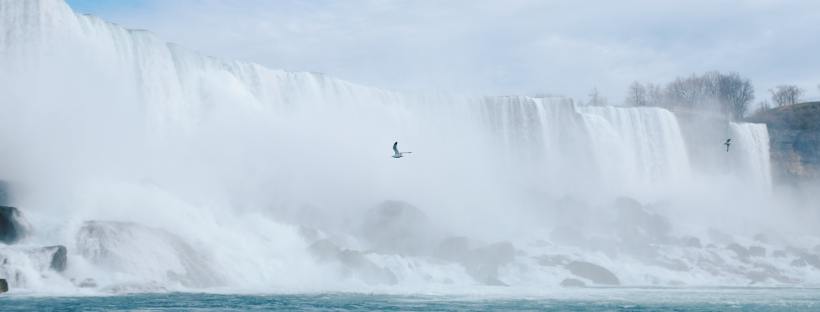
Photo by Elias Kauerhof on Unsplash

Keywords: expectations, money, taxation, unemployment, supply, demand, cost-push, demand-pull

Bernstein, P. L. (1998). Against the Gods, the Remarkable Story of Risk. John Wiley & Sons.

Smith, A. (2009). Wealth of Nations. Classic House Books.

Tuchman, B. W. (1978). A Distant Mirror: The calamitous 14th Century. Alfred A. Knopf.

Money – the Shape Shifter

December 10, 2023

by Stephen Stofka

This week’s letter is about public goods and the characteristics of public goods. I’ll discuss whether money or a digital currency is a public good. I’ll explore the four types of goods as economists classify them. These properties can enrich our understanding of some contentious debates. Hop on board as we tour the safari park of economic ideas.

Economists use two criteria to classify goods: whether they are rival and whether they are excludable. Rival means that one person’s consumption of a good lessens another person’s consumption of the good. An excludable good means that there is a feasible mechanism to prevent someone from consuming a good. A private good is both rival and excludable. A public good is both non-rival and non-excludable. It helps to look at public goods from a cost perspective. The marginal cost of providing the good to one more person is practically zero. The marginal cost to prevent someone from consuming a public good is very high.

An example of a public good is the national defense. One person’s protection from attack has little if any effect on another person’s protection. A country cannot practically prevent someone from being protected. Another example is firework displays. Although we call the street out in front of our house a “public street,” it is a toll good or club good according to these characteristics. Once built and maintained, the cost for one more driver to use the road is zero so it is non-rival just like the national defense. But it can be made exclusive at a reasonable cost by restricting access. A toll road is an example. A city makes a street public by decree, not by any characteristic of the road. A decree can be undone as when a city converts a city street to a pedestrian mall.

Another type of good is rival but non-exclusive. These are called pooled goods. A classic example is fishing in the ocean. The fish that someone catches are no longer available to someone else so they are a rival good. However, it is difficult and costly to prevent someone from fishing in the ocean. Pooled goods typically include natural resources or game animals. A government manages the depletion of the resource by issuing licenses and imposing fines. Overfishing of the world’s oceans has been a contentious issue for decades.

Governments have managed the problem of pooled resources by selling a property or use right to a private owner. The manager restricts access to the resource and charges a fee to users of the resource, effectively turning a pooled good into a toll good. A use right might be in the form of a 99 year renewable lease or a public-private partnership where a private company manages a park or other natural resource. 

These characteristics can provoke some lively discussion. For instance, is money a public good? It might seem so. It costs almost nothing to make another $1 of currency. But providing the next $1 of currency requires billions of dollars of legislative and judicial debate because public spending is rival. If that $1 is spent on one cause, it cannot be spent for another project. If transferred to one person, that same $1 cannot be given to another person. Is it excludable? Social spending programs are based on criteria that exclude some while entitling others to the benefits of the program. We argue so much about “public” spending because the spending itself has characteristics of a private good. It is rival and excludable. Once built an air defense system might act as a public good, providing non-excludable protection. The spending itself is not a public good.

Let’s follow the path of a tax dollar. It went from a private party through a banking system that restricts access to money resources, then into a government pool where it became an indistinguishable unit of tax revenue, a pooled good, then became private again when the tax dollar was spent or transferred to someone. If spent, the use of the good or service became public in some sense. An air defense system or the building of a public library, for example. If transferred to a person, the money was spent in the private economy for goods and services like food and rent. The  transformation of private dollars to public pot and back to private dollars is accompanied by a lot of heated debate.

The money supply has characteristics of a pooled good although it is not a natural resource. In circulation it acquires the characteristics of a natural resource, a good that has many access points. A government manages the money supply like a pooled resource. It licenses out the ability to create money to member banks, imposing some regulations and trusting that the discipline of gain and loss will cause banks to act prudently when making loans that increase the money supply. However, banks don’t just loan money to individuals and businesses. They loan money to financial institutions who loan money, thus magnifying the power of the money-creation process.

Money in the economy acts like a magnetic field in a giant turbine. The turbine turns as long as the magnetic field keeps changing. Money has the characteristics of a private good in exchange, then a pooled good in taxation and a toll good in the banking system, and then a private good again. Money can buy public goods and services but can’t assume the characteristics of a public good. Like money, a digital currency like Bitcoin has an exchange power between private parties that relies on the seller’s willingness to accept payment in Bitcoin. But it cannot act as another type of good because the government refuses to accept Bitcoin as a payment for taxes. Doing so would interrupt its control of the money licensing process. Money then becomes an intermediary in a Bitcoin exchange, like the Universal Translator on the original Star Trek TV series. Money is adaptable to each type of good for which it is exchanged. That adaptability gives money power, a power that governments have abused in centuries past, giving people a cause for concern.

///////////////

Photo by Richard Horvath on Unsplash

Keywords: private goods, public goods, toll goods, club goods, private goods. Bitcoin, digital currency.

Money Exchange

August 6, 2023

by Stephen Stofka

This week’s letter contains some idle thoughts on the exchange of money. Imagine a visitor from outer space who observes the exchange of cash for a $5 ice cream cone at a store. The buyer starts eating the ice cream. The store clerk puts the piece of paper in a black box, the cash drawer. It is clear to the visitor that the buyer has received something useful. What is not clear is what the store clerk received in exchange. The visitor has learned that creatures throughout the universe give up something in response to a reward or a threat. If the piece of paper was a threat, the clerk did not seem alarmed when the buyer offered the piece of paper across the counter. The visitor reasons that the paper is an energy packet which the clerk will consume later. Perhaps the clerk can put the paper into water and it will become food.

The visitor from outer space has realized an essential aspect of money. It contains potential energy that can be released immediately and exchanged for a good or service. It’s like an electrical capacitor ready to deliver an energy packet. We call that exchange energy purchasing power. Immediate release means that money has no maturity period, or a maturity of 0. A one-year CD cannot be spent because it has a maturity of one-year. To spend it, I need to wait until the one year is over or convert the CD to cash and receive a reduced amount, a penalty for early withdrawal.

The charge on that money capacitor can increase or decrease. We use the terms deflation and inflation for the increase and decay of money’s purchasing power. Inflation measures the percent of purchasing power lost over a period of time and that percentage lost cannot be more than 100%. In other words, a $1 bill cannot lose more than $1 of purchasing power. There is no theoretical limit to deflation, the increase in money’s purchasing power.

We use the terms yield and discount rate for the increase and decrease of money’s nominal value at some future time. These rates of change in purchasing power reveal another aspect of money – an exchange of time. What is time? A container of probabilities and that involves risk. Instead of consuming the ice cream cone, let’s say the buyer left the ice cream cone in a freezer for a period of time. What is the chance that some random power outage occurs and the ice cream melted while the freezer was off? When the freezer is opened, will the cone of ice cream be intact and ready to enjoy or will it be a discardable mess of ice cream protoplasm? Readers will note the analogy with Schrodinger’s thought experiment about a cat in an unopened box containing a life-threatening amount of radioactive material.

A lottery winner must decide between a series of payments and a lump sum payment that is far less than the nominal amount of winnings. The difference between now consumption and future consumption is called the discount rate, which includes a rate of risk that the winner does not live to receive all the payments. Social Security allows people to claim benefits at age 62 but the monthly payments are substantially lower than someone who waits until full retirement age. The discount rate is about 8% per year, almost the average annual return on the stock market. The risk is that a retiree dies prematurely and leaves money on  the table, so to speak.

There is no objective or time-invariant value in an exchange of energy. The exchange value of time varies by person and circumstance. In case of death or injury, the insurance industry calculates an average annual loss of income, or purchasing power, multiplied by an average estimate of years remaining in a person’s life. Ken Feinberg worked pro bono as the master of the 9-11 Victim’s Compensation Fund set up by Congress to resolve and expedite the many lawsuits that victims and their families would bring against the airlines. Feinberg agreed that an objective measure like years lost cannot compensate for the subjective loss of a life to a victim’s family. Money cannot measure life.

The exchange of money for goods and services connects buyers and sellers to a tree of information. Transactions take two forms: those that are recorded or “witnessed” by a third party and those that are not. If a buyer uses a check or credit card to buy an ice cream cone, a bank records the exchange of money for ice cream. If the buyer uses cash, only the merchant and the buyer have a record. The merchant records a sale and the buyers gets a receipt if they ask. The merchant reports the sum of sales to a government agency for sales tax and income purposes. In the case of a food-borne disease the USDA will investigate the many branches of that tree, searching the vendors, distributors, packagers and growers to isolate the source of contamination.

The exchange of ice cream for money is a connection to a tree of production. The manufacture and storage of the ice cream involved a network of power plants to generate electricity, machinery and labor for production, as well as natural and artificial ingredients. The buyer has the purchasing power in her pocket because of some past exchange of energy as part of a production process.

The sidewalk and street outside a store connects a buyer to a tree of organizational authority. Some public entity had the ability to gather the resources to build that infrastructure. The use of those public facilities might have cost the ice cream buyer 30 to 40 cents in sales tax. Over decades metropolitan areas have attracted people because cities offer an economic bargain of public benefit for relatively small cost.

The exchange of ice cream for money connects the buyer and seller to a network of rules and expectations of behavior. The clerk won’t sing the Star Spangled Banner when she receives the money. She won’t do a magic trick with the ice cream. The buyer will not give a dramatic reading of the serial number on the $5 bill before handing it to the clerk. Exchange requires a tacit cooperation, an agreement to follow the rules.

As a child I learned that there was electricity inside the walls. The air I walked through and breathed was full of radio waves in addition to light and sound waves. There was literally music in the air, captured and translated by a portable radio. Today our cell phones interpret the microwave radiation emitted by hundreds of nearby cell towers. Our thoughts and senses are connected to each other as we walk through the information stream. The ultimate source of every bit of that information is the effort of another human being. For the monthly cost of a cell phone bill, we have access to that effort, that infrastructure, the taxing and regulatory authority that supports that exchange. The exchange of money connects our efforts, yet talking about money usually introduces dissension. We disagree about the distribution of money, the priorities of public spending and the principles of taxation. Then we blame money instead of ourselves.     

///////////////

Photo by Artem Sapegin on Unsplash

The Money Information Network

June 25, 2023

by Stephen Stofka

This week’s letter is about money, both conventional and digital, prompted by the news that Argentina’s yearly inflation just passed 100%, 25 times the U.S. rate of inflation reported a week ago. Let’s not confuse money and the banking system. Money exists within a banking system. The regimes, or set of rules, that govern that system are fluid but the institutions that manage that regime have evolved over centuries. The pillars of international institutions rarely crumble suddenly.

On Monday June 19, Bitcoin’s 24 hour volume was $10B, almost 2% of its $513B market cap. M1, the measure of transactional money like cash and checking accounts, was $18.6 trillion, about 36 times the market cap of bitcoin. Bitcoin’s algorithm changed the nature of money hoping that the adoption of Bitcoin would bypass the hegemony and inequities in the global banking system.

Satoshi Nakamoto, the pseudonym of the developer of the Bitcoin algorithm, understood the informational nature of money. Let’s explore that informational model. Economics students learn the three roles that money plays: a unit of account, a medium of exchange, and a store of value. The banking system manages a network of information databases. That’s the store of value function. That information is denominated in various currencies, the unit of account function. As a medium of exchange, access to that information is mostly guarded by a banking system that manages permissions. Our credit or debit card number is a password into that exchange.

Within this database model, cash is a permission-less and anonymous public information source that can be exchanged freely and (usually) confers a property right with that exchange. However, the availability and flow of cash is managed by central banks.  Satoshi designed Bitcoin to take advantage of those two characteristics of cash and avoid the negative aspects of central management, including the risk of inflation. To avoid a central gatekeeper, Bitcoin’s algorithm introduced a lot of nodes as gatekeepers. Those nodes formed a path of past exchanges which verified the existence of the funding source for an exchange.

Some entity had to keep a digital record of those exchanges, however. That has become a vulnerability in digital currencies because the exchange is also a broker, facilitating trades within its own exchange. Conventional securities are traded in an environment where the exchange, like the New York Stock Exchange, and the broker, like Vanguard, are entirely separate. Not so with digital currencies and that presents an opportunity for mismanagement and fraud. The implosion of the FTX exchange owned by Sam Bankman-Fried is a recent example. Until digital currencies can separate their broker and exchange functions, they are vulnerable to these shenanigans. Yes, the banking system is subject to mismanagement and fraud but the gatekeeper, the government, provides some recourse.   

Bitcoin is like a set of Christmas lights with many bulbs. If one goes out, a circuit may not complete and a transaction between two parties be recognized on both ends of the exchange. The banking system is like a network of traffic lights in a city. Traffic lights are permissions. Should one go out, a policeman will likely show up to manage those permissions and direct traffic. There is no recourse when a node in a digital currency block goes out or an exchange produces tokens to cover its trading losses.

Nations are their own banks and their security and welfare depend on that status. Wikipedia lists more than 150 central banks among the 195 countries in the world. The adopters of bitcoin and other digital currencies dreamed big but cannot overcome the political advantages of such a system. The dream of one-world currency may be destined for the same graveyard where the one-world government envisioned in the 1990s went to die. The hope that digital currency embodies will live on.    

////////////////

[20230625Lights.png]

Photo by Aedrian on Unsplash

Keywords: bitcoin, money, banking

The Money Cycle

March 5, 2023

by Stephen Stofka

This week’s letter is about money and a natural resource like water. The nature of money, its origin and history have long been a subject of lively debate. What similarities and differences does money have with water? Does an analogy help uncover some less apparent characteristics of money? I’ll start with the three purposes of money that every economics student learns: a medium of exchange, a store of value and a unit of account. Coincidentally, water has three phases, gas, solid and liquid, and in each of those phases has some of the characteristics of money. The quantity of money can expand. The volume of water in all its phases is fixed.

Ice stores the energy of water the way that money stores value. As freezing water locks together in a crystal lattice, it becomes its own container. Oddly enough, most ice exhibits a hexagonal form, an efficient material transformation in response to changes in temperature. Only 2.5% of the world’s water is freshwater and most of that is locked up in glaciers. Money’s store of value is contained within assets.

In Part 5, Chapter 3 of the Wealth of Nations, Adam Smith noted that people tend to hoard their capital, to lock it away from a government which has little respect for individual property – what he called a “rude state of society.” If merchants and manufacturers have confidence in a government, they are willing to lend it money because the debt of that government can be traded in the market as though it were money. It is an interest bearing money. He lamented the fact that too many governments borrowed money to finance war and taxed people to build infrastructure. He suggested that governments do the opposite – borrow as much idle capital as possible to enhance the productivity of a country and tax people to finance wars. There would be less war and more progress.

Like money, water vapor is a medium of exchange between sky and ocean, between sky and earth. It is in constant motion within the atmosphere because its density quickly changes in response to changes in heat. It carries the water from the ocean and drops it onto the land in a conveyer belt system called the hydrological cycle. When all the earth came together in one supercontinent called Pangea 250 million years ago, water vapor transported little moisture from the oceans to the interior of the vast continent and the land was mostly desert (Howgego, 2016). When businesses around the world closed their doors at the onset of the pandemic in March 2020, we became very aware that our society, not just our economy, depends on a cycle of exchange.

Money is a unit of account, a common denominator to add up all the various goods and services in an economy. We add up tons of wheat and corn and millions of hours of labor in terms of money. . While we often think of fractions as “this divided by that,” economists understand fractions as “this in relation to that.” A social scientist might question whether it is a good idea for people to think of their labor in relation to money, the common denominator. Sadly, our society judges our worth to society in relation to that common denominator, money.

Water has a density like money has a purchasing power. Water is at its most dense – its weight per unit of volume – at 39°F and that benchmark is standardized at 1 in the metric system. The density of water at 39°F is like the benchmark price that economists use when they compute real GDP. Its volume expands as it gets colder or hotter than that temperature, so it’s density declines. The most measurable changes come at higher temperatures; at 200°F, the density is .963. We often use the language of heat when talking about inflation. The economy is overheating, for example. When there is hyperinflation¸ society itself begins to change state, just as water does at the boiling point.

Changes in the market value of our assets can have a material effect on our sense of safety. We work hard and save only a small portion of what we earn. When the value of an asset declines, it seems to melt away as though it were a block of ice on a sunny day. We may get a sense of helplessness or anxiety similar to the feeling we have when we lose electricity and worry that we will have to replace all the food in our fridge.

Readers may have other insights into money based on this water analogy. Just as equations can expose relationships that we did not understand before, analogies can do the same.

////////////////////

Photo by Ryan Yao on Unsplash

Howgego, J. (2016, July 14). Travel back in time to the most extreme desert and monsoons ever. New Scientist. Retrieved March 3, 2023, from https://www.newscientist.com/article/mg22730300-600-travel-back-in-time-to-the-most-extreme-desert-and-monsoons-ever/

Money As Wave

February 5, 2023

by Stephen Stofka

This week’s letter is about money, a peculiar thing invented by people that has no intrinsic value unless exchanged between people. Unlike other goods, the consumption of money satisfies no human wants. Price is the thing on the left side of an equation. On the right side can be a physical quantity like a haircut or a quart of milk, or a less physical good like the satisfaction of a debt owed, or the title of ownership to a car. Money is the equal sign of that equation, the channel that connects the price information to real goods and services.

Many goods have two types of value – subjective and objective. A tomato’s subjective value depends on the needs, preferences, and resources – the circumstances – of the consumer. These circumstances vary with time. A consumer who is hungry and who likes the taste of tomatoes values a tomato more than a consumer who is not hungry or who doesn’t like tomatoes. The subjective value depends on a consumer’s resources. A consumer with a fridge can preserve a tomato longer and might value a tomato more than someone who has no cool place to store a tomato. A further element of subjective value is the intended use for the good. A consumer who wants to eat a fresh tomato might have different quality standards than someone who wants to puree the tomato for a soup or sauce.

The second type of value is objective, an intrinsic value of the good itself – the nutrients and calories a tomato provides, the chemical changes that it undergoes, the pests that the tomato harbors within its skin. Just as the circumstances of the consumer vary with time, the benefits or dangers of a good’s consumption can vary with time.  

Like the values of goods, the value of money has a subjective and objective component. The objective component is a decay in the exchange value of money on the left side of millions of exchange transactions. Economists measure thousands of prices each month and determine an average weighted price for a set of goods – a consumer price index. The annual, or year-over-year, percent change in that index is called inflation. It compares this month’s price index with the price index one year ago. Economists also measure the change in that percent change and the two sometimes get lumped together by the financial press. Inflation is like the odometer in a car. If I travel 50 miles in an hour, I have averaged 50 MPH but it is the speedometer that tells me my current speed, not the average over an hour. Too often the arguments on social media mix the two together. Imagine getting pulled over by a patrol car for speeding and explaining to the officer that your average speed for the past 15 minutes has been less than the speed limit. The officer cares only about your acceleration – the near instantaneous speed.

The value of money has a subjective component that depends on the user’s circumstances. Today-Money is that which is needed to satisfy current needs. Future-Money is savings. As prices go up, people tend to hold more money as a percent of their income to pay for living expenses. If a household spends 90% of their income on current needs, then much higher inflation rate might cause them to spend 100% of their income on expenses. A higher income household might spend only 60% of its income on expenses. The effect of inflation is lower for higher income households.

Savings is an exchange between two people in time, between a person today and that same person in the future. “You got to pay you,” we may be told when encouraged to save some of our paychecks. The first you is Today-You. The second you is Future-You, who will be grateful that Today-You was prudent. Future-You does no work yet enjoys all the sacrifices that Today-You makes, the extra work, the enjoyment of things not consumed in order to save. Future-You is truly the child of Today-You.

The financial system facilitates the exchange of money-value through time. In countries with a poor financial system, people place their savings in things, animals and children whose work or usefulness will provide for a person when they become less vigorous in their old age. A child may grow up with the moral and financial burden of having to care for their parents. In these pastoral societies, a child is considered a form of wealth.

Children in an area far from home or in a foreign country are expected to send a substantial part of their paychecks home to their parents or extended family. This moral burden drives young people to immigrate to another country where they can earn more money. Part of their earnings form the international flow of remittances which increased by almost 5%, according to the Migration Data Portal (2023). India, Mexico, and China were the top recipient countries in 2022, accounting for $310 billion of the $690 billion in remittances. This sum does not include informal or illegal transfers of goods and services between countries.

Money acts like a radio wave, conveying price information about the relative values of goods and services. It requires institutions to broadcast and relay that wave as it travels around the globe and through our lives.

////////////////////////

Photo by Pawel Czerwinski on Unsplash

Migration Data Portal. (2023, January 6). Remittances. Migration data portal. Retrieved February 3, 2023, from https://www.migrationdataportal.org/themes/remittances. The portal was established in 2016 as a data repository founded under the auspices of the United Nations. It collects central bank data through the World Bank and IMF.

House of Money

June 12, 2022

By Stephen Stofka

Economics students learn that money is a complex function, a multi-tool that plays three roles in our lives. Lawyers study the role of money in contracts. Psychologists study how our beliefs and personal history shape our distinct attitude to money. Our use of money embodies our expectations of the future and our perceptions of risk. The financial crisis demonstrated that money connects us and separates us. The struggle between cooperation and distrust is the foundation of our experiment in democracy.

Money is the Swiss army knife of most societies. As a medium of exchange, it saves us the cost of matching our needs. We can store our labor in a unit of money, then trade it for the things we want. The law regards an exchange of money as a “consideration” that distinguishes a contract from a gift. Current Supreme Court precedent has held that money is speech. Because we use money to store purchasing power, we want it to be a reliable container that doesn’t leak value. Money’s role as a unit of account requires legal institutions to administer the rules of that accounting.

We buy insurance to mitigate risk but to do so we are herded into risk pools based on age, sex or occupation. Those under age 25 pay higher car insurance premiums but lower health insurance premiums. Because they make less money as a group, they have a higher loan default rate and must pay higher borrowing costs. Roofers pay higher workmen’s compensation premiums than police. Heights are more dangerous than criminals. Before Obamacare, health insurance companies charged women of childbearing age higher premiums for individual policies (Pear, 2008). The premiums reflected the higher expected costs of pregnancy regardless of whether a woman had any intention of getting pregnant. We are Borg.

Companies may classify our risk profile but we have a unique relationship with money, a composite of personal experience and inclination. “Me” and “my” are appropriately contained in the word “money” because our attitude toward money is as unique as our fingerprints. In 1984, British psychologist Adrian Furman (1984) led a study to assess people’s attitudes toward money. The questionnaire included 150 questions grouped into five areas that probed the subjects’ beliefs, their political attitudes and affiliations, their sense of autonomy and personal power. An argument about money can be as complex as that questionnaire.

Many political debates involve money. Each party tries to gain control of the public purse to fund its priorities. After 9-11, the debate over money intensified. The hijackers had attacked a money center as a symbol of American hegemony. While Americans debated the justification for an invasion of Iraq, the budget surplus of the late Clinton years evaporated. For some voters, the choice was a stark one – spend money to blow up people in a foreign land or spend it to strengthen American communities. To calm his critics, Mr. Bush promised that Iraq would repay American war expenses with its oil revenues. This was one of several follies that turned voter sentiment toward Democrats in 2008.

The financial crisis showed us the complex nature of money and tested the values that we attach to money. In the last months of a flailing Bush Presidency, the crisis exposed the corruption, greed and stupidity of the country’s largest financial institutions. Billions of taxpayer money had created and fed a thicket of regulatory agencies that were either corrupt or incompetent. The crisis ignited a strong moral outrage that intensified when Democrats fought to pass Obamacare.

The debate may have ebbed during the decade that followed but the Republican tax cuts of 2017 reignited public disdain and distrust. While many American families struggled to recover from the crisis, the politicians and their rich patrons fattened their fortunes.

Money is the heart of the American experience. The American confederacy of colonies that had won independence from Britain could not pay its debts or borrow money. The writing of the Constitution was sparked by the urgent desire to resolve that crisis or risk becoming subjects again of a colonial power. To reach consensus, the colonies had to overcome their distrust of a central government with the power to levy taxes. The colonies distrusted each other and the regional coalitions that might take the reins of that central government. The founders built their distrust into the Constitution and its governing institutions. In grade school we learn them as “checks and balances,” a euphemistic phrase for distrust.

On social media we argue about the many aspects of money. Our experiment in democracy will be over when Americans stop having spirited discussions about money.

////////////////

Photo by Kostiantyn Li on Unsplash

Furnham, A. (1984). Many sides of the coin: The psychology of money usage. Personality and Individual Differences, 5(5), 501–509. https://doi.org/10.1016/0191-8869(84)90025-4

Pear, R. (2008, October 30). Women buying health policies pay a penalty. The New York Times. Retrieved June 7, 2022, from https://www.nytimes.com/2008/10/30/us/30insure.html