
March 16, 2025
by Stephen Stofka
This is part of a series on centralized power. The debates are voiced by Abel, a Wilsonian with a faith that government can ameliorate social and economic injustices to improve society’s welfare, and Cain, who believes that individual autonomy, the free market and the price system promote the greatest good.
In the park, Abel paused beneath an elm tree to study the new leaf buds emerging on the branches. He turned at the sound of Cain’s voice from the picnic table. Cain raised a seat cushion and motioned Abel over. Abel set the tray of two coffees on the concrete table inlaid with a chessboard. Abel said, “I didn’t know they had chess here.”
Cain frowned. “They used to provide sets, but the park office is closed. What do you have?”
Abel unslung his backpack, set it down and withdrew a white paper bag. “Burritos. This is a good idea, meeting outside on a nice spring day.”
Cain lifted a coffee from the cardboard tray. “Sugar?”
Abel nodded as he sat down. “In the bag. You know, we were talking about executive orders last week. You were comparing Trump and FDR. I was reading an article in Foreign Affairs this week called “The Path to American Authoritarianism” (Source – Levitsky and Way). They compare Trump’s strategies to autocrats around the world and they are similar.”
Cain pointed to his burrito. “Mild chili?” Abel nodded. Cain said, “I’m skeptical but go on.”
Abel continued, “Autocrats want to silence their critics, so they bring the media under control by hitting them with lawsuits. Trump has done that. Bezos and Zuckerberg have both settled lawsuits or the threat of lawsuits against the Washington Post and Facebook.”
Cain swallowed. “Trump sued both the Washington Post and the New York Times for defamation in March 2020 when he was running for re-election (Source – NPR). He sued ABC News in March 2024 when he was running for President again (Source – BBC). In office or out of office, the guy sues. It’s an election tactic.”
Abel replied, “Yeah, Trump has always kept lawyers busy, whether for him or against him. It’s just that between Election Day and Inauguration Day, when Trump took power, prominent media figures gave in.”
Cain shook his head. “I don’t think the White House has any more control of the media than it did when JFK was President. Here’s one example. To protect their access to the White House, the press kept JFK’s physical condition secret. Today, that would be a scandal. In that time, it was business as usual.”
Abel set his coffee cup down. “The authors of that article also talked about weaponizing the justice system to go after the political opposition.”
Cain shook his head. “FDR, JFK and Johnson weaponized the FBI. Is it OK when Democrats do it but not when Republicans do it?”
Abel shrugged. “You keep comparing the present to a time like sixty years or more in the past. The 60s and 70s introduced a lot of reforms to curb those abuses of earlier decades. Trump is undoing those reforms.”
Cain put his cup down on the concrete table. “Look, there are plenty of checks and balances in the system.”
Abel nodded. “Yeah, Levitsky and Way listed several. Let me think. There’s a small number of political appointees in the civil service. That’s one I can remember. The Senate has to confirm the heads of agencies. That’s another.”
Cain offered, “Lifetime tenure for judges?”
Abel replied, “Yeah, and staggered terms for independent agencies. Also, the military. Lots of laws to isolate the military chain of command from the political chain of command.”
Cain traced the rim of his cup with his forefinger. “So, a variety of boundaries that restrain a president.”
Abel shook his head. “But an autocrat systematically tries to break free of those restraints. He uses the tax system against his enemies. He rewards friendly businessmen and punishes unfriendly businesses.”
Cain interrupted, “You mean like Obama did favoring Solyndra? That was the solar panel company that got a lot of federal loans before it went bankrupt. Meanwhile, the Obama administration was imposing new regulatory burdens on the oil and gas industry (Source).
Abel frowned. “Solyndra’s business model did not account for the falling cost of making solar panels or the state support that panel manufacturers were being given in China. The Obama administration paid more attention to its own ideology rather than the economic and political facts. But that’s a common mistake. The financial crisis developed because policymakers like former Fed Chair Alan Greenspan was ‘blinded’ by his faith in the free market” (Source – video). People act based on their convictions.”
Cain shrugged. “Hmmm, good point. In fact, that’s a great argument for a minimum of regulation. Policymakers pay more attention to their ideologies when they make decisions. Or they favor their political friends. The Sackler family, the owners of Purdue Pharma, the makers of Oxycontin – they escaped responsibility for their actions for years (Source). They were generous contributors to both civic and political organizations. Policymakers on both sides of the aisle overlooked their role in the growing opioid crisis. Is that evidence of an authoritarian state or just plain old ‘machine’ politics?”
Abel replied, “I think the authors would say it’s a matter of degree. One or two examples of favoritism, or judicial prosecution does not indicate a slide into authoritarianism. It’s an accumulation of evidence. I guess its like in civil court cases. It’s a preponderance of the evidence.”
Cain argued, “But by then, when the evidence has accumulated, it’s too late. The autocrat has taken over the systems of government. Right? So many things in life are a matter of degree. ”
Abel nodded. “I guess you’re right. That’s why I often hear some version of the ‘slippery slope’ argument. Is the banning of the sale of bump stocks an abrogation of second amendment rights and a step on the road to tyranny or is it a reasonable response to the invention of digital printers?”
Cain crumpled his napkin. “It depends on my political bias or passion for a particular issue. People on the opposite side of an issue or the political aisle are more likely to see a single incident like bump stocks as a threat to individual freedom.”
Abel gave a short laugh. “It sounds like we are agreeing on something.”
Cain smiled. “I think I speak for a group that is naturally skeptical of the power of group thinking. A person might have what sounds like a good idea. Then it gets distorted. Take Darwin’s idea of evolution by natural selection. Policymakers here in America used that idea to justify eugenics. An earlier theory was Lamarckism, the idea that use or disuse of a part of the body was passed on to succeeding generations (Source). Policymakers justified taking American Indian children from their families and training them to be ‘civilized.’ They would then pass those traits on to their offspring.”
Abel looked up as a crow flew into the tree near them. “Yeah, Levitsky and Way stress how powerful a government is. There has to be checks on that power to protect people and businesses. The richest nations are capitalist because it’s an economic system that minimizes the role of government.”
Cain nodded. “I like that. Government needs to be smaller than it is.”
Abel replied, “That’s easy to say, but imagine you are trying to apply for Social Security or resolve some problem related to that. Some things have to be handled in person. Musk and DOGE are planning to close fifty Social Security offices (Source). So, you’ve worked a lifetime. You’ve paid taxes into the system, and you just want someone to handle the problem. How fair is that?”
Cain shrugged. “The way you put it, no, it’s not fair. Most people use computers or smartphones. A person with a problem could just start a chat with a Social Security representative. We need to design apps that make such interactions easy. Facial recognition, maybe some other biometric identification tools for security. Private institutions like banks have been closing branches as many people migrate to online banking. Government needs to do the same.”
Abel set his coffee cup down. “Last week you said that Americans accept the reality that politicians lie. As we said goodbye, you said I didn’t have enough faith in the American people. Those two sentiments contradict each other, if you ask me.”
Cain shook his head. “I didn’t mean that Americans are cynical. We guard our freedom. We’re more suspicious of power than European democracies, I think. We’re more feisty and non-conformist compared to European sensibilities. I think the Democratic Party has become more conformist in the past decade or so.”
Abel frowned. “Trump has taken over the Republican Party because they fall in line. They champion the ‘party over person’ idea. Even if you don’t like a politician personally, vote along party lines because a unified party is how policy gets enacted in this country. Trump could never take over the Democratic Party because it’s like herding cats. Like Trump, Obama was a charismatic leader, and he struggled to corral the diverse sentiments in the party.”
Cain nodded. “OK, good point. But no one is requiring people to vote Republican. The woke movement is all about conformity to certain language like the use of pronouns. Then they make policies that require students and employees to take the DEI classes. It’s indoctrination. That’s what Huxley warned about in Brave New World (Source).”
Abel scoffed. “In 1945, Sinatra made a short film denouncing racism that was called The House I Live In (Source – video). Was that DEI training or some mind control? No. It was in response to the prejudices when soldiers from different faiths and backgrounds came together to fight World War 2. This country is big. A lot of different people, races, religions. It’s about not putting up with bigotry and sexism when we encounter it on college campuses or some corporate headquarters in Manhattan.”
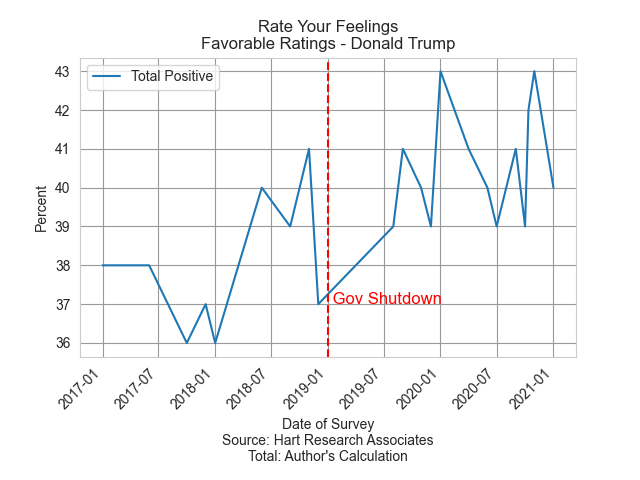
Cain argued, “As to diversity, there are a lot of factions in the Republican Party. Trump averaged about 40% approval ratings in his first term (Source). Why? Because the party is not conformist. There’s MAGA and traditional conservatives like Mitt Romney and the libertarian Rand Paul faction and the Freedom Caucus. Under Trump’s leadership, the party is now attracting more voters from the Democratic side. Republicans are against DEI because it’s forced indoctrination.”
Abel sighed as he closed the paper bag that had held their breakfast. “I look forward to these weekly talks because they challenge my viewpoint. I just don’t think we are going to get anywhere on this. DEI is about acting with some civility and responsibility, not some futuristic mind control.”
Cain smiled as he stood up. “It’s the slippery slope, isn’t it? Some see DEI as a step to an authoritarian government. Others see it as benign.”
Abel slid to the side on his bench seat. “Some see Trump’s actions as a path to autocracy. Some see it as a remedy for a bloated bureaucracy. Hey, at least we found some agreement this week. That’s a step forward.”
Cain laughed. “Is that one step on the road to total agreement? Hey, I’m glad we got together here in the park. I’ll see you next week.”
Abel waved. “Take care.”
///////////////////
Image by Chat GPT in response to the prompt “draw an image of a group of people sliding down a slippery slope with alarm on their faces.”




 Innocent Investor