October 20, 2024
By Stephen Stofka
This week’s letter takes an economic perspective on our vote. Economists classify goods into four categories: private, toll, public and pooled. Two characteristics distinguish the four categories: whether a good is rivalrous and excludable. A quart of milk is rivalrous. My consumption of that quart precludes someone else from consuming it. We typically exclude goods by attaching a price to them. National defense is a non-excludable good because it is not possible to prevent a person from enjoying the benefits of national defense.
A private good is both rivalrous and excludable. A toll good is non-rivalrous but excludable. A toll highway is a clear example. One person’s use of the road does not prevent another person from using it. The entries to the highway are usually controlled in some way so that people have to pay to use the highway. A public good is non-rivalrous and non-excludable. Again, national defense is a clear example of this type of good. The last category are pooled goods which are rivalrous but non-excludable. Ocean fishing is an example. One person’s catch reduces the number of fish in the ocean so that the good is rivalrous. There is no practical way to limit or exclude access to the ocean. These classifications can help economists analyze the dynamics of a particular market (Fulton & Gray, 2007).
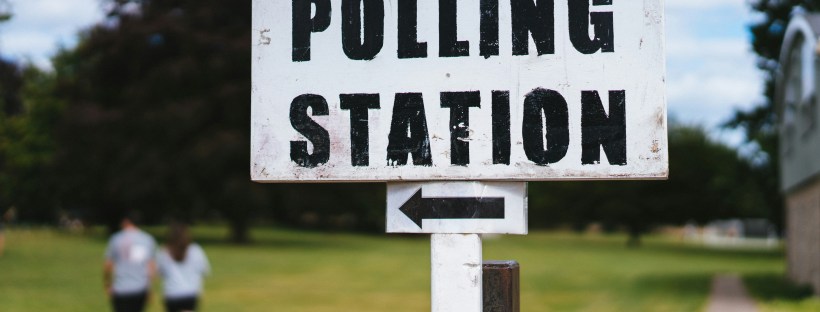
Given that background, what type of good is a vote? There are two aspects here: the vote itself, and the mechanics of voting. The vote itself is a toll good, excludable but non-rivalrous. One person casting a vote does not effectively reduce another person’s ability to vote. However, the mechanical act of voting in person is rivalrous. There are time restrictions when polling stations are open and only one person can use a voting machine at a time. Mail in voting removes the time restrictions of polling stations. Early voting expands time restrictions. Both give voters more freedom and convenience. Donald Trump and his allies in the Republican Party want to abolish mail in voting and restrict early voting to control access more effectively to the vote.
How does that work? Voters in rural and suburban areas, who are more likely to vote Republican, typically have fewer registered voters per polling place than voters in dense urban areas. In the 2016 election, the Election Assistance Commission reported that half of jurisdictions had fewer than 1000 registered voters per polling place. A quarter of jurisdictions reported twice that many voters per polling place (p. 4). Voters in those districts do not have equal access to the polling stations where they can cast their vote. Mail in voting and early voting help to equalize the mechanical effort of casting a vote.
Presidential elections in the U.S. are conducted in a variety of ways in the 10,000 voting districts in the 50 states. In a 2010 article in the Election Law Journal, Spencer and Markovits (2010) noted a few examples to show the breadth of that variety. In Wisconsin and Michigan, each local district controls their own election procedures. In Oklahoma and Washington, elections are managed by officials who are all state employees. The Election Assistance Commission reported nearly a 117,000 polling places in the 2016 election.
Many people might be surprised to learn that there is no right to vote contained in the language of the Constitution. In the 2004 Presidential election, voters in Ohio, Pennsylvania and Florida endured long lines to cast their vote. In some urban precincts in Ohio, voters waited ten hours to vote, and the long wait was especially prevalent in predominantly black districts (Powell & Stevin, 2004). The following year, Illinois, Ohio and Utah passed laws permitting early voting. Today early voting is permitted in all but three states – Mississippi, Alabama and New Hampshire. (See this map at CBS News). Many “red” states in the south permit early voting to all voters but restrict mail-in ballots. Thirty-seven states permit both early voting and mail-in ballots.
For decades, mail-in ballots were often used by Republican voters. Stalwart Trump supporters like Senator Ron Johnson of Wisconsin supported early voting. Trump and his allies now want to roll back state efforts to improve access to the vote. Why? Trump believes that early voting cost him the 2020 election. Winning is Trump’s only principle. Any election rule that advantages his supporters and disadvantages his opponents is a winning strategy. The Brennan Center for Justice tracks changes to election law in the states. Since the last election, states have passed more measures that expand access to voting than restrict access. Should Trump win the election this year, he will champion election integrity as a pretense to roll back laws that expand access to voting. Winning – and staying out of jail – is all that matters.
///////////////////
Fulton, Murray, and Richard Gray. 2007. Toll Goods and Agricultural Policy Saskatoon, SK: Canadian Agricultural Innovation Research Network. issue brief.
Powell, M., & Stevin, P. (2004, December 15). Several factors contributed to “Lost” voters in Ohio. Washington Post.
Spencer, Douglas M., and Zachary S. Markovits. 2010. “Long Lines at Polling Stations? Observations from an Election Day Field Study.” Election Law Journal: Rules, Politics, and Policy 9(1): 3–17. doi: 10.1089/elj.2009.0046. Available at: https://www.liebertpub.com/doi/epdf/10.1089/elj.2009.0046. The authors cite a field study of polling stations in California, a state with a strong Democratic majority. The study found that 11% of registered voters who did not vote in the 2008 election, indicated long lines as the primary reason for their not voting.
 Innocent Investor