Alliances of Reasoning

July 14, 2024

by Stephen Stofka

This week’s letter is about expectations and alliances of judicial reasoning and power. I will begin with some background on the judiciary, then follow up next week with a closer look at the rationales that various schools of judicial reasoning employ to reach their desired conclusion.

The legislature has 535 individual opinions of what is fair and just, as many interpretations of statutory and Constitutional text, and many prescriptions of what should be done to address a problem. Party leaders must collapse those many dimensions into a singularity, a sheet of paper that becomes law. As laws emerge from the halls of Congress, they become a multi-faceted work of collaborative reasoning. Businesses hire lawyers to reinterpret a piece of legislation in their favor, or to defend against regulatory action. The executive agency responsible for administering or enforcing the law has its own opinions of what the law says and how it should be executed. Judges in federal district courts weigh in with their opinions as they rule on cases and controversies brought before them.

Those opinions may be challenged in federal appellate courts then submitted to the Supreme Court asking them to take the case for review, a petition  called a “writ of certiorari.” Of the many cases submitted, the Court accepts only a small number – 62 in the 2023-24 session, according to Ballotpedia. Lawyers for the plaintiff and respondent argue their opinions to the Court, which reviews those arguments as well as amicus briefs submitted by advocate groups on either side of an issue. Again, many opinions collapse into a judgment won by a majority of the Court’s justices. In some cases, they simply refer the case back to a lower court with a clarifying interpretation of a legal area that the lower court should include in its consideration of the case.

The Constitution contains three articles that establish the Legislature, Executive and Judiciary. Article 3 authorizing the Judiciary is only 373 words, less than the word count required of a fourth-grade essay. Article 2 establishing the Executive branch is three times longer. Article 1 instituted the Legislative branch and is almost eight times as long. The principle of judicial review, that the courts can decide whether portions of laws passed by the legislature conflict with the Constitution, is not cited in Article 3. How did the Judiciary assume that plenary power?

The ruling in an 1803 case titled Marbury v. Madison decided that Marbury, the plaintiff, did not have standing to sue Madison, the Secretary of State under Thomas Jefferson. The decision was less noteworthy than the reasoning supporting the decision. The Court, headed by Chief Justice John Marshall, ruled that a portion of the Judicial Act passed in 1789 conflicted with Article 3, Section 2 of the Constitution. In that decision, Marshall assumed the right of the Court to have the final word on the meaning of statute and Constitutional text. A strict textualist interpretation of the Constitution would argue that the Marshall court had found a clever way to amend the Constitution. In recent decades textualist interpretations of the law have gained popularity among conservative justices. This branch of analysis emerged as a reaction to the purpose-oriented jurisprudence typical of the Court’s opinions in the sixties and seventies.

After WW2, voters gave Democrats an average 81 seat advantage in the House (Kraft & Furlong, 2021, p. 345), an effective mandate. In the current House, Republicans have only a 7-seat advantage. Many House members were World War 2 veterans, determined that the sacrifice of their military brothers in the fight for freedom would not be subjugated to racial practices that suppressed the freedoms of Black people, including those soldiers who had fought in the war. In 1962, Rachel Carson’s book Silent Spring focused popular attention on the sewage and dangerous chemicals that contaminated the nation’s air and water. As veterans gained seniority in Congress, they were able to pass civil and environmental reforms. In a surge of anti-Republican sentiment following the Watergate scandal, voters in the 1976 election handed Democrats a 150-seat advantage in the House.

A Constitution should thwart the human inclination to shape laws to suit to one’s advantage. The Supreme Court, headed by Chief Justice Earl Warren, established, or re-established depending on one’s perspective, several Constitutional principles of equality that upset relationships of power at the state and local levels. Shortly after President Eisenhower appointed Warren to head the Court, it issued its Brown v. Board of Education decision that established the principle that segregated schools in southern states were not equal. George Wallace, the Governor of Alabama, defied federal efforts to desegregate the state’s schools. In his campaign for President a decade later, he rallied his followers with the cry “segregation today…segregation tomorrow…segregation forever.”

The Court’s reliance on the equal protections of the 14th Amendment provided the rationale for other reforms, including Reynolds v. Sims (164), the “one person, one vote” decision. In several states, a dwindling population of rural voters maintained control of the state legislature through imaginative schemes. In Kentucky, districts were apportioned according to the mileage of the roads in the county, not the number of voters. In Tennessee, the legislature had not changed district apportionment since 1901, a move that disadvantaged the growing urban population of that state. In Vermont, 49 people in one district had equal representation with 33,000 in another state district. Other individual protections included the Miranda warning upon arrest, the protection from search and seizure by state and local officials without a warrant,  and the freedom to buy contraceptives in the Griswold ruling.

Some considered these rulings an intrusion on state and local autonomy and antithetical to the conservative principle of limited government. In the final year of the Warren Court and the close of the 1960s decade, Nixon encouraged a “silent majority” of traditionalists to reject the reforms and societal upheavals of the past decade. Nixon sought to wake the sense of grievance in a coalition of conservative minorities. In 1973, a volatile combination of events – the Watergate hearings, an oil embargo touched off by America’s role in the Arab-Israeli war, an 8.8% inflation rate, and the Court’s Roe v Wade decision – stirred up a backlash of traditionalist fervor that would gain momentum over the next two decades. Next week I will examine those alliances of power.

///////////////////

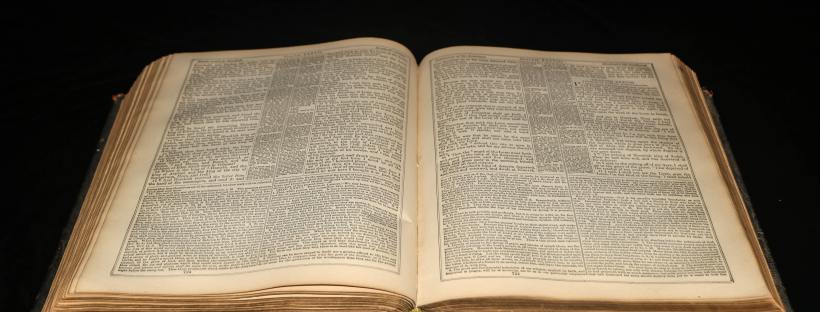
Photo by Wesley Tingey on Unsplash

Keywords: silent majority, Watergate, Roe v. Wade, segregation, Supreme Court

Kraft, Michael E., and Scott R. Furlong. 2021. Public Policy: Politics, Analysis, and Alternatives. Thousand Oaks, CA: CQ Press.
A Court of Many Opinions

June 26, 2022

by Stephen Stofka

In the past two decades the Roberts’ court has overturned several long standing court precedents and laws. In Heller and Citizens United, the court has favored the greatest degree of individual freedom in their reading of the 1st and 2nd Amendment. In this week’s 5-4 decision to overturn Roe, the court has chosen the least amount of individual freedom in their interpretation of the 14th Amendment. In his concurring opinion, Justice Clarence Thomas stated a desire to overturn other court precedents based on the 14th Amendment. In 2013, the court’s Shelby decision overthrew portion of the Voting Rights Act based on the 14th Amendment.

Before overturning the “separate but equal” doctrine that had been in place for five decades, newly appointed Chief Justice Earl Warren delayed the Brown v. Board of Education decision by six months to try and convince two of the justices to change their vote and make the decision unanimous. Warren demonstrated a respect for the principle of stare decisis that the Roberts court does not have. This week’s decision overturned five decades of legal precedent on a 5-4 vote. At Scotusblog, Amy Howe (2022) notes the disagreement among the justices as to what their decision means going forward.

The six conservative members of the Supreme Court are members of the Federalist Society. Each working day of the session they gather in a candle lit chamber in the basement of the Supreme Court Building and kneel down before the Grand Jurist of the Federalist Society.

“Do you believe in the sanctity of the text?” they are asked and each affirms their belief.
“Do you swear to only write opinions and never write law?” the Grand Jurist asks and they each swear an oath.

Around each neck, an acolyte drapes a necklace adorned with eyes of newt, the claw of an eagle, the eye of a falcon. Each jurist will deftly weave through the jungle of legal texts like a newt. Each jurist will grasp the text’s relevant truth like an eagle. Each jurist will have the wide vision but narrow focus of a falcon.

Each jurist puts their thumbs and forefingers together to form the letter “O.” “Do you swear to observe the commandments of Originalism?” the Grand Jurist asks and each affirms obedience. Each justice stands and is wrapped in the black robe of objective jurisprudence based on the meaning of the original text as the lawmakers understood it. They bow to the Grand Jurist and are escorted to their individual chambers.

Their law clerks bring each justice the finger bones of dead lawmakers and jurists – the 18th century jurist Blackstone, the forefingers of Jefferson, Adams, the signers of the Constitution and the Amendments. Into a bowl go the bony digits and the justice gives the bowl three shakes, and no more. Two law clerks tie the dark bandana of Originalism around the justice’s eyes. In a ritual called “throwing the bones,” the justice withdraws a bone from the bowl, and lays it at a random spot on the unfurled scroll of sacred text. Twice more the ritual is performed, then the bowl is put aside and the bandana untied.

Jefferson’s finger may point to the “privileges and immunities” clause in the 14th Amendment and a clerk solemnly records the historical precedent. The thumb of John Bingham, the author of the first section of the 14th Amendment, may point to the “life, liberty, or property” phrase in that same Amendment. The pinky digit of Thurgood Marshall might point to the “due process” phrase in the 5th Amendment. These will be the foundations of the justice’s opinion. The bones are returned to their vessels, the scrolls rolled up and secured. The bones and their placement are different for each justice.

The clerks begin a scan of the databases containing all the sacred texts, searching for the occurrence of each phrase and an indication of how the lawmaker or previous justice understood those phrases. In the course of several months, each justice assembles these perspectives into an opinion which they hand first to the Grand Jurist of the Federalist Society. The Grand Jurist selects that opinion that most faithfully follows the principles of Originalism, secures that opinion with a wax seal, then imprints the wax seal with his ring. An acolyte then delivers the opinion to the Chief Justice, John Roberts and the opinion is made public.

The Grand Jurist was 22 and in law school when Roe v. Wade was decided fifty years ago. He never liked that decision. This Friday, the Grand Jurist smiled as he closed the heavy door to the underground chamber below the Supreme Court.

//////////////

Photo by Danika Perkinson on Unsplash

Howe, A. (2022, June 24). Supreme Court overturns constitutional right to abortion. SCOTUSblog. Retrieved June 24, 2022, from https://www.scotusblog.com/2022/06/supreme-court-overturns-constitutional-right-to-abortion/

A Call for Free Market Justice

September 5, 2021

by Stephen Stofka

In a 5-4 decision this week, the Supreme Court decided to let stay the Texas law against abortion that went into effect this week. The court is a democracy whose majority opinion, no matter how slim the majority, becomes the winning opinion. Despite the black robes and pretense of objectivity, the court “elects” its opinions. In 1776, America declared independence from the tyranny of one person rule yet we often stand here today subject to the rule of one person on the court. Should we change our procedure so that the court operates more like a free market?

Writing in the independent court commentary Scotusblog, Amy Howe (2021) summarized the history of the case, the unsigned majority decision and the signed objections of the four dissenting justices including the Chief Justice, John Roberts. Under the law, anyone assisting a woman terminating a pregnancy after 6 weeks can be sued by a third party in Texas civil court. Most women do not know they are pregnant until at least six weeks so this is an effective ban on most abortions. The law effectively deputizes private citizens as vigilante enforcement, paying them up to $10,000 for each successful case and absolving the state of legal responsibility.

The court’s majority opinion was largely founded on procedural grounds that there was no way to know if the person named in the suit would bring a case against an abortion provider under the new law. U.S. and Japanese courts have concrete judicial review as opposed to the abstract review of the European system. Under concrete review, courts act only on cases brought before them. The crafting of this law was designed to take advantage of that aspect of our court system.

The Federalist Society was founded in 1982 to push a libertarian ideology as a counteracting force to the perceived dominance of a liberal interpretation of the Constitution. The Society champions a judicial interpretation of the law “founded on the principles that the state exists to preserve freedom [and] that the separation of governmental powers is central to our Constitution” (Federalist Society, 2021). Without clear jurisdiction granted to the federal government by the Constitution, state law should be given deference. Six of the nine members of the Supreme Court are members of the Society and lean toward that libertarian interpretation of the Constitution.

Libertarians champion the dynamics of the free market because it is not a democracy ruled by a majority. There are multiple brands competing for our loyalty. In metropolitan areas, local governments do compete with each other for residents but governments generally act like the water and electric utilities they regulate as public monopolies. A government provides a public monopoly on force and on rule-making. In our Federalist system, 50 states have 50 different sets of laws, 50 separate court systems and 50 interpretations of the Federal constitution and federal law.

We already have a free market in our judicial system. Why should we let a slim majority vote in the Supreme Court contaminate that free market? The justices base their decisions on what they consider sound jurisprudence consistent with past historical principle. Legal briefs present competing opinions that are a distillation of many opinions, a winnowing process that is characteristic of a free market. In choosing between those few dominant legal interpretations, the justices try to establish a positive reasoning to a normative opinion of what is the “best” interpretation. The free market is at work until that final moment when free market principles are upended by a majority vote of one opinion to rule them all.

Let the last step in the process be one that preserves free market principles. If there is a close vote, let each justice vote on the two most dominant opinions whether they agree with those opinions or not. From those votes, let two choices emerge and each choice be assigned a 1 or 0. A roll of nine dice will decide the winning choice. Each six-sided dice will have 1 spot on three faces and no spot on three faces.  The majority rule of the dice, not human beings, would decide the final choice of the winning opinion.

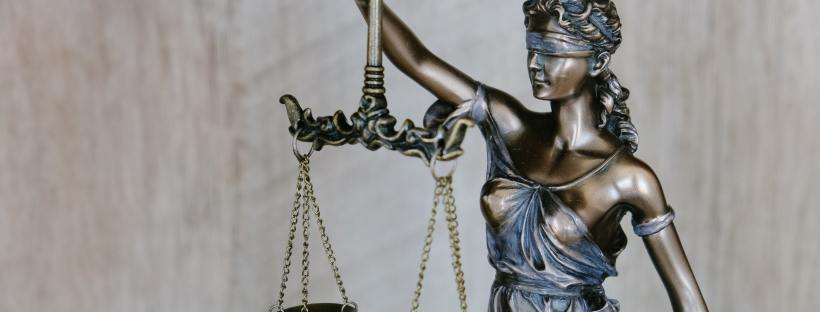
This method will preserve historical precedent, an important feature of the common law foundation of American jurisprudence. In current practice, contesting and concerned parties submit merit and amicus curiae briefs that cite both past majority and dissenting opinions. Adopting this suggested method would continue to support that practice. We would place our most cherished jurisprudence before the whims of fortune, not the tyranny of one person’s vote. Let Lady Justice be truly blindfolded as each opinion is put on the scale.

///////////

Notes:

Photo by Tingey Injury Law Firm on Unsplash

Federalist Society. (2021). About us. Retrieved September 04, 2021, from https://fedsoc.org/about-us

Howe, A. (2021, September 02). Supreme court Leaves Texas abortion ban in place. Retrieved September 04, 2021, from https://www.scotusblog.com/2021/09/supreme-court-leaves-texas-abortion-ban-in-place/