
A man in a red parka stands on a snow covered hill looking at jagged mountain peak ahead of him

The Visible and Invisible

May 31, 2026

By Stephen Stofka

One of this summer’s biggest movie releases is Christopher Nolan’s The Odyssey, the story of a military commander returning to his home in Greece after the Trojan war. When he encounters several dangers on the trip, Odysseus prays to the Greek goddess Athena for help. For much of human history, we have tried to leverage invisible powers to help us get what we want. These invisible powers were capable of work. We prayed to invisible beings for love, for rain, for relief from sickness and pain. Roman families prayed to their household gods, the Lares, for protection of their home and other favors. The Jewish people were the chosen people of their god.

Gods were not neutral. They took sides in battle. Gods had to be placated. If our side lost, it was because our sacrifices, our rituals had not pleased our gods. If our side won, it was because our god was more powerful than their god. Catholics and Jews shared the same God, the same Old Testament, but differed on the belief in the divinity of Christ. Jews had to be punished and persecuted. Catholics and Muslims shared the same God, but Muslims had an entirely different text, the Koran, and a prophet that Catholics did not recognize. The Catholics launched several crusades to defeat the Muslims. Protestants and Catholics had the same god and the same sacred texts, but a different hierarchy, and different worship rituals. Each side believed that their way of worship was right and warred against each other throughout Europe.

The Age of Neutrality

The realm of the natural was visible, capable of being perceived by our senses. Phenomenon not accessible to our senses was the realm of the supernatural. In 1644, Evangelista Toricelli showed that the atmosphere had weight. We were like crabs out of water, walking beneath an ocean of air (Source). The invisible was no longer the realm of the supernatural. A few years later Otto von Guericke showed that the weight of the air could be used to lift objects. For the first time in history, an invisible being could do work, and the word force was repurposed to include these “gods” of nature. A few decades later, Newton published his theory of gravity in 1687. These natural gods like gravity were neutral. The god of gravity treated everyone the same. These natural forces were more reliable, more predictable than the supernatural gods. In several more decades, Thomas Newcomen developed an efficient steam engine. People were learning to bring the invisible forces of heaven down to earth, ushering in the First Industrial Revolution (Source).

Social Exchange

As physical scientists explored the exchange of energy in physics, chemistry and biology, social scientists began to investigate exchanges of the invisible among people. In 1776, Adam Smith published The Wealth of Nations, an analysis of the production and exchange of goods among people. Money cannot be consumed yet it has value, an invisible quality. A pound of flour can be consumed but only as an ingredient in bread. It’s value is latent. In Part 1, Chapter 4, he wrote about the diamond water paradox. Water is far more useful to people than diamonds, yet the exchange value of water is much lower than that of diamonds. To help resolve the paradox, Smith developed two notions of value, value in use and value in exchange, and noted how unrelated the two values could be.

Value is a property as invisible as a god, its existence and effectiveness only apparent by its manifestation in the natural world. Value in use was a functional value, the ability of a commodity like corn to satisfy some human want. That function was only possible through transformation by people. The land had to be tilled and sown. The crop had to be weeded, harvested, and stored. Many foods needed a final transformation to make them palatable or digestible. While it was difficult to measure a property, the costs to realize the functional value of a commodity could be measured. In those days when humans or animals did most of the work, the chief cost of a commodity was human labor.

Value in exchange could also be measured by human labor, since this was the most common tradeable value that people had. Smith, David Ricardo and other early 19th century economists developed a labor theory of value as a solution to the riddle of the diamond water paradox. In the latter half of that century, the increasing use of machines in production tested the logic of that theory. Karl Marx was such a fierce adherent of the labor theory of value that he regarded any contribution by machinery or capital as an exploitation of labor.

Marginal Analysis in Economics

Marx introduced an edifice of historical, political and social relations that obscured the fundamental economic principles of exchange. In an effort to concentrate solely on the economic aspects of the marketplace, economists like Jevons, Edgewater and Marshall introduced the idea of marginal usefulness, or the value of one additional unit. Value was situational, determined by supply and demand, and based on individual preference.

How did these economists resolve the diamond water paradox? Water was vital to a human being, but when there is a good supply of it, an additional glass of water has little value. Because diamonds are scarce and convey a prestige highly valued by people, an additional diamond may have high marginal value.

Scarcity and surplus determine the price of a good. The seller of a loaf of bread does not price his product based on the wage or earnings of his customers. Buyers and sellers have a shortage or surplus of a good and want to maximize the usefulness of the next unit of that good or service. These economists, called marginalists, rejected the belief that there was any value infused in a commodity. The only measure of that value was the price.

Political and Social Theory

For more than a century, marginal analysis has been the dominant theory of economic study. Can it be used to understand political and social relationships? Perhaps not. It has some disturbing implications. Despotic governments are governed by marginal thinking, the idea that human value is based on a person’s usefulness to the ruling regime to maintain its power and control. In a liberal ideology, political rights are grounded in the theory of natural law, whose chief proponent was the 17th century philosopher John Locke. People are imbued by their creator with certain inherent or natural rights that are inviolable to a government.

A marginal analysis of personal and social relationships treats people as means to satisfy our ends. The philosopher Emmanuel Kant wrote “So act as to treat humanity, whether in your own person or in another, always as an end and never as only a means.” People had an intrinsic worth in their own right. But this view is not grounded in anything other than an agreement among people that humans have worth. Their suffering has meaning. Yuval Harari, the author of Sapiens, A Brief History of Humankind, laments the fact that people on one side of a conflict struggle to even acknowledge the suffering of people on the other side. We are so invested in the about the righteousness of our actions that we lose sight of the intrinsic worth of those on the other side of a conflict.

The Sacred and Humanist

People of faith claim that the natural world must be connected to the supernatural to have any meaning. Without a belief in a creator God, they claim that morality is ungrounded. Human life has value because we are creatures of God. The Constitution was divinely inspired, a work of the Christian God.

Humanists believe that people have a responsibility and capability to act ethically without a belief in supernatural gods (Source). That responsibility is based on our innate sense of compassion. That capability is born of our rationality. It is up to us, not some invisible gods, to shape the meaning of our lives. I hope to see you next week.

///////////////////

Photo by Joshua Earle on Unsplash

Keywords: marginal, economics, categorical imperative, value, religion

Blurb: The gods of our ancestors have vacated heaven and now live among us in a myriad of forces and energy.
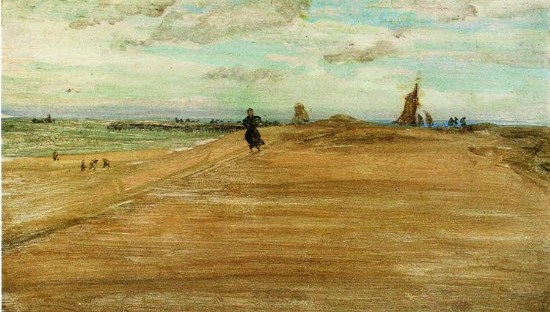
A painting of a beach with a curve of water on the left edge of the painting. A lone figure clad in black stands in the distance.

Work of Art or Sacred Text?

May 24, 2026

By Stephen Stofka

In her last interview, author of The Origins of Totalitarianism, Hannah Arendt said that Americans regard their Constitution as sacred text (Source). “There are no natives here. The natives were the Indians. Everyone else are citizens. And these citizens are united only by one thing and this is true: That is, you become a citizen in the United States by a simple consent to the Constitution.” Arendt was speaking of those, like her, who immigrated to America. For those born in the United States, even that consent is not a prerequisite to citizenship.

Is the Constitution sacred and what did Arendt mean by that? Former Justice Antonin Scalia was famous for his remark that the Constitution was “dead, dead, dead” (Source). Scalia believed that the meaning of the Constitution was fixed forever at the time it was written. In later remarks at Princeton University, he clarified that he favored an enduring rather than a living Constitution (Source). Scalia meant that the meaning of the Constitution was enduring. In his book Reading the Constitution, former Justice Stephen Breyer regarded the intention of the framers as enduring (p. 262). Breyer gave more weight to a law’s purpose and consequences in deciding the merits of a case before the court, rather than the text itself (p. xvi). I will call that intentionalism.

Scalia advocated a judicial interpretation he called originalism, an approach that tries to understand the original meaning of the text. Scalia’s method involved reading the Constitution as though it were a statute. In a speech he gave to students at Princeton University in 2012, Scalia said “When we read Shakespeare we use a glossary because we want to know what it meant when it was written. We don’t give those words their current meaning. So also with a statute — our statutes don’t morph, they don’t change meaning from age to age to comport with the whatever the zeitgeist thinks appropriate.”

The word naughty in Shakespeare’s time meant wicked or immoral, a moral condemnation. We use the word to describe someone acting mischievously. The word in his current usage does not convey moral condemnation. Of course, the English language was in a state of great transition during Shakespeare’s time. The meaning of the words in the Constitution have changed relatively little since 1787. A soldier carrying a flintlock rifle and an M-16 rifle are both bearing arms, the phrase used in the Second Amendment. Due to advances in gun technology and manufacture, the scope of that phrase has changed. The M-16 can be set to fire more than one shot. Did the framers intend to include any weapon that can be carried by a person, no matter how powerful and destructive it can be?

A Constitution is written using broader terms. A statute is written with specific terms and often contains definitions of those terms. Here is an example from the Colorado Revised Statutes: “Each eligible individual who is partially unemployed shall be paid a partial benefit. Partial benefits shall be in an amount equal to the eligible individual’s weekly benefit amount for total unemployment, minus that part of wages payable to the individual with respect to the week that is in excess of fifty percent of the individual’s weekly benefit amount…” (Source). Terms are defined as in “’Benefits’ means the money payments payable to an individual with respect to his unemployment. The different classifications of benefits are set forth in section 8-70-110” (Source).

Let’s look at Article 1, Section 2 of the Constitution, one of the more specific sections in the Constitution. “No Person shall be a Representative who shall not have attained to the Age of twenty five Years, and been seven Years a Citizen of the United States, and who shall not, when elected, be an Inhabitant of that State in which he shall be chosen.” At first glance, the language might seem precise, but there are a lot of details missing. How shall the Representative substantiate his age? Birth certificate by a state agency? Eyewitness sworn before a local judge? A document signed by a registered midwife? If citizenship was not granted at birth, how should the Representative certify citizenship? A federal document attesting to that fact? What if there is a line entry in a federal register attesting to such citizenship, but the document itself was lost in a fire? Is that enough documentation? Does the qualification for state residency vary with the regulations of each state? These details are handled by statute or agency regulation, not by a Constitution.

Unlike statutes, the U.S. Constitution has few defined terms. James Madison objected to the insertion of the term “general welfare” in Article 1 of the Constitution because the term was imprecise. Others at the Convention responded that it would be up to future generations to determine what the phrase meant. Scalia and other textualists attach their own meaning to words, then claim the meaning they favor was the original meaning of the word. When historians show evidence to the contrary, textualist judges rarely defend their research.

The Constitution is like a landscape painting by James Whistler (Source). It is imprecise. Many details are missing. The painting is an invitation to come inside its borders, to explore its mood, the people and objects within that rectangular frame. A statute contains the details involved in constructing that painting. These include the kind of paint, it’s source and mixture, the quality of the linen for the canvas and how it should be primed. Constitutional text contains the vision. The supporting statutes are the instructions for implementing that vision. Textualist justices like Antonin Scalia, Samuel Alito and, to a lesser extent, Clarence Thomas treat Constitutional interpretation as though the Constitution was a paint-by-numbers hobby kit (examples here). Because it is not, the justices simply write in their own numbers on the canvas, and claim that the founding generation wrote in the numbers.

In the 2008 District of Columbia v. Heller opinion, Scalia treated the clause in the Second Amendment regarding the militia as a prefatory or incidental clause. The right to bear arms was not connected to service in the militia, Scalia argued. Why did the framers put that clause in? Scalia admitted that the “structure of the Second Amendment is unique in our Constitution” but found some examples in state constitutions (Source). This is the ploy of originalism. A jurist can dig through any number of historical documents until they find something that supports their interpretation of a text. They ignore all other historical evidence that contradicts their opinion, then pronounce that their opinion is grounded in the original meaning of the text.

In the 2022 Dobbs v. Jackson Women’s Health Organization opinion, Justice Alito wrote that the word abortion was not in the text of the Constitution (Source). Therefore, it was not a protected constitutional right. In the 2010 Citizens United v FEC opinion, former Justice Kennedy was not an originalist but found that money as a funding source for speech was protected under the First Amendment (Source). The First Amendment states “Congress shall make no law … abridging the freedom of speech.” The framers could have written “Congress shall make no law … abridging the freedom or funding of speech,” but didn’t. Justice Kennedy and the conservatives on the Court rewrote the Constitution they way they would have done it if they had lived two hundred years ago. That is a radical, not a conservative, approach.

The framers used general language in the Constitution to state principles, not regulations, so that future generations could instantiate those principles in evolving circumstances. The process of amending the Constitution, as set forth in Article V, was arduous. Surely, the framers did not intend that a few men on the Supreme Court could effectively amend by the Constitution by reinterpreting it. The framers never intended to give away their power to the judiciary. To do so would have been irrational. In Marbury v Madison (1803), Chief Justice John Marshall claimed the authority to decide the meaning of the Constitution, effectively executing a judicial coup of the legislature and the executive. Neither President Jefferson nor the Democrat-Republicans in Congress challenged Marshall. They were too involved in negotiations for the Louisiana Purchase completed two months after Marshall’s decision. Why did the framers give life tenure to judges? They never intended the judges to have Constitutional authority.

The Republican led Congress has abdicated their power and authority to the courts and to the Executive. It is time to restore the primacy of Congress, the representatives of the people. In Federalist #51, James Madison wrote “In republican government, the legislative authority necessarily predominates” (Source). Legislative supremacy was a long tradition in England after the Glorious Revolution of 1688. By its nature, a legislature has several internal controls. The Executive and Judiciary do not. Why? Those two branches were never meant to become as powerful as they have. It is time for the Congress to undo that. That is the why of the problem. The how is a matter of deliberation but the how is not possible until both parties in Congress can agree on the why. On that note, I hope to see you next week.

/////////////////

Image: Beach Scene by James McNeill Whistler, 1896. Public domain (Source)

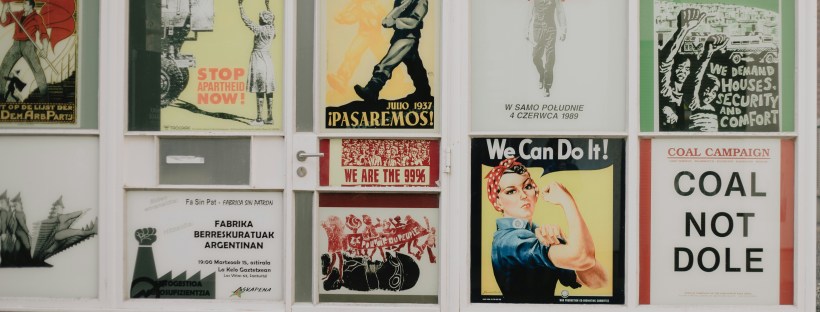
A wall with propaganda posters from several countries

Power and Propaganda

May 17, 2026

By Stephen Stofka

This week I want to explore the nature of propaganda. Is it a form of speech? Is it in the eye of the beholder, like beauty? Did the framers intend to protect propaganda as a form of speech?

Let’s look at a dictionary meaning of propaganda: “information, ideas, or rumors deliberately spread widely to help or harm a person, group, movement, institution, nation, etc.” (Source). The Bible would satisfy that definition. Most of the political spin that comes out of the White House would also satisfy that definition. CYA, or “Cover Your Ass” comments and redirection is a form of propaganda.

I prefer the definition in the Oxford English Dictionary (OED), which describes the meaning as “the systematic dissemination of information, esp. in a biased or misleading way, in order to promote a particular cause or point of view, often a political agenda” (Source). Propaganda is prop-agenda,  a propping up or boosting of an agenda or regime. Propaganda is systematic, not casual. Harm to a group or person is incidental to promoting a particular cause. This helps distinguish retribution  from propaganda.

President Trump often attacks people he doesn’t like in a systematic way, a characteristic of propaganda, but he does not promote a particularly coherent cause. Trump uses repetition as a strategy of branding or labeling. His attacks on Jerome Powell, Chairman of the Federal Reserve, for being “incompetent” and “crooked” is a branding strategy in a campaign of retribution (Source). It is not propaganda.

The former talk show host Rush Limbaugh used repetition and ridicule to brand political figures that he didn’t like. Trump borrows some of those techniques but doesn’t have Limbaugh’s imagination. Limbaugh invented colorful names and phrases to belittle political opponents, and the reach of his radio program helped them become common usage. Examples include tree huggers for environmental activists, feminazis for abortion activists, and drive-by media for mainstream media. Both Limbaugh and Trump emphasized the entertainment aspect of political discourse.

In 1922, journalist Walter Lippmann published Public Opinion, about the shaping of public opinion in a democracy. World War I had birthed a massive propaganda machine in America, led by George Creel, who headed the Creel Committee, appointed by President Wilson to promote America’s involvement in the war (Source). Wilson had won re-election in 1916 on the promise that America would stay out of the war in Europe, and he needed to combat the isolationist sentiments of the majority of Americans. Creel fought “for the minds of men, for the conquest of their convictions” to spread “the gospel of Americanism” to “every corner of the globe,” Lippman quoted Creel (p. 19). So began the evangelical crusade to convince the world that American institutions were superior to those of other nations.

Lippmann wrote “Without some form of censorship, propaganda in the strict sense of the word is impossible” (p. 18). Censorship is a key aspect because it is a police power, a function of government. Lippmann wrote “a group of men, who can prevent independent access to the event, arrange the news of it to suit their purpose” (p. 17). All governments claim that war justifies an additional degree of censorship, but that is an ugly term in the minds of Americans. We have the First Amendment and a free press. Censorship is a term we associate with Communist Russia, China and North Korea.

In 1918, Congress passed the Sedition Act of 1918 to outlaw any “disloyal, profane, scurrilous, or abusive language” about the government, the military or the flag that interfered with the war effort. It was meant as an expansion of the Espionage Act of 1917, and more than a thousand people were prosecuted under both acts. In Debs v United States, the Supreme Court upheld the conviction of Eugene V Debs for an antiwar speech he gave (Source). The decision was unanimous, indicating how little importance the Court paid to individual rights during wartime. Although the Sedition Act was repealed in 1920, the Espionage Act remains in effect to this day (Source).

The first thing American politicians must do is sell censorship to Americans as something other than censorship. An administration may be “combating misinformation” for the “public safety.” Censorship is necessary to “protect national security.” Another ploy is the use of a national emergency. The administration often claims that bold and unconventional action is needed because of a national emergency, but can’t give a coherent explanation of the emergency because of national security. George Carlin (1937 – 2008) was a comedian who famously poked fun at many of the euphemisms we use. He would have found the Trump administration a rich source of material for his stage act.

To justify censorship, American politicians have been in state of war since World War 1. If they are not fighting communism, terrorism, or totalitarianism, they are at war with drugs, poverty, and injustice. War for a noble cause can be used to justify secrecy and censorship. During the Vietnam War, reporters and TV crews had fairly free battlefield access. Both the Johnson and Nixon administrations felt that an honest and open coverage of the war contributed to public skepticism and a lack of support for the war.

During the Gulf War twenty years later, reporters were herded into press pools or embedded with military units. Reporting was subject to military security reviews to prevent the leak of any operational details and for the protection of the troops. Imagery of casualties was kept to a minimum and the emphasis was on the technological prowess of the American military. Those censorship policies continued during the Iraq and Afghanistan Wars. Both Israel and America have tried to hide the costs of the current war against Iran. The Trump administration has suppressed reports of damage to American military bases in the Gulf Coast states. Defense Secretary Hegseth has purposely understated the monetary costs of the war. Israel has effectively imposed a total black out of damage within its country. Both countries have discarded the trappings of democracy, and adopted the tactics of totalitarian regimes.

Did the framers intend propaganda to be included in First Amendment protections? That is not so clear. The first use of the word in its current political meaning did not occur until 1790, according to the historical examples shown in the OED entry. The chaos of the French Revolution and the prospect of war with France led Federalists in Congress to pass the Alien and Sedition Acts in 1798 (Source). They did not refer to propaganda, as such, but used similar terms, like “seditious writings,” “foreign influence,” and referred to the “licentiousness of the press.” The Sedition Act criminalized publishing “false, scandalous, and malicious writing” against the federal government, Congress, or the president. Federalists argued that coordinated attacks by partisan newspapers could undermine public confidence and destabilize republican government.

Before the Acts expired in 1801, several defendants challenged the constitutionality of the Sedition Act. Matthew Lyon, a Republican congressman, was prosecuted and jailed for criticizing President John Adams. Lyon argued the law violated freedom of speech and press protections. Thomas Cooper challenged the constitutionality of the Sedition Act in court, arguing that criticism of government officials was protected political speech. At that time, people disagreed whether federal courts had the authority to strike down acts of Congress. A few years later, Chief Justice Marshall set a precedent in Marbury v Madison that it was the responsibility of the Supreme Court to interpret the Constitution.

Is “false, scandalous, and malicious writing” a form of propaganda? The Federalists were worried about coordinated acts by newspapers, a systemic campaign that would indicate propaganda. Remember that Walter Lippmann introduced a distinguishing characteristic of censorship, which implies a police power. I might think that Fox News broadcasts propaganda, but does Fox News have the power to impose censorship? Viewers can choose to watch or not. The coverage might be biased, but it is not propaganda. That element of censorship can only exist when government institutions produce a biased set of information and opinion in a systematic manner.

The use of propaganda is an existential tool for any political regime. That’s especially so when the media is privately owned. An administration must carefully prune information which undermines its effectiveness. The Trump administration has been particularly aggressive in reducing data gathering at federal agencies that Trump does not like (Source). He has cut staff at NOAA because he doesn’t like climate change. NOAA is responsible for climate modeling and weather forecasting. Farmers in Iowa who no doubt voted for Trump depend on that information to manage their business. He has reduced staff at the CDC and eliminated surveys that gauge reproductive health and infectious disease (Source). Like many conservatives, Trump does not like the Department of Education and would eliminate it if he could (Source video). Most of the staff at the National Center for Education Statistics has been terminated (Source). The department administers student loans and special education funding. It enforces civil rights protections and helps equalize funding across states. How well is the Trump administration managing those areas? Without a national database of information, Trump can avoid scrutiny.

Under the Freedom of Information Act (FOIA), media organizations file hundreds of thousands of requests to gain access to information. If the administration denies the request, the requester can file a lawsuit. There is no central database that compiles FOIA requests by administration or agency, but the number of FOIA lawsuits (not requests) during the first Trump administration far surpassed that of previous administrations (Source).

In casual conversation, we may label something as propaganda, but it is limited to a government with the police power to limit information and prosecute offenders. Detecting propaganda is made more difficult if it aligns with our biases. We may tolerate censorship by an administration that we favor, reasoning that they must have a good reason. However, we are alert to any censorship from an administration that we don’t like. We are suspicious and more apt to believe in conspiracy theories about that administration. In an electorate that is evenly divided, as we have now, half of voters are tolerant of propaganda and half are not. We need to be less tolerant of propaganda and censorship from either party. Yes, it takes time and resources. Yes, we have other concerns in our daily lives. The health and viability of a democratic republic depends on an informed people who are not duped by politicians from either party.

///////////////////

Photo by Sinitta Leunen on Unsplash

The Judicial Bird Cage

May 10, 2026

By Stephen Stofka

Last week, I wrote about the Supreme Court’s cutting away key portions of the Voting Rights Act. This week, I want to understand the conservative attempt to keep the country imprisoned in the sentiments and prejudices of the 19th century.

Three-quarters of the states must vote in favor of an amendment to the Constitution. It takes only a plurality of Supreme Court justices to amend the Constitution through reinterpretation. Throughout our history, the Court has acted as a second Congress, limiting or amending statutes using some judicial theory invented by one or more members of the Court. The Congress must jump a high hurdle to make substantial constitutional changes. The Court has only to step a bit higher to have the same effect.

At the Constitutional Convention, the framers underestimated the power of the judiciary so badly that they left it up to the first Congress to draft the rules. What if the Constitution had set the same three-quarters threshold for substantial changes to the Constitution? Today’s court would need seven justices to set new precedent, amend or overturn a former precedent. Key decisions of the Roberts’ court would not have met the minimum threshold.

Marbury v Madison  and Roe v Wade (abortion) would have passed the test. Dobbs v Jackson Women’s Health Organization, which overturned Roe, would not have passed the test. Infamous rulings like Dred Scott v Sandford and Plessy v Ferguson would have passed the test. The 13th and 14th Amendments overturned the Court’s decision in Dred Scott. Brown v Board of Education overturned Plessy and was a unanimous decision.

Conservatives on the court often refer to customs or precedents mentioned in 18th and 19th century text. In District of Columbia v Heller, Justice Antonin Scalia used 18th century dictionaries, English common law and practices in the American colonies to understand what the words “bear arms” meant in the Second Amendment. What was the notion of self-defense in colonial times? He used this historical foundation to justify his interpretation of the Second Amendment as an individual right to carry a gun. Scalia declared that the First, Second and Fourth Amendments were pre-existing rights. The Constitution could only recognize then, not create them. Thus, it could not diminish or take away those rights.

Scalia was a proponent of Originalism, a judicial analysis which insists that modern opinions rely on the meaning of texts when a law was written, and the historical practices and statutes prevalent in that period. Originalism has a central conflict. The Constitution, the Bill of Rights and statutes written during the decades before the Civil War were based on a different understanding of rights than we have today. In the 18th and early 19th century, rights depended on each person’s status in society, their race, gender or property. Different people had to play by different rules. A historical analysis of the law must struggle to overcome those multiple standards and reach a precedent that is consistent with modern sensibilities.

The problem was that different people had different sets of rights. White people had rights that black people didn’t. A shop owner had rights that his workers did not have. Women had few rights. Under the common law custom of coverture, a married woman’s legal status was merged with her husband. She could not make a contract, own property or sue in court. The English jurist William Blackstone wrote that a husband and wife were one person in the eyes of the law.

The Declaration of Independence stated that “all men are created equal, that they are endowed by their Creator with certain unalienable Rights.” In America, unlike Britain, official titles of class and nobility were forbidden, but people understood that there were roles in society, and roles were not equal. This was especially true in the southern states whose economies were founded on agriculture. Their social hierarchies were more static than those in the northern states. My maternal great-great-great grandfather was a farmer in S. Carolina, and three succeeding generations of sons were farmers. Rights varied by one’s role in society. The responsibility of a state was to manage the roles and rules within that society.

It’s important to understand that, prior to the ratification of the 14th Amendment, the protections contained in the Bill of Rights applied only to the Federal Government, and not to the states. The founding states were concerned that the central government not interfere with the sovereignty of the states in how they dealt with their citizens. The protection of the rights of their citizens was the main responsibility of the states. In fact, the constitutions of some states afforded far better protections of individual rights than was contained in the Bill of Rights.

By the time of the Civil War, Americans recognized that the southern states had managed those roles and rules to segregate or exclude black Americans in private and public life. After the Civil War, the Equal Protection and Due Process clauses of the 14th Amendment promised to equalize the rights and freedoms that people enjoyed. Following the passage of the Civil War amendments, several Supreme Court decisions reduced their scope by drawing distinctions between civil and social rights, and enacted double standards for government and private business.

In 1875, Congress passed the Civil Rights Act to ensure the equal treatment of black Americans in hotels and inns, in theaters and on public transportation. In The Civil Rights Cases(1883), the Court ruled that the Fourteenth Amendment allowed the federal government to regulate discriminatory behavior by state and local governments, not private businesses. This was an 8 – 1 decision, reflecting the normal understanding of rights as they were understood at the time the 14th Amendment was ratified. If Justice Scalia’s Originalist approach is correct, then today’s justices should apply that same distinction between government and private parties.

In Plessy v Ferguson(1896), the court ruled that segregated but equal accommodations enacted by state law did not violate the equal protection of the law. This was a 7-1 decision, reflecting the dominant understanding of equal protection at the time the 14th Amendment was ratified. The lone dissent, authored by Justice Harlan, did not reject the distinction between government and private parties but noted that a private institution like a railroad serves a public function and is subject to the protections contained in the 14th Amendment. In Brown v Board of Education (1954), the Court overturned that precedent of “separate but equal.” If Justice Scalia’s Originalist approach is correct, then today’s justices should apply that same understanding of “separate but equal,” and overturn the precedent set in Brown. Do you think that is not coming? Just wait.

In fact, the inevitable outcome of Originalism, consistently applied, is to resurrect these 19th century understandings, the sentiments and prejudices of that age. Both the Originalism and Textualism projects will rationalize stratifications in our society because of the roles that people play. Six of the current Court’s justices are involved in one or both of these projects.

In Trump v United States (2024), the Court gave former Presidents “absolute immunity for actions within his conclusive and preclusive constitutional authority,” and “at least presumptive immunity from prosecution for all his official acts.” This is 19th century court jurisprudence that sets out different rules and rights depending on one’s role in our society.

In Dobbs v Jackson Women’s Health Organization, Justice Samuel Alito concluded that the Constitution did not “confer a right to abortion.” He based his reasoning on 18th and 19th century abortion regulations and English common law, all of which regarded women as functions, as roles in our society. Women bore the children, kept the house and cooked the meals. Society did not recognize a woman’s personal boundaries. With  that understanding as a foundation, it is no wonder that Alito could find no sense of privacy, of personal sovereignty for a woman who was performing a role similar to a brood cow.

The 18th century philosopher, Immanuel Kant (1724 – 1804) formulated a rule of ethics that we should treat people as ends, not just as means. In other words, people were more than the roles, the functions they played in society. That ethical rule ran counter to 18th and 19th century legal jurisprudence which regarded people as functions, not beings in their own right. In fact, much of English common law and Blackstone’s Commentaries, used frequently by conservative justices on the court, regard people as functions within society. By basing their reasoning on that ancient jurisprudence, the conservative justices on the Court reject Kant’s rule.

Three of the six conservative justices might serve another 20 – 25 years, so we can expect more of this type of jurisprudence in the future unless Congress changes the number of seats on the Supreme Court just as it did after the Civil War. That is quite an undertaking but the Originalism and Textualism projects were big undertakings that began in the 1970s with the establishment of the Federalist Society, ALEC and Heritage Foundation.

We can be a nation rooted in the present and looking to the future, or we can be a nation trapped in the birdcage of historical prejudices. The conservative court constructs a cat’s cradle of confusing opinions and unexplained shadow docket rulings that the lower courts have struggled to apply. The court itself has little to no checks on its power to interpret the Constitution and we must correct that. We can open the bird cage. I hope to see you next week.

/////////////////

Photo by Enrique Chagoya on Unsplash

The Samurai Supreme Court

May 3, 2026

By Stephen Stofka

This week, while waiting to cross a busy intersection, I noticed the networks that surround us. Traffic light sequences, driving regulations and customs help us navigate our world. Clouds gathered in the afternoon sky, a sign of the water cycle of evaporation, condensation and precipitation, a network of energy. My phone is a node in an information network. My bike is a network of mining and manufacturing. My clothes are a network of agriculture, manufacturing and transportation. Fish swim in water. Human beings swim in networks of words, legal rules and social customs.

As societies, we are the network. Networks operate by rules. In a republic or democracy, the voters determine those governing rules or elect representatives to craft those rules. The voting process itself abides by rules. In the United States, some rules are determined by the states, some by Congressional statute, others by the Constitution. Article 1 of the Constitution gave the states the primary responsibility for administering federal elections but allowed Congress to make laws as well (Source).The Constitution required each state to redraw its congressional districts to adjust for population changes and balance geographic population shifts within the state.

In 1965, under the authority granted by the 14th and 15th Amendments, Congress passed the Voting Rights Act (VRA) to counter decades of discriminatory voting practices in some states (Source). Under Jim Crow laws, the southern states had marginalized black voters for eighty years by requiring black voters to pass tests before they could vote.

Section 2 of the VRA sets the principle: “No voting qualification or prerequisite to voting, or standard, practice, or procedure shall be imposed or applied by any State or political subdivision to deny or abridge the right of any citizen of the United States to vote on account of race or color” (Source). Section 4 of the VRA stipulated that any states or counties that had an election test in place on November 1, 1964, were discriminating against some voters (Source). Section 5 of the VRA subjected the election practices of those violators to a preclearance review by federal authorities. Those violators included seven southern states, Alaska and Arizona. Other states had some districts within their state subject to the same review. The whole state of North Carolina was not subject to review, but many of its counties were. Several counties in New York, Florida, S. Dakota and California were also subject to review (Source).

The law is a vast network of principles and values, history and consequences, all bound together by words. Conservatives have long sought to weaken the voting rights network by attacking key clauses in the VRA. Since his time working in the Justice Department under the Reagan Administration in the 1980s, Chief Justice Roberts has advocated a weakening of Section 2 of the Act. In Chapter 12 of her book Without Precedent, Lisa Graves describes this long history.

In Shelby County v Holder, decided in 2013, the Court ruled that Section 4 of the VRA was unconstitutional because the criteria that determined a violator did not respond to current conditions (Source). In his opinion, Chief Justice Roberts encouraged Congress to update the criteria but the John Lewis Voting Rights Advancement Act was filibustered in the Senate. A key segment of the Act was severed.

In Brnovich v. Democratic National Committee (2021) the Court limited the type of practices that could be considered discriminatory under Section 2 of the VRA (Source). Justice Alito wrote the majority opinion. Another key segment cut.

This week, in Louisiana v Callais, a 6-3 majority of the Court voted along ideological lines that any election practice in violation of Section 2 of the VRA must be intentionally racially discriminatory. Another segment of the network cut. The court effectively raised the bar for anyone claiming discrimination because proving intention is a difficult task. A redistricting map that discriminates against Democrats is not racial discrimination if a state legislature can claim that the map meant only to discriminate against Democrats.

Justice Alito, the author of the majority opinion, stated, “When Section 2 of the Act is properly interpreted, it imposes liability only when circumstances give rise to a strong inference that intentional discrimination occurred. Properly understood, Section 2 thus does not intrude on States’ prerogative to draw districts based on nonracial factors, including to achieve partisan advantage” (Source). Alito’s interpretation is based on a textual analysis, or textualism.

Textualism selects and emphasizes words and combinations of words that support a justice’s preferred interpretation. Alito calls his preferred interpretation the “proper” one, as though it were endorsed by a higher power. Textualists claim that their opinion is based on the text, so that makes their opinion objective. However, those opinions are based on some of the text, and what constitutes that some is a matter of the justice’s discretion. Textualism is the art of selecting words that justify a justice’s sentiments. Judicial interpretations based on textualism use a divide and conquer strategy. By dividing the text into separate compartments, they conquer the intentions of the whole of the text.

In the District of Columbia v Heller decision, former Justice Antonin Scalia negated more than a century of precedent and opined that the Second Amendment contained an individual right to bear arms (Source). The founders hotly debated the words in the Constitution and the Bill of Rights because those words were critical to ratification. In drafting the Second Amendment, they inserted the clause about the militia. If only they could have known that Scalia would choose to disregard their efforts, they wouldn’t have bothered. Scalia discarded that half of the text of the Second Amendment having to do with the militia. It was a “prefatory clause,” Scalia wrote, whose meaning was subjunctive to what Scalia thought was the main clause, which agreed with Scalia’s sentiments. Because a textualist approach is inherently arbitrary, the lower courts had difficulty applying Scalia’s reasoning in subsequent cases and began to use a balancing approach traditionally associated with First Amendment cases.

After Scalia died, the court tried to clarify Scalia’s textualist approach in New York State Rifle & Pistol Association v. Bruen (2022). Justice Clarence Thomas wrote the majority opinion urging the lower courts to use history and tradition to understand restraints on government power. Did the Founding generation or the Civil War generation have a similar law? Thomas called this the text, history and tradition approach. Where Scalia had used history to understand the meaning of a section of text, Thomas used history as a guiding boundary of government power. In his dissent, former Justice Stephen Breyer noted that a justice has a wealth of history to pick and choose from to support their opinion. Both the strict textualist and text, history and tradition forms of analysis are ungrounded and arbitrary. This approach looks to the past. It’s the judicial version of walking backward.

On page 111 of his book Reading the Constitution: Why I Chose Pragmatism, Not Textualism, retired Justice Stephen Breyer offered an alternative judicial analysis: text, values and consequences. The text of a statute or the Constitution represents the past. Justices should consider the consequences of their opinion, a respect for the future. What joins past and present are the enduring values embodied in a law.

Breyer often held public debates with Scalia and recalled the irresolvable issues between the two justices. Breyer read the totality of a statute or a constitutional amendment. He saw the law as a network of words, and that network had a purpose, a problem that it wanted to resolve. Scalia, on the other hand, picked out the words in a text that he thought were important. He pretended to be a historian, able to divine the original meaning of the words that 19th century legislators used. According to Breyer, page 25, Scalia thought that his approach would create a “science of statutory interpretation.” Far from it. Since the Heller opinion, there have been several cases in which the court tried to amend, extend and clarify the jurisprudence of Heller.

The specific finding in the Louisiana v Callais case was that Louisiana’s redistricting map was unconstitutional because it was based on racial gerrymandering (Source). In Rucho v. Common Cause (2019), Roberts had written that partisan gerrymandering was political and beyond the reach of federal courts. In Roberts’ view, partisan gerrymandering does not undermine the Court’s precedent of  “one man, one vote,” even if that gerrymandering weakens the electoral voice of constitutionally protected black Americans.

In Shelby County and in this case, the Court has not eviscerated the VRA, but wounded key segments of the Act, Sections 2, 4, and 5. More than 80% of black voters choose a Democrat candidate. As the dissent in Louisiana v Callais noted, it will be difficult for any plaintiff to show that a redistricting map discriminated against voters based on their race or color. The respondents can claim that political divisions, not race discrimination, motivated the redistricting schema. What did the network of words in the 15th Amendment and Voting Rights Act try to accomplish? To undo the silencing of a particular minority at the ballot box. The Court has effectively undone that undoing. I hope to see you next week.

/////////////////////

Photo by Krys Amon on Unsplash

Note: When Alito’s opinion refers to section 2(a) or 2(b), he is referring to the text of the U.S. law that encodes the Voting Rights Act as amended. See here (Source).