America first, Americans last

April 5, 2026

By Stephen Stofka

I keep a thought bin of ideas for articles, then weave some of them together into a single essay. Sometimes finding that thread is difficult. This week, I am going to write on an assortment of these ideas.

The Nonchalant President

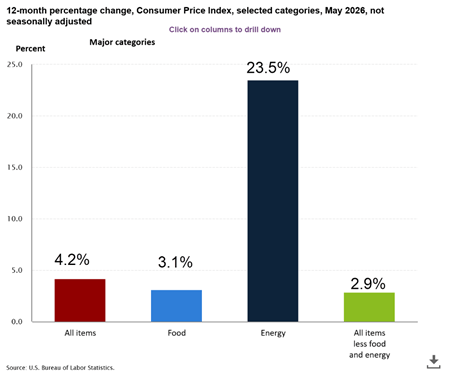
In early March, President Trump was nonchalant about rising gas prices. In an interview with the Reuters international news agency, he said “if they rise, they rise” (Source). A lot of Americans who voted for America First didn’t bargain for Americans Last. To elites like Trump, born with a golden spoon, the concerns of everyday Americans are trivial. The only thing Trump wants is their vote. Then comes the betrayal.

Energy as a Weapon

Green energy is locally produced, which can make many countries less dependent on the major producers of oil. I think that is a major reason why President Trump dislikes green energy. The U.S. is the leading producer of oil (Source) and that gives our country a geopolitical edge. The Middle Eastern countries account for a third of global oil production, which gives them a great deal of geopolitical importance despite the fact that their combined population is only 380 million, slightly more than the U.S. alone. International relations is a chess game of power played by individual nation states. The more powerful states, particularly a regional hegemon like the U.S., want to maintain or increase their economic edge over other countries to preserve their dominance.

There are several examples of dominant powers who sabotaged production in other countries to preserve their economic dominance. During the 18th and 19th centuries, Britain imposed punishing tariffs on India’s textile industry so that India could not compete against Britain’s textile industry. Britain’s Navigation Acts mandated that British colonies could only trade using British ships. Britain actively suppressed manufacturing in its colonies, using them only as a source of raw goods which were finished by Britain’s own manufacturing industries. In 2010, China imposed restrictions on the export of rare earths, giving them effective control of key components of industrial production around the world (Source).

Strategic Power

Some of the president’s many miscalculations in the Iran War arise from a lack of appreciation for strategic power. Volume, not cunning or planning, appeals to him, so he engages in “bomb, baby, bomb” and “drill, baby, drill.” More, more, more is not always better. China controls production of most of the world’s rare earths, a key component in many electronics systems, including those of our military systems. When Trump threatened high tariffs on China last year, they threatened to choke off the supply of rare earths and he capitulated. Did he learn his lesson? No. Iran controls 20% of oil production that is shipped through the Straits of Hormuz, a narrow strip of water where Iran can destroy any oil tanker that does not play by Iran’s rules. Did Trump consider that? No. Strategic control of resources can be as powerful as a fleet of bombers.

Declining Leadership

President Trump has the attention span of a tweet and so his staff has to keep his daily security briefings short. His daily updates on the war consist of two-minute compilations of targets bombed (Source). This would not be unexpected in an adolescent. We should expect more from a grown man who is the leader of the most powerful country on the planet. Why have the American people put Biden and Trump, two doddering seniors, in such a position of power?

Sacrifice

More American soldiers have died in the Iran war than Israeli soldiers. It is the young who give up their lives in war, sacrificing many more years of life than the older men who commit them to that fight. The question of reinstituting the draft has come up. The 62-year old comic Rob Schneider thinks we should have a military draft (Source). He was 12 when the draft was ended and is not eligible for the draft at his advanced age so it is easy for him to be rah-rah about the draft. It would take an act of Congress to reinstitute the draft but Trump has shown a persistent ability to bypass the subservient Republican majority in Congress. In 2018, the CDC reported that the military considered 71% of eligible youth physically unfit for military service (Source). They have had trouble filling the ranks of a volunteer military service.

A Policy of War

As I wrote last week, we are “celebrating” 25 years of continual war. John Mearsheimer is a political scientist known for developing the theory of Offensive Realism. This theory focuses on states which are great powers, a state which is dominant in its region of the world. The U.S., China and Russia are examples of great powers. India, Japan the European Union are sometimes included. The theory claims that these great powers must maximize their power relative to other countries to ensure their survival.

The international system is anarchic, meaning that there is no central authority. In such an environment, a great power cannot know the intentions of other countries, so the safest course of action is to become as powerful as possible while preventing rival countries from gaining greater power. This leads states to compete aggressively, expand influence, and exploit opportunities to weaken other countries. This view sees international cooperation as a temporary aligning of opportunities because gains by one state are often at the expense of other states. Conflict is a structural feature of international relations. To demonstrate his point, Mearsheimer reminds us that the U.S. has been at war of some type since the end of World War 2. These include the Cold war with the U.S.S.R, or hot wars like Vietnam, Iraq, the Balkans, and Iran. He referred to the U.S. as a “crusader state” (Source – video).

The Ethics of War

On February 28th, the first day of the war against Iran, U.S. planes bombed a girl’s school, killing about 170 students. The incident happened because military leaders had used out of date maps and failed to double check before setting the targets. Trump was unconcerned about the deaths, absolving the U.S. for any responsibility. At first, he suggested that the Iranians might have been at fault. What I noticed was that signature shrug of his shoulders, indicating his casual dismissal of the deaths. During the 2016 presidential campaign, the Access Hollywood tape recorded Trump saying he was entitled to grope women because he was a star (Source). Does his casual dismissal arise from that sense of entitlement? Trump dislikes rules and institutions. For him, there is only power. He has the same cold-blooded look of nihilism in his eye as the character Malcolm McDowell played in the 1971 movie Clockwork Orange.

Taking Back Power

Congress passes the laws but doesn’t deal with the consequences of their implementation. Perhaps if they did do more administration, they would write better laws or more readily modify those laws which they have written. In the 19th century, Congress took a more active role in administering the programs they enacted. The National Archives contain the records of Congressional committees that decided the pensions of soldiers, an administrative task now done by the Veterans Benefits Administration, a department of Veterans Affairs and part of the Executive branch (Source).

Searching for Truth

In grade school, we are presented with questions where there are many wrong answers but only one right answer. When was the Declaration of Independence? How much is 3 times 4? We get the answer.

In high school, we are presented with questions for which there are several “right” answers. In English class, students might be asked “Why did the character in this story make this decision?” In History class, they might be asked, “What was the primary cause of this war?” In Social Studies class, students might be asked, “Should an individual sacrifice for the greater good?” In a Science class, they might be asked, “How to best design this experiment to test this hypothesis?” We explore the answers.

In college, we study the methods of answering questions. These include the frameworks of investigation, various models and schools of interpretation, the types of evidence and which are more reliable. Lastly, we are asked to formulate our own question and design a method of answering that question, often having to explain why we chose that method. We create the questions.

In the comments to a well written essay on social media, I have noticed that the comments often neglect the reasoning we learned in high school. The writers of these comments seem to be stuck in grade school, believing that there is only one answer to complex social and political problems. Coincidentally, they have that one answer and are willing to share it in their comment! Yes, we are so grateful for your generosity and wisdom. And with that, I hope to see you next week.

Finally

P.S. check out this anime video of a solution to the immigration issue and have a chuckle.

////////////////////

Photo by Nils Söderman on Unsplash

The Black Robes

July 28, 2024

by Stephen Stofka

This week’s letter continues my look at a method of judicial interpretation called textualism. For fifteen years, I have been writing regularly, trying to understand systems of power and thought that are bigger than my readers or myself. We are often unaware how much our daily lives are shaped by some ethical philosophy that guides the institutions that determine the rules we live by. Over the past two decades, the Roberts’ Court has increasingly used textualist interpretation to upend decades of precedent. The Court has overturned Roe, and several justices have same sex marriage protections in their sights as the next precedent to fall. They have redefined the Second Amendment as an individual right and set severe restrictions on affirmative action considerations used in college admissions.

The economist John Maynard Keynes once commented that we were slaves to the ideas of some defunct economist. The same can be said about judicial interpretation. Justice Scalia, the leading proponent of textualism on the Supreme Court, died several months before the 2016 election. Fellow Justice Alito indicated the reverence that conservative justices had for Scalia’s reasoning when he commented that they would ask “What would Scalia do?”

Stephen Breyer, another Associate Justice on the Court who retired in 2022, often held public debates with Scalia. In his book Reading the Constitution: Why I Chose Pragmatism, Not Textualism, Breyer recalls the irresolvable issues between the two justices. Breyer placed greater weight on the purpose of a law. Scalia emphasized the statutory text of a law and the “text’s original public meaning” (p. 28), a sub-branch of textualism called originalism. Sometimes a strict textualist approach conflicts with or contradicts an originalist approach. Richard Epstein (2014, p. 54) cautioned, “it is a dangerous mistake to conflate any form of originalism which asks how texts were understood when written, with strict textualism, which ignores those necessary but implied exceptions.”

Breyer (p. 25) writes that Scalia thought the textualist approach would create what Scalia himself called a “science of statutory interpretation.” In the 19th century, Jeremy Bentham, a founder of an influential philosophy called utilitarianism, wanted to become the “Newton of morals.” Bentham invented a “felicific calculus” to bring scientific and objective analysis to moral and ethical controversies. The calculus focused on the effect of an action, not its nature or the parties involved. Bentham’s goal was to design a system of moral reasoning that would make judicial sentences proportionate to the effect of a crime. A stolen chicken was a stolen chicken. It didn’t matter who was the owner of the chicken. Novel in its approach at the time, it has become the foundation of law, ethics and economics but the calculus itself seems rather quaint to students who are introduced to it in an ethics class. Like Bentham, Scalia wanted to develop a set of rules of judicial interpretation that would guide the drafting of statutes in Congress. Unfortunately, the Court’s textualist reasoning has created confusion in the lower courts.

Some of the confusion arises from the inconsistent application of textualist methods by the conservative justices. In the District of Columbia v Heller majority opinion authored by Scalia, he disregarded the first half of the text of the Second Amendment. The Amendment had been written to assure the state legislatures that the new federal government could not call up state militias, then collect their muskets and disband the militia, leaving states powerless against an autocratic federal government. In his majority opinion, Scalia dismissed the first half of the text as a prefatory clause imposing no limit on the meaning of the second half of the amendment’s text. That decision highlights the difficulty, if not impossibility, of being objective in legal or moral reasoning.

Ethicists have long grappled with a grounding problem, establishing a moral foundation for ethical evaluation. The folks at Crash Course Philosophy have an informative video. (I set the  playback speed to .75 to digest all the points they present). In ancient Greece, Socrates asked Euthyphro if the gods loved the pious because it was pious, or was something pious simply because the gods loved it. Twenty-five hundred years later, ethicists and jurists have not resolved this question, known as the Euthyphro dilemma. Is something inherently just or right, or do we simply make it so? Neither Scalia nor Bentham could escape the inherent self-centeredness of our perceptions. In Einstein’s terms of space-time, we are like the sun that bends the space around it. We bend the information that we receive so that it is difficult to find any objective agreement among human beings that will persist across time and culture.

The subjectivity of our perceptions can defeat any methodology in search of an unambiguous objectivity. I will pick a case from the Court’s current term to illustrate how textualist analysis can reach very different conclusions. Snyder v United States was a case testing the distinction between bribery and gratuity. James Snyder was a former mayor of Portage, Indiana who was charged and convicted of violating a federal law for a payment he received following the award of a contract for the purchase of some garbage trucks. Snyder was charged under §666 (the curlicue symbol denotes “paragraph”) of Title 18 of the U.S. Code:

“corruptly solicits or demands for the benefit of any person, or accepts or agrees to accept, anything of value from any person, intending to be influenced or rewarded in connection with any business, transaction, or series of transactions of such organization, government, or agency involving any thing of value of $5,000or more.” §666(a)(1)(B).

Snyder argued that he did agree to any payment before the transaction and that   §666 applied only to bribes. Writing for the majority opinion of six conservative justices, Justice Kavanaugh distinguished between bribery, a payment before an act, and a gratuity, a payment after an act:

either (i) a reward given after the act with no agreement beforehand (gratuity)

or (ii) a reward given after the act pursuant to an agreement beforehand (bribe).

Although Kavanaugh distinguishes the two, why did Congress expand the scope of the law by including “or rewarded?” If they meant that §666 of the statute to apply only to bribery, they could have left the text unmodified. The addition to the text indicated to the dissenting three justices that Congress intended the amended text to apply to payments before and after the fact. However, a strict textualist approach ignores legislative history. Kavanaugh justified his reasoning because of the placement of an adverb “corruptly” in the statute. Kavanaugh looked to §201(b) covering bribery and §201(c) of the statute governing gratuities and found that only §201(b) used the word. Therefore, Kavanaugh reasoned, the use of “corruptly” in  §666 limits its application only to bribery.

The bribery statute for federal officials, §201(b), uses

the term “corruptly.” But the gratuities statute for federal

officials, §201(c), does not. The term “corruptly” therefore

signals that [18 U.S.C.] §666 is a bribery statute. And statutory

history, statutory structure, statutory punishments,

federalism, and fair notice strongly reinforce that textual

signal and together establish that §666 is a bribery statute.

Writing the dissenting opinion, Justice Jackson wrote, “To reach the right conclusion we need not march through various auxiliary analyses: We can begin—and end—with only the text.” Justice Jackson referred to a separate §215 that targeted bank employees who accepted bribes and gratuities. That  section of the text was used as a model for the language in §666, according to the House Reports of Congress at the time, and §666 duplicates the wording of §215. The majority opinion disregarded that salient fact.

At the heart of this controversy and others is the conservative dislike of federal interference in state affairs, a breach of federalism, mentioned twelve times in Kavanaugh’s opinion. Here is one example: “Interpreting §666 as a gratuities statute would significantly infringe on bedrock federalism principles.”

Congress awards federal money to states for various purposes, but local officials complete the transactions with national and local companies. It is perfectly understandable that Congress did not want local officials to profit from the disbursement of federal funds. However, Congress effectively made all jurisdictions subject to the law, expanding the scope of federal regulatory power. The federalism principle is nowhere in either the Constitution or the relevant statute but captures the idea of boundaries and separation of powers implied in the Constitution. Given that aversion to an expansion of power, a skilled jurist can use textualist analysis to serve whatever purpose they want.

A recurring theme in former Justice Breyer’s book is that textual analysis is as arbitrary as the traditional analysis it was meant to replace, an analysis guided by the purpose of a piece of legislation. Scalia thought that textualist interpretation would produce a set of rules that would guide legislators as they wrote the law. Out of all the justices on the Court, only Stephen Breyer had worked for a time in a legislative function, serving as counsel on Senator Edward Kennedy’s staff. Scalia knew little of the negotiations and deliberate obfuscations that legislators employ to build a consensus to pass a law. The ambiguity in statutory text is deliberate in some cases. Just as with the executive and legislative branches, justices have points of view, and they use their talents and experience to reinforce their perspective. Don’t be fooled by the black robes. There are human beings beneath the cloth.

These past weeks I have explored some aspects of the law as they relate to expectations. Because I am not a lawyer or a constitutional scholar, the research for these topics requires more time. I hope that readers have learned a bit as I expanded my own knowledge of these topics. I apologize in advance for any faults or omissions. Next week, I intend to turn to several topics on investment, the tradeoff between our current self and our future self when we delay consumption and save money.

///////////

20240728Courthouse.png

Photo by Gene Gallin on Unsplash

Keywords: ethics, utilitarianism, bribery, gratuity, textualism, originalism

Breyer, S. G. (2024). Reading the constitution: Why I chose pragmatism, not textualism. Simon & Schuster.

Epstein, Richard Allen. (2014). The classical liberal constitution: The uncertain quest for limited government. Harvard University Press.