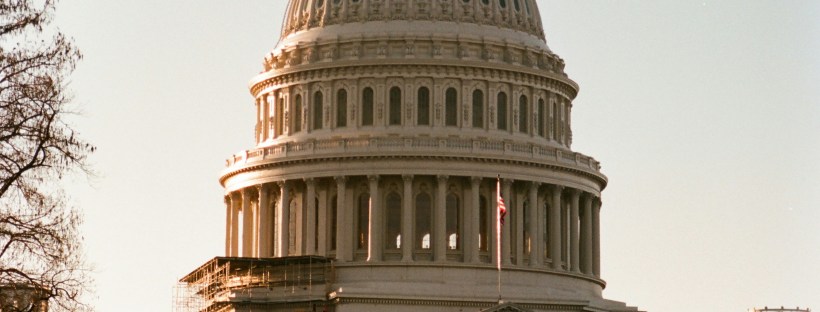
Picture of a domed government building

Which Authority?

June 21, 2026

By Stephen Stofka

Last week I looked at schisms in religious and political organizations. I ended with the speculation that many of our disagreements ultimately are about authority. I want to take a look at the various types of authority we recognize, and what characteristics they share. Secondly, what is the relationship between authority and responsibility?

Most cultures recognize a parental authority derived from the responsibility that a parent has for a child. Religious tradition claims that parental responsibility and authority come from God, not the state. However, states claimed a responsibility under the doctrine of parens patriae, a Greek term meaning “parent of the country.” Therefore, the state had a duty to protect anyone, particularly children, who could not protect themselves. In 1962, a seminal paper published by Kempe, M.D. et al (Source) identified a clinical condition of physical abuse in young children that the authors termed battered child syndrome. Doctors and hospitals became more likely to report suspected child abuse to local authorities, and legislatures passed laws mandating such reporting

On the other hand, many jurisdictions regarded the home as a private sphere. Police were reluctant to actively intervene in cases of suspected domestic violence (Source). Litigation and activism by women’s rights groups prompted legislatures to adopt laws that criminalized domestic violence, rather than treating it as a private family matter. As we can see, the spheres of authority are not clearly defined and clashes over authority are frequent in human societies.

Governments at all levels claim a political authority, a right to make and enforce laws in its role as the parent of the country. Authority is not power but authority can be imposed by power. Monarchies and theocracies base their claims to authority on God, not the people. In a democracy, a government’s police power is based on the consent of the governed. In a multi-layered system like the United States, governments often clash over jurisdictional authority.

A central debate divides the electorate. Through its legislative authority and police power, a government controls the terms of contracts between private parties. It grants licenses to individuals and companies to conduct business. It sets rules that contracts must follow. Those contracts govern the distribution of wealth within a society. Does a government have an accompanying responsibility to ameliorate the economic outcomes from those contracts? Half of the population says yes, and advocate social programs that address inequalities of circumstances. Half of the electorate says no. The government may make the rules but has no responsibility for the outcomes. Question: is authority without responsibility legitimate?

Legal authority is derived from political authority, but is concerned with applying the law rather than making it. It is the least responsible branch of government in our country because many judges are unelected and are not held accountable to the public. Often there is not a clear distinction between applying the law and making law. Lawmakers often write laws using imprecise language so that they can reach a consensus. Judges must interpret such language, and are accused of making law when some people don’t like their interpretation.

However, even when a law or constitutional amendment is clearly worded, judges have been unable to resist a secret desire to write law through their interpretation. Let’s  call this an authority by implication, by implied meaning. Here’s an example. The 14th Amendment states “All persons born or naturalized in the United States, and subject to the jurisdiction thereof, are citizens of the United States and of the State wherein they reside. No State shall make or enforce any law which shall abridge the privileges or immunities of citizens of the United States.” In the 1873 Slaughterhouse Cases, a 5-4 majority of the Supreme Court interpreted that language to create two sets of citizenships with distinct rights (Source). Citizens of the United States had one set of rights. Citizens of the State had a separate set of rights. Does the 14th Amendment state any such thing? No. Does that language imply that there are two separated sets of rights? Implied meanings are personal and quite arbitrary. Did the framers intend to give the judiciary both arbitrary power to draw their own implications and lifetime tenure? These are the essential characteristics of kingly power. After a seven year war of independence against the British King George, they decidedly did not grant such a power. The judiciary grabbed that power.

God is a convenient source for authority claims, because God can accommodate many different claims to truth. Clergy claim a religious authority based on sacred texts like the Bible, or Qur’an, or on some divine revelation. Why do church institutions feel the need to claim authority? Ultimately, they want to convince others to submit to their authority. The philosopher Fredrich Nietzsche (1844 – 1900) rejected claims by any institution that it had unquestionable authority over human thought, morality, or values. His targeted Christianity because of its influence over European morality, but his criticism extended to all religious, moral and political systems that claimed control of the human mind.

Clergy often link religious authority with moral authority, claiming that objective morality is impossible without God. Early Christian leaders like Augustine and Aquinas taught that all moral laws are derived from God. Of course, the classical Greeks would have disagreed, but Christian teaching has long rejected secular principles and virtues. More recently, the evangelist preacher Billy Graham preached that, without God, everything was permissible. Without God as a foundation for morality, actions cannot be judged right or wrong. Right actions are simply social and personal preferences. There is an obvious contradiction here. How can a subjective belief in God create a foundation for an objective morality? Religious believers are practiced at embracing contradictions. Never let a contradiction get in the way of a religious claim to truth.

Expert authority may be based on a practiced knowledge or it may be based on nothing more than the recognition of other practitioners in a certain field. For several thousand years, the theory of humors was the bedrock of the medical practice. First proposed by the Greek physician Hippocrates (c. 460 B.C.E. – c. 375 B.C.E.), the theory claimed that disease was an imbalance of four humors in the body. Bloodletting was a common practice to rebalance the humors. The theory was flexible and could be used to explain any outcome. If the patient got better after bloodletting, that demonstrated the truth of the theory. If the patient died, as in the case of President Washington, it was because the humors were too far out of balance. The effectiveness of bloodletting was not tested until around 1820, when it was shown that bloodletting was either ineffective or harmful for most diseases. How did experts get it wrong for two millennia? They relied on an authority based on tradition.

Many of our institutions depend on managerial authority, derived from the hierarchy in an institution. Examples include corporations, universities, and military organizations. A manager with little experience in a field may override the experience and knowledge of employees that he manages. The problem is particularly acute in the federal government. After a change of the executive, political appointees are put in charge of a large department based on their loyalty to the President or fundraising ability rather than knowledge critical to the successful operation of the department.

Linked to managerial authority is economic authority. Employers, lenders, and property owners control economic assets, investment and job opportunities. As a recent example, Iran’s control of the Strait of Hormuz, a key shipping lane, supported an economic authority that proved to be as powerful as the authority that the United States claimed as a military hegemon.

We can classify authority by its justification. There is an authority by force, which needs no justification. Might makes right, as the saying goes. Even those who use force to impose their authority often make some of the other justifications I have noted above because force is an expensive tool to implement a regime of command. Authority by consent enlists the cooperation of those subjected to that authority and requires fewer resources. Expertise, tradition, political, moral and religious justifications are often woven together in a packagethat helps defeat challenges to an institution’s authority. In our daily disputes, we can keep an eye out for these combinations of justifications to help us unravel competing claims. And, with that, I hope to see you next week.

/////////////////

Photo by Chad Stembridge on Unsplash

Capacity Without Legitimacy

March 30, 2025

by Stephen Stofka

This is part of a series on centralized power. The debates are voiced by Abel, a Wilsonian with a faith that government can ameliorate social and economic injustices to improve society’s welfare, and Cain, who believes that individual autonomy, the free market and the price system promote the greatest good.

Cain looked around the restaurant. There was only one empty table. “Busy here this morning.”

Abel nodded. “Even when they are busy, they bring out water, coffee and a menu. To me, that’s a mark of good organization. Good service.”

Cain added half a packet of sugar to his coffee. “Yeah, that initiates the process. Like saying, ‘We see you. We are going to take care of your needs.’ I think that’s what the Trump administration has done these first two months. Tried to fulfill some campaign promises from the start.”

Abel rolled his eyes. “Like a waiter who brings a pitcher of water to the table and forgets the glasses, then blames the mistake on the dishwasher.”

Cain laughed. “Oh sure, just like that. Look, they’re trying to fix stuff that’s been broken for decades. Stuff like illegal immigration. Both parties promise to fix it but it’s a hard problem. Unlike past presidents, Trump is making an effort to fulfill his campaign promises.”

Abel interrupted, “Yeah, forget about human rights and due process. That’s a heck of a way to fix problems.”

Cain asked, “When does due process become excess process? We are a nation of laws, the saying goes, but we’ve become a country of lawyers who profit from creating red tape. We’re tangled in it. We’ve got plenty of process but few outcomes. We’re like a sailing ship stuck in the horse latitudes. Trump is trying to steer this ship toward land.”

Abel laughed. “That is a poetic description of this administration’s efforts.”

Cain asked, “This country has the capacity to fix problems but the processes that have evolved cripple the legitimacy of government. Trump is reasserting executive capacity.”

Abel objected, “But the way he is doing it weakens the legitimacy of his actions.”

Cain argued, “In the eyes of some. Anyway, you think some of these Venezuela gang members have any respect for human rights?”

Abel frowned. “How did they determine they were gang members? Because they had a tattoo. Is there a tattoo that distinguishes the gang? No. Any tattoo will do. That kind of arbitrariness is typical of the way this administration acts.”

Cain sat back in his seat as the waitress set his order in front of him. After serving Abel, Cain replied, “There’s what, a few hundred gang members? Could there have been a rush to judgment on one or two individuals? Maybe. So, should the government let two hundred criminals loose to save one person who maybe doesn’t belong to the gang? Reminds me of the old argument that it’s better that a lot of guilty people should go free rather than one innocent person should suffer.”

Abel nodded as he set his coffee cup down. “Yeah, you’re talking about Blackstone’s ratio. The need for firm proof before convicting an innocent person. It’s taught to law students as a foundational principle and Ben Franklin cited the ratio (Source). It alarms me that this administration would throw out a traditional principle of fairness just to look like they are accomplishing something.”

Cain replied, “There are so many issues in the 24-hour news cycle. How long will people be concerned about this? In the ‘80s and ‘90s, people worried about two American gangs, the Bloods and the Crips (Source). The drug epidemic was crack cocaine, not fentanyl. The two gangs killed each other to claim territorial rights to sell crack. There were innocent kids killed in drive-by shootings. The public wanted politicians to get tough on crime and they passed laws to get tough on crack dealers and users. One of the leaders in that effort was none other than Joe Biden. So now when Trump gets tough on criminal gangs, it’s bad? Come on.”

Abel said, “You’re talking about the 1994 crime bill that Biden sponsored. He was criticized later by people in his own party for sponsoring that bill. They said it unfairly targeted black people. But, there were a lot of leaders in the black community who supported that bill because the gangs and the drugs were tearing apart black families and communities (Source).”

Cain nodded. “So, this time the scourge is fentanyl, not crack. Strung out homeless people camped out on downtown sidewalks. It’s turned the downtown areas of many cities into graveyards of drug zombies. There’s a video that Peter Santenello shot in the Kensington neighborhood of Philadelphia and the druggies are walking around slumped over like the zombies on that TV show ‘The Walking Dead’ (Source). And where is the fentanyl coming from? Gangs from Latin America and suppliers in China. The drug problem is worse now than it was when Biden introduced the 1994 crime bill. Voters wanted action and Trump is delivering.”

Abel shook his head. “In the ‘90s, Biden went through the legislative process of building a coalition and forging compromises with other members of Congress. That’s the democratic way of creating policy. Trump is disregarding any procedural safeguards. Immigration officials are targeting people who have green cards (Source). They are in the country legally. This isn’t just about drugs. They’re targeting ideas that the administration doesn’t like. This is an arbitrary purge, an attack on free speech.”  

Cain nodded. “Yeah, I don’t agree with that. But some of those protestors did more than just talk.”

Abel argued, “Is there any evidence of violence? They arrested Khalil Mahmoud for leading protests in support of Palestinians. He’s a grad student at Columbia and he wanted the university to divest from Israel (Source). In the 1980s, there was a similar campaign to get U.S. universities to divest from South Africa to protest their apartheid policies (Source).”

Cain interrupted, “Yeah, that campaign was successful. There is not a powerful South African lobby in this country to pull political strings. On the other hand, the Israeli lobby might be more powerful than the gun lobby, if that’s possible. They don’t like any protests against Israel’s policies or actions and the Trump administration bows to any pressure from that lobby.”

Abel nodded. “Good point. So, Khalil was born in a Palestinian refugee camp (Source). Naturally, he is going to be sympathetic to the Palestinian cause. He’s got a green card, for God’s sake, not just a student visa. The folks at ICE didn’t know that. It’s all power and no preparedness. Totally arbitrary. So, the Trump administration interprets Khalil’s humanitarian concern for the suffering of innocent civilians as support for Hamas, a terrorist organization (Source). They’s making it up as they go along.”

Cain shook his head. “Ok, so there are excesses and mistakes. It’s the same with any administration. Does an injustice done to one foreign student…”

Abel interrupted. “There are others, as well.”

Cain nodded. “Ok, several foreign students. Does it get voters riled up enough? I don’t think so. We can argue whether it should or not, but the plight of a few people is far away from most people’s lives.”

Abel argued, “What about the plight of students marching in Birmingham, Alabama in 1963? Public sentiment shifted when they saw water cannons turned on kids protesting Jim Crow policies in the south (Source).”

Cain nodded. “Sure, but there wasn’t enough momentum to pass any legislation on that issue until after Kennedy was shot later that year. The Civil Right Act in 1964 is almost a memorial tribute to Kennedy, an appeasement for the death of a president in a southern state. It takes several events to arouse public sympathy to the point of action.”

Abel agreed. “Usually there’s some event that gets the public’s attention. People became more sympathetic to campus protest against the Vietnam War after the Kent State Massacre. The national guard troops killed four student protestors. Killed them! That’s when a lot of people said, ‘Hey, this is a step too far.’”

Cain interrupted, “Yeah, I don’t think the arrest of a few student protestors has pushed public sentiment to that point yet.”

Abel asked, “Every week, there’s more examples of bullying by this administration. Republicans in Congress are afraid to speak up publicly. Musk has threatened to primary any Republican opposition to Trump’s policies (Source). Congressional Republicans are approaching the administration privately, hoping to carve out exemptions for those policies that are hurting their constituents (Source). Trump has already cowed the legislative branch of his own party. Now his supporters are going after federal judges who rule against Trump’s policies (Source). A showdown is coming with the Supreme Court. They are rewriting the Constitution, eliminating the other two branches of government. That’s the world they want. No accountability for their actions.”

Cain sat back in his chair. “Whoa! A few excesses and you’re ready to declare the end of democracy. As Adam Smith once said, ‘there is a great deal of ruin in a nation’ (Source). You’re alarmed at the excesses of one party but less sensitive to excesses committed by a party that you voted for.”

Abel shook his head. “No, what I am concerned about is the pursuit of a dream that Donald Trump has had for many years. To be accountable to no one. To do whatever strikes his fancy at the moment and have no one to check him.”

Cain smiled as he pushed his plate to the side. “That’s probably a secret dream of many people.”

Abel frowned. “Yeah, but most of us develop some impulse control. Social, political and economic circumstances may put limits on our impulses, or we learn to develop that control as part of our character. Trump has not developed it. He goes around fondling women’s privates in public and says, ‘they let you do it’ (Source). No, they are frightened and don’t know how to respond. Why? Because most normal people do not do that unless they are drunk or high on drugs. Now Trump has put together a team of people to carry out his impulses.”

Cain shrugged. “You’re talking about the Hollywood Access tape before the 2016 election. Voters knew about it. They voted for him anyway. In 2024, they voted for him a second time.”

Abel sighed. “That’s what I don’t understand. Are people so loyal to their party that they are willing to disregard a candidate’s character? That’s what worries me.”

Cain stood. “That’s a discussion for another day. Which do you worry about more? Trump or the majority of American voters who voted for him?”

Abel lifted his eyebrows. “Good question. I’ll see you next week.”

Cain said, “I’ll pick up the tab. Next week, then.”

/////////////////

Image by ChatGPT in response to the prompt “draw an image of an angry elephant.”