Health Care and the Supremes, Part 1

Sorry, no pictures or graphs this week 😉

A few weeks ago, the Supreme Court ruled on the constitutionality of the health care act.  26 states brought suit against the government, asserting that the Government had no constitutional authority to impose a penalty on people for not buying health insurance.  Regardless of the arguments for and against, many of us have a gut level aversion to the Federal Government, or a State Government, for that matter, forcing us to do something.  While living in Brooklyn in the early 70s, I knew two people who had left good jobs to take sporadic cash only jobs because they did not want to be forced to have their taxes pay for the Vietnam War, a war they – and many others – believed was immoral.  In my state, Colorado, there have been many who think that the state government has no right to force drivers to wear seat belts.  For those of you in the more crowded coastal states with better public transportation systems, driving in the western states is as much a necessity of living as eating. 

The Government argued that Congress had the power to impose an individual mandate to buy health insurance under the following authorities: 1) the power to regulate Commerce as found in Article 1, Section 8, Clause 3 of the Constitution; 2) the Necessary and Proper Clause (clause 18 of the same section); and 3) the taxing power in the Constitution.

Writing for a 5-4 majority, Chief Justice Roberts rejected the first argument, writing “Congress has never attempted to rely on that power [the constitutional power to regulate Commerce] to compel individuals not engaged in commerce to purchase an unwanted product.” (pg. 18 majority opinion) He asserts that the Constitutional grant of power to the Congress to regulate Commerce does not imply that the Congress can create Commerce.  On page 20, he writes “The individual mandate … does not regulate existing commercial activity.”  On pg. 24, Roberts writes “The Framers [of the Constitution] gave Congress the power to regulate commerce, not to compel it, and for over 200 years both our decisions and Congress’s actions have reflected this understanding.”  In short, “regulate” does not mean “create” nor does it mean “compel.”

During oral arguments, Justices Roberts and Kennedy had repeatedly asked the government advocate for a limiting principle to Congress’ authority to regulate Commerce.  On page 21, Roberts makes an important distinction in the Wickard v Filburn case regarding a 1942 law that had the effect of regulating a farmer, Roscoe Filburn, growing wheat for his own consumption.  The Wickard decision, Roberts summarized,  upheld Congress’ authority to regulate the production of something, not the consumption of a product.  The individual mandate regulates the consumption of a product.  “Accepting the Government’s theory would give Congress the same license to regulate what we do not do, fundamentally changing the relation between the citizen and the Federal Government.” (pg. 23) 

On page 25, Roberts rejects the Government’s oft repeated argument that individuals are inherently “active in the market for health care,” writing that any inactivity can be said to be participating in some arbitrary market; without any limiting distinction, the phrase has no constitutional significance. He writes “Our precedents recognize Congress’s power to regulate ‘class[es] of activities’…not classes of individuals, apart from any activity in which they are engaged.”  He finds that the individual mandate breaks precedent: “The individual mandate’s regulation of the uninsured as a class is, in fact, particularly divorced from any link to existing commercial activity.”  Who can regulate individuals?  The states alone have that power: “Any police power to regulate individuals as such, as opposed to their activities, remains vested in the States.”

Roberts rejected the government’s second argument that Congress has the authority to impose the individual mandate under the Necessary and Proper Clause as a regulatory mechanism associated with the existing economic activity of healthcare.  The Government argued that the mandate is an “integral part of a comprehensive scheme of economic regulation.”  Roberts reasserts previous precedents that the intention of this clause of the Constitution is to unequivocally grant Congress power which is incidental or instrumental in enacting the powers enumerated in the previous clauses of that section of the Constitution.  It does not give Congress new powers or enable Congress the ability to expand its power.

The Government’s third argument, a fallback position, was that the mandate was not “ordering individuals to buy insurance, but rather as imposing a tax on those who do not buy that product.”  Roberts cites previous precedents that “if a statute has two possible meanings, one of which violates the Constitution, courts should adopt the means that does not do so.”  On page 31, Roberts writes that “The most straightforward reading of the mandate is that it commands individuals to purchase insurance.”  However, he acknowledges the merits of the Government’s contention that the mandate “can be regarded as establishing a condition – not owning health insurance – that triggers a tax” and that the mandate “makes going without insurance just another thing the Government taxes, like buying gasoline or earning income.” (pg. 32) Roberts acknowledges that this interpretation of the mandate is not the most natural one, but cites previous precedent that “The question is not whether that is the most natural interpretation of the mandate, but only whether it is a ‘fairly possible’ one.”

For the purposes of the Constitution, is the individual mandate a tax or an “assessable penalty?”  Roberts cites several previous laws in which Congress has shown that it regards a tax and a penalty as two separate entities. He quotes a previous decision, that of Drexel Furniture, which ruled that what distinguishes a penalty from a tax is whether an exaction or payment is punitive.  If so, then it is a penalty.  The tax imposed by the individual mandate is less than what it would cost someone to buy a policy, indicating that Congress had no intent to impose a punitive penalty. The individual mandate does not have a scienter requirement typically associated with a penalty; that an individual must have intent or knowledge that their action or inaction is against the law.  In addition, there is no criminal prosecution if someone does not pay the tax, another indication of Congress’ intention that the mandate is a tax.  In the law, there is no requirement to buy an insurance policy; there is only the imposition of a tax if you don’t buy a policy.  Roberts also cites an older precedent regarding the child labor law tax.  Even though the law called it a tax, the court held that, because it was very punitive, it was a penalty, regardless of what Congress called it.  Roberts is continuing to build on previous court decisions to reinforce the court’s policy that, although the court should regard the use of a particular word by Congress as intentional, Congress can not obfuscate the stated intentions of the entirety of a law by attaching a label to a piece of it.  On page 12 of the majority opinion, he writes “Congress cannot change whether an exaction is a tax or a penalty for constitutional purposes by describing it as one or the other.”

Did the Supreme Court even have the authority to hear this case at this time?  Did the 1867 Anti-Injunction Act prevent the court from hearing the case till someone actually paid the tax?  In finding that the individual mandate can be construed as a tax, Roberts distinguishes between a present tax and a future tax, justifying the Court’s authority to hear the case at this time. The Anti-Injunction Act was designed to prevent a state or any party from “restraining the assessment or collection of tax” (pg. 12 of majority opinion).  The tax will not go into effect for two years and no one will actually pay the tax for three years.  The suit that the 26 states have brought before the Supreme Court is not intended to delay the collection of this tax; therefore, Roberts rules that the Supreme Court can hear the case.

Although Justice Ginsburg was in the majority, she strongly dissented with Roberts arguments that the individual mandate was unconstitutional under the Commerce clause.  Hopefully, I’ll get some time to go into Ginsburg’s arguments as well as the dissenting opinions of Justices Scalia, Kennedy, Thomas and Alito.

June Labor Report and Plaques

On a recent vacation road trip, I enjoyed a number of tourist sites.  At Carlsbad Caverns in New Mexico, I learned that 2000 men with the CCC (Civilian Conservation Corp) built most of the visitor walkways and accomodations in the caverns between 1938 and 1942. Not only did the Caverns project provide enjoyment and a learning experience for me seventy years later, it provided work for a country still suffering through a long depression.  In Corpus Christi, I learned that, in the early 1970s, the sand dunes had been reclaimed by a joint effort of Texas and the Federal Government.  Stopping at a scenic site in west Texas, I read that visitor accommodations had been built as part of the Federal Highway project in the 1950s. At Big Bend National Park, I learned that Texas had turned these deep canyonlands into a state park in 1935, providing work for many in the process. 

What tourist sites will our children and grandchildren visit?  Will they read any signs that herald the hard work of those who lived through this Great Recession?  Why not?  Politicians argued about the budget and the national debt in the 1930s, in the 1950s, in the 1970s, just as they do today.  Then they got to work and made something happen.  Democrats and Republicans have sat on opposite sides of the fence and pointed fingers at each other in those past decades – then grudgingly came to a compromise and got something done, putting thousands to work on enduring projects.  Fifty to a hundred years from now, will there be any projects built by this generation that will have visitor plaques that our great grandchildren can read while on vacation?

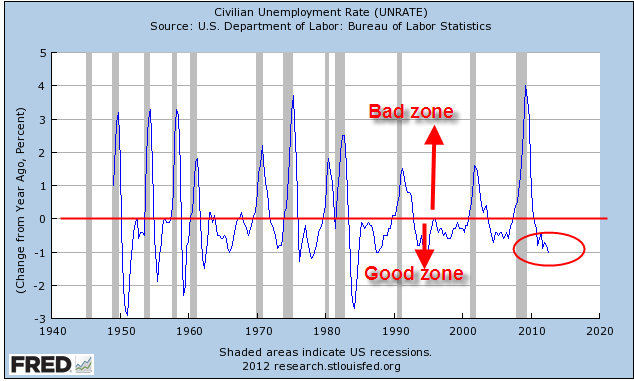
With that, I’ll turn to the June employment report.  The headline number was a disappointment to many.  Although the number of jobs increased by about 75,000, it was less than the 120,000 hoped for.  The good news is that the year over year percent increase in jobs for most of the working population continued to increase.

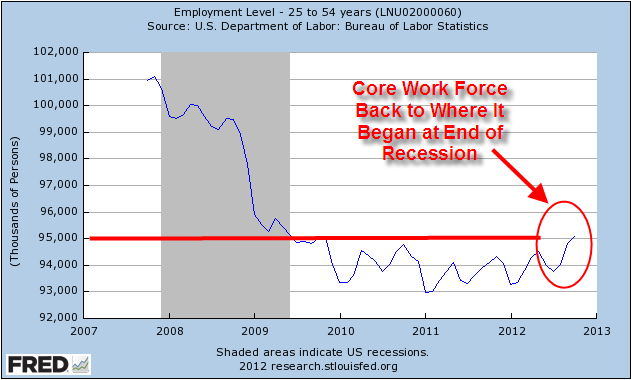
The core working force – as I call it – those aged 25 – 54 continued to show modest positive increases as well.

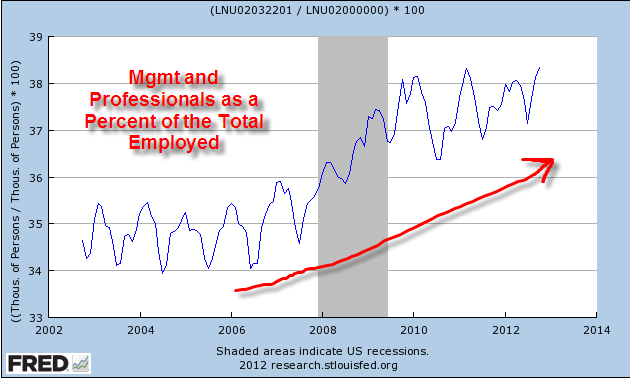
The problem is that it is still not enough.  In the larger work force, aged 25+, we would like to see sustained 1.5% to 2% year on year growth to pull the economy up and out of the quicksand.  Despite all the rhetoric from the politicians who claim they know how to create jobs, those of us who actually create jobs know that the chief reason for the lack of stronger hiring is the politicians themselves.  The June survey of the National Federation of Independent Business (NFIB) a small business organization, reported that about 25% of business owners “who say it is a bad time to expand blame the current political mess.”  Another quarter of respondents blame weak sales, a fifth blame taxes and another fifth blame “unreasonable regulation and red tape.”  The number of firms planning to hire in the next six months offset approximately the same number of firms planning on reducing jobs.  In short, a lackluster preview of the second half of the year.

Over the past two years, business loans are continuing to grow, indicating increasing investment.

Businesses are preparing – cautiously – for increased consumer spending.  But consumer loan growth has stalled after a severe decline at the onset of the recession several years ago.  The spike in the first quarter of 2010 was an accounting change (explanation)

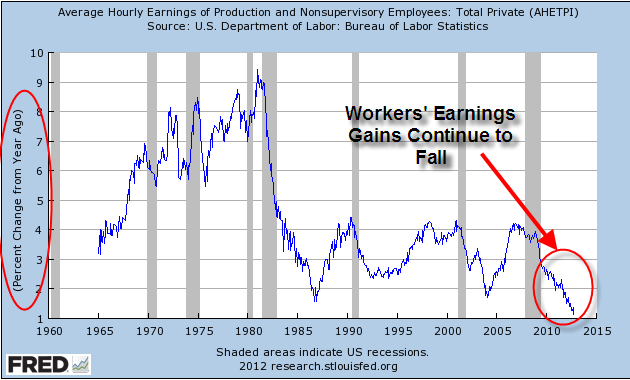
A bright spot – or dark spot – is the increase in overall consumer credit, approaching the levels of 2007.  Are consumers more confident?  Recent surveys don’t show that.  Are consumers more desperate and charging more to make up for  a lack of income growth?  Probably.

Disregard the rants and promises of blowhard politicians.  Consumer demand initiates most of the job creation in this country.  Businesses respond to that consumer demand by hiring more employees.  Without the demand, business owners create few jobs.  The only jobs created are sales and advertising jobs as business owners try to increase demand or take sales away from competitors.

In the coming months before this election, I encourage all of you to ask two questions of your representatives, senators, president and presidential contender:
1.  If consumers are still cautious, what policy can you implement that will encourage consumers to spend more? 
2.  If businesses are still cautious in their outlook, what policy can you implement that will encourage them to invest more in new jobs and equipment?

If the politician is a Republican, he or she will say that reducing regulations and taxes for businesses will help them create more jobs.  Ask them how that will help create jobs if the business has only tepid sales growth.  Should businesses hire more people just to sit around and fiddle their thumbs?

If the politician is a Democrat, they will talk about “investment” but what they mean is government spending to take the place of the lack of consumer spending.  How are they going to encourage consumers to spend more?  Silence.

Neither party has an answer to the problem of deleveraging, which is what consumers have been doing for the past several years.  They borrowed against their homes and their homes went down in value.  They charged more on their credit cards to make up for the lack of growth in their real incomes.  They had to pay down or default on that credit before charging more.  Deleveraging is a process that must be endured.

Unlike the individual states, the federal government has the constitutional capability of borrowing money.  While the federal government can not solve the problem of consumer deleveraging, it can soften the impact by borrowing to initiate the same kind of projects that the federal government, together with the states, did in previous decades: build and improve stuff that we can put a plaque on!  I do not like increasing government debt but I do like visitor plaques and informational signs at scenic and tourist sites.  Fifty years from now, will the Boomers be known as the Stumble Bum Generation or the Plaque Generation?

Income Tax and the Constitution

The Constitution of the United States was designed to protect the individual states who feared the power of a large central government.  In keeping with that design, the Constitution enumerates the various powers of the Federal Government. This past week a majority of the Supreme Court decided that the health care law known as Obamacare was constitutional, basing its decision on the taxing power granted by the Constitution and the 16th Amendment.

A fundamental presumption of writing the Constitution is the self-preservation of the new nation as such.  Various powers of defense, the ability to make war and treaties with foreign countries are some of the enumerated powers granted to the Federal Government to ensure the country’s continued existence.  What is not enumerated but assumed is the right, the duty of the Federal Government to protect the country as a whole.  At a time of armed conflict within a fractured nation, President Lincoln understood this point more clearly than most – that the utmost responsibility of a President is not spelled out in the Constitution that he had sworn to uphold.

There are two common faults that have caused the downfall of all nations, particularly nation empires: 1) the internal struggle for power by factions; and 2) the inexorable concentration of wealth and property.  The second leads to the first.

In the Federalist Paper No. 9, Alexander Hamilton wrote “It is impossible to read the history of the petty Republics of Greece and Italy, without feeling sensations of horror and disgust at the distractions with which they were continually agitated, and at the rapid succession of revolutions, by which they were kept in a state of perpetual vibration, between the extremes of tyranny and anarchy.”  Periods of calm within those empires were short-lived, “soon to be overwhelmed by the tempestuous waves of sedition and party-rage.”  As we look at and listen to the debates regarding health care, what do we see?  Party-rage.  Day after day, proponents on both sides of the issue make claims that are either blatantly untrue or a tortured stretching of fact.  There are so many dubious claims that reporters at Politifact.org  can only examine the more widely spread claims.

In Federalist Paper No. 10, James Madison, the chief constructor of the Constitution, wrote: “Among the numerous advantages promised by a well constructed Union, none deserves to be more accurately developed than its tendency to break and control the violence of faction.”  Further, he writes “Complaints are every where heard … that the public good is disregarded in the conflicts of rival parties.”  He explained what he meant by the word faction: “By a faction, I understand a number of citizens, whether amounting to a majority or minority of the whole, who are united and actuated by some common impulse of passion, or of interest, adverse to the rights of other citizens, or to the permanent and aggregate interests of the community.” 

What is to be done?  Madison wrote “There are two methods of curing the mischiefs of faction: the one, by removing its causes; the other, by controling [sic] its effects.  There are again two methods of removing the causes of faction:  the one by destroying the liberty which is essential to its existence; the other, by giving to every citizen the same opinions, the same passions, and the same interests.”  The first of these methods is undesireable; the second is impractical. Madison concluded “The latent causes of faction are thus sown in the nature of man.”  He does not condemn people for this tendency to form factions; a well constructed government must deal with this part of man’s nature.

Madison saw “A zeal for different opinions concerning religion, concerning Government, …an attachment to different leaders ambitiously contending for pre-eminence and power [who] have in turn divided mankind into parties, inflamed them with mutual animosity, and rendered them much more disposed to vex and oppress each other, than to co-operate for their common good.  So strong is this propensity of mankind to fall into mutual animosities, that where no substantial occasion presents itself, the most frivolous and fanciful distinctions have been sufficient to kindle their unfriendly passions, and excite their most violent conflicts.  But the most common and durable source of factions, has been the various and unequal distribution of property.  Those who hold and those who are without property, have ever formed distinct interests in society. [Many different interests] grow up of necessity in civilized nations, and divide them into different classes, actuated by different sentiments and views.  The regulation of these various and interfering interests forms the principal task of modern Legislation, and involves the spirit of party and faction in the necessary and ordinary operations of Government.” [emphasis added]  These astute observations by Madison are true today just as they were two hundred years ago.

In its own self-preservation, a government must ameliorate the “unequal distribution of property” which Madison considers to be the chief cause of factions.  How is a government to do that and preserve the respect for property rights that Madison and the framers deemed essential to a free people?  Madison wrote “From the protection of different and unequal faculties of acquiring property, the possession of different degrees and kinds of property immediately results: and from the influence of these on the sentiments and views of the respective proprietors, ensues a division of the society into different interests and parties.”  As with factions, this contradiction is an essential process of being a free people.  To use the same sentence construction as Madison: there are two methods for removing the causes of the concentration of wealth and property:  the one, by abolishing individual property rights which are essential to a nation of free people; the other, by giving every citizen the same amount of property.  The first is undesireable; the second invalidates the first principle and impractical, as Communist societies discovered.

A well constructed government uses its taxing authority to fund its operation and control the inevitable concentration of wealth and property. Many conservatives of today argue on principle that government’s role is not to transfer wealth from one person to the next.  They ignore the history of the decline of many nations whose wealth concentration reached a critical mass that ignited revolution.  They forget that the first principle of a nation is its own preservation; that a nation MUST transfer enough wealth to slow its concentration among a small portion of its citizens.  By its very nature, a property or income tax takes, by threat of force, the property of a person.  The principle of respect for individual private property rights can not be sustained in the ideal if a nation is to survive.
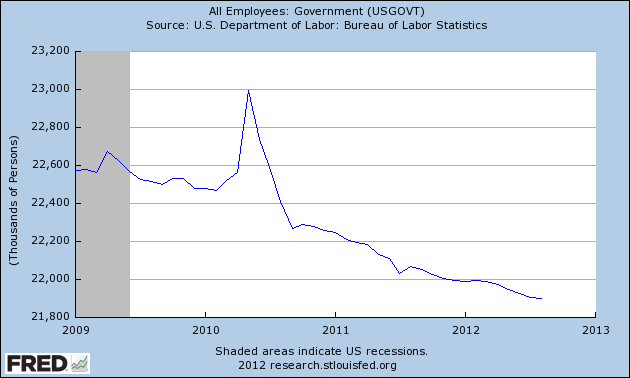
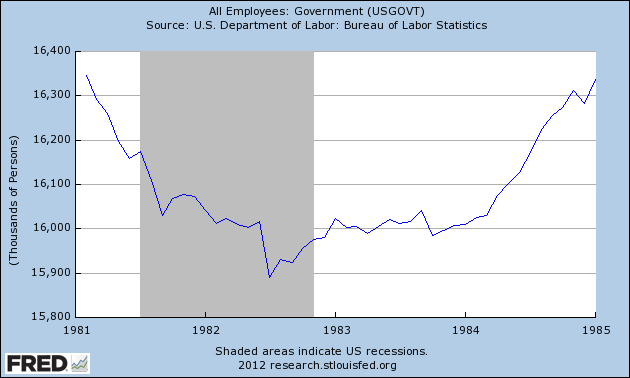
The income tax, or 16th, amendment was “sold” to the state legislatures as a way to tax corporations and very wealthy individuals.  For corporations, the income tax was to be an excise tax or a fee for the exemption from liability that a corporate structure afforded its stockholders.  Today many conservatives advocate a flat tax or a less progressive tax rate structure, citing the uneven distribution of the tax burden on the rich.  When the legislatures voted on this amendment, they did so on the premise that almost all people would not be subject to the income tax.   Corporations and those with extremely large incomes were to shoulder the entire burden of the income tax.  Those state house members who voted for ratification would be shocked that the top 1% of income earners paid only 38% of the personal income tax collected in 2008 (National Taxpayers Union).  They would be indignant that corporations paid only 22.1% of the combined total of personal and corporate income taxes collected in 2008 (IRS Statistics  Table 1).  When the 16th Amendment was sold to the American people in 1910 through 1913, these two groups combined were to shoulder most, if not the entire, burden of the income tax.  In 2008, they paid a little less than 52%.

In the coming months billions of dollars will be spent to sway or negate our vote.  The people and corporations who spend these vast amounts of money will try to convince us that we should vote a certain way on principle, out of loyalty to a particular ideal, party or policy.  Those who spend this money are not evil – they are simply promoting their own interests, hoping that they will convince each of us that we share an interest with theirs.  Given a choice of two competing parties, some voters will be undecided, feeling lukewarm or conflicted about the interests of either faction.  We may wish for some alternative to these dominant factions, or a menu where we could pick and choose the narrow interests that most closely align with ours.  It is the nature of mankind that we can not either live or vote in the ideal; that we must make compromises and choose the faction which most closely aligns with our interests.

From the beginnings of this nation, parties have arisen, trying to wrest control of the government, hoping to grab control of its power for their own self-interest.  For its own self-preservation, a well constructed government MUST constantly strive to distribute competing interests and power; since money and property form the core of power, a government must spread just enough money from the richest of its citizens and corporations to the rest of its citizens.   How well a government can do so determines whether the nation survives.

Health Care Republican Style

This week the Supreme Court is scheduled to give their verdict on the constitutionality of 1) the individual mandate; 2) whether the Supreme Court can make a ruling at this time (are the penalties a tax or not a tax?); 3) if they rule against the individual mandate, is the mandate “separable” from the health care bill and can the Court let the rest of the bill stand; and 4) are changes to Medicaid eligibility rules an imposition on the states that effectively forces the states to accept the new rules or lose funding for their entire Medicaid program.

Jerry sent me a link to a 2009 set of Republican proposals  for health care reform.  here was my response:

Jer,

This is a Republican position paper from June 2009.  At that time Republicans were chiefly concerned about proposals for a single payer system.  If you read the paper, you will see that many of the Republican reforms were incorporated in the final health care bill.  So why the Republican push back against the health care law?

Dick Armey is a former Texas Congressman who was (and still is?) chairman of Freedom Works, which provided the financial and organizational resources for the formation of the Tea Party.  Armey fought against the individual mandate in 1993 under “Hilarycare” and prodded Tea Party members to protest against the individual mandate in “Obamacare” (why isn’t Medicare called “JohnsonCare”?).  While not a staunch conservative, he felt that the Republican Party had drifted too much to the left.  Armey retired after staunch conservatives continued to challenge him for his seat so he is not one of the wacko conservatives, despite what some Democratic pundits say.

The protest against Obamacare was a wedge issue used by Karl Rove and other Republican strategists as a way to take back the House in 2010 and it worked.

Republican reforms incorporated into the bill may not have been done exactly as Republicans wanted but they were included:

Affordable and accessible health care of all Americans with no refusal for pre-existing conditions.

Enable people to keep the current health care plan they have with their employer.

Give people a choice of health plans and allow small businesses access to affordable health plans (state insurance exchanges)

Prevention, wellness and disease management programs – emphasis on primary care (Bernie Sanders’ amendment that funded Community Health Clinics)

Tax fairness – credits for those buying individual plans so that they have the same tax benefits as people who have employer sponsored plans. (Republican Dan Issa’s committee now finds that this would help too many poor people)

Republican proposals that were not included in the health care bill:

Tort reform that some say causes doctors to order additional tests just to cover their liability.  Estimates of the savings under tort reform run from 1% – 10%.  My own personal experience with my parents’ doctors is that they order additional tests to confirm their diagnosis before starting a definitive treatment program.  The general idea of tort reform is good but the devil is in the details.  If your epileptic child becomes a vegetable after your doctor treats her for the epilepsy, do you want there to be a $100K cap on damages that you can get from the doctor?  Probably not.

Expansion of health savings accounts

I don’t know if these were included:

Additional oversight and authority to Medicare and Medicaid to stop waste and fraud.  One proposal was that Medicare should change its policy of paying bills received within 30 days.  Fraudulent clinics bill Medicare, take the money and have closed up shop by the time Medicare investigators discover the fraud (featured on 60 Minutes program).  The problem with this proposal is that this would also make it difficult for smaller clinics and individual physicians to manage their cash flows.

Financial help for family members who provide in-home care for a relative.

Republicans have successfully used the emotional issue of the individual mandate to decry the entire health care bill.  Should Republicans “repeal and replace”, many of the elements that are in the current health care bill will also be in the Republican bill.  But Republicans will claim that it is theirs and it is substantively different than the current bill.  That is how a party wins elections.  The health care debate is not primarily about health care – it is about elections and power.

GDP and Recession

So you’re sitting at a picnic table in the park, having a barbecue with friends and family and one of your kids starts complaining about how life is so unfair because of something or other and you find your mind drifting off to the state of the economy.  You feel like telling your kid that, as they grow older, they are going to find that life is full of unfair and to just get over it.  But you don’t tell your kid that because they are not strong enough for it yet, which reminds you of Jack Nicholson’s line in the movie A Few Good Men: “You can’t handle the truth!”  But you don’t tell that to your kid because it would scare them so you act sympathetic and give your kid a little hug and pretty soon everything is OK again except that about eight feet away from the table Uncle Bob is having an argument with your friend about the money the government is spending.

Uncle Bob is saying that Obama and the Democrats are bringing down this country and your friend counters that it is Obama who trying to resurrect the country after Bush’s eight years as President.  You begin to turn your shoulders to them as though to insert yourself into the debate but notice that your wife is looking at you kinda funny from across the picnic table and, while you are not that good at mind reading, there is something in her look that raises a flag of caution in your mind.  Your father in law is busy at the barbecue and calls out that the burgers will be ready in five minutes – which gives you just enough time to whip out your iPad and check the Federal Reserve data site to answer a nagging question:  what is GDP per person in this country?

Gross Domestic Product accounts for most of the private and government economic activity in a country.  GDP doesn’t take into account the money that a government borrows to fund its spending;  GDP only includes the spending.  GDP doesn’t care what the money was spent for, whether it was to build a bridge in Iowa or destroy a bridge in Afghanistan.  Regardless of these and other faults,  GDP serves as a report card on a country’s economy.

Real GDP is an inflation adjusted GDP, a way of comparing apples to apples over the years.  Real GDP per capita is the inflation adjusted economic output per person.

You type in “Real GDP” into the search box  and the Federal Reserve database, or FRED to its many users, obliges you with a list of GDP reports and you select the first one. The full graph comes up showing the years 1947 to 2012.  You touch the Edit Graph button, then change the beginning date to 1960.

Both Uncle Bob and your buddy have had a few beers, a beverage which adds certainty to a man’s opinion.  You wonder how many of these political-economic debates have occurred this week at the dinner table, at the office, while taking a break on a construction site.

Your iPad screen shows the rise in real GDP with the “hook” starting in late 2007.  It is that hook that has got a lot of people arguing.  Its the hook that has pulled home values down and given a hard yank on the retirement dreams of  many people.  That hook tugged away the after school program your kid was in as the school district tightened its belt.  That hook took your wife’s job away; it almost took yours.

Now your buddy is talking loudly and pointedly about higher education cuts, but is barely able to finish his sentence as Uncle Bob interrupts him with the tale of the state university vice-president who is getting $300K a year in pension benefits.  Bob is sick of paying higher taxes for the fat cat retirements of the elite government employees.

Although the Bureau of Economic Analysis called an end to the recession in June of 2009, every adult with half a brain knows that the recesson didn’t end then. The billionaire investor Warren Buffett uses a rule of thumb that a recession ends when real GDP gets above the high point before the recession began.  You touch the “5 year” range button on the screen and see that real GDP has in fact surpassed that high point in 2007 so Buffett probably called and end to the recession in the fall of 2011.


FRED conveniently colors in the recessions, highlighting the periods in gray, but they are the “official” periods of recession, when GDP rises or falls for two consecutive quarters.  GDP could fall from $100, for example, to $60, signalling a recession, then increase to $65 over six months and the BEA would say it was the end of the recession, even though any sane person would say “Hey, we’re still down a third from the $100 high point.”

Has the GDP per person surpassed its 2007 high?  Your mother-in-law leans over and asks whether you want lettuce and tomato, glances down at the iPad screen with just a hint of disapproval in the set of her mouth and tells you that everyone will be eating soon.  OK, just a minute, you tell her.

Touching the screen, you click the “Add Data Series”, then touch line 1.  In the box you type “POPTHM”, the population census figures.  The other night, you couldn’t remember Bruce Willis’ name from the Die Hard movies but you can remember the label for the population series.  You’re not old yet but this is probably what happens to old people’s brains.  To get the GDP, which is in billions, per capita, which is in thousands, you need to multiply the GDP dollars by a million before dividing so you type into the formula box: “a * 1000000 / b” and touch the “Redraw Graph” button below it.

FRED redraws the graph, showing that the per capita GDP has still not risen above the 2007 high point.


For four and half years we have been in recession, you think.  No wonder we are arguing.

Was it as bad as the recession in the early eighties, you wonder.  That was a double dip recession.  You touch the starting date box and click on 1960 and a new expanded graph appears on the screen. “Hey, hon, why don’t you help me with the ice?” your wife asks.  “Ok, just a sec,” you reply, not looking up from the screen.

You see that this recession on a per capita basis is about the same as the early eighties, lasting about four and a half years, from late 1978 to mid 1983, with an upward hiccup during that period.  The period was the same but the decline in the late 70s and early 80s was much shallower than this current recession. 

You want to show both your friend and Uncle Bob why they are arguing, that the recession really hasn’t ended, the comparison of this recession and the 1980s but your wife needs help with the ice so you close the iPad cover.  Maybe you can show them the graph after the meal.  “Burgers are up!” your father-in-law shouts and the whole group sits down to chow down. 

After the meal, your friend hauls out an old croquet set. There are a few hoops missing and one mallet has a head but no handle, but the kids are delighted.  At some point in the game, Uncle Bob sends your friend’s ball far afield with a taunt “Out in left field where the liberals belong!” but your friend doesn’t take the bait.  On second thought, you muse, showing these guys the graphs would only reignite the debate.

“Daddy, it’s your turn.  You can use my mallet,” your kid says and you reach for the mallet, thinking  We try to teach our kids to be considerate and cooperative on the playground and in school.  So what happens to that sense of cooperation when we grow up?

The Personal Income Problem

Last week, I looked at Obama’s GDP problem.  This week I’ll look at the Disposable Personal Income (DPI) problem.  DPI is after tax income, what’s left to spend and save.  The following chart (thanks to the FRED database at Federal Reserve) showd the real, or inflation adjusted, rise in per person disposable income since 1960.

Zooming in on the past thirty years shows just how severe this recession has been.  Real disposable income flattened out or declined only slightly in past recessions; in this recent recession, it fell sharply.

Looking closer at the last ten years shows the 2008 – 2009 decline more clearly and the stalling out of income growth over the past two years.

Now the bad news for the 99% of us.  Remember, this is inflation adjusted income, in 2005 constant dollars. When we look at the annual increase in income, we see a steady decline in the peaks.  The chart below shows a three year smoothed average of that yearly increase in real income.  We are working more and making less.  Higher paying manufacturing jobs have been lost to foreign countries and more of us are working in the service sector, whose average wages and productivity gains are below that of manufacturing workers.

Next, let’s look at Obama’s problem in this election year.  Below is that same chart with the results of re-elections over the past 40 years.

Voters cast their ballots with their guts and the level of personal income and financial security is both a dollar figure and a gut feeling.  President Obama can make a good case, as Ronald Reagan did, that the poor to middling economic performance of the past few years is due largely to the severity of the downturn he inherited.  The chart also shows the decline in personal income during Reagan’s second term and helps to explain why Reagan received poor poll numbers from the public on his management of the economy in the mid to late eighties.  Many are not old enough to remember those days and some who are old enough were not paying much attention at the time.  With a tripling of the nation’s debt and personal incomes falling during Reagan’s second term, Reagan’s vice-president, HW Bush, felt he had to run away from Reagan’s economic policies to get elected.  In a two decade effort to lift up Reagan’s legacy, the mainstream conservative media has consistently glossed over, rationalized or neglected much of the economic history of those times. 

Ross Perot, running as an Independent, kept the 1992 election focus on the economy.  HW Bush would have been re-elected had not Perot taken enough Republican votes that he cost Bush his re-election.  Obama can learn from HW Bush’s experience.  With no substantive third party challenger to take away votes, Obama will need to broaden the political conversation to include more than the economy.

Obama’s most ardent supporters have become lukewarm but Romney has not won much enthusiasm either.  This election will be one of trench warfare, each side carrying their banner, hoping to rally voters to the banner, not the man.

Obama’s GDP Problem

In these home stretch months before the election, President Obama and Republican nominee Mitt Romney will be repeatedly challenging each other’s economic performance; Obama as President and Romney as Governor of Massachusetts.  Already the initial attack ads of both campaigns are running and each has plenty of factual ammo they can aim at the other.  Contrary to all common sense, we continue to measure Presidents by the health of the economy.  Although Congress is largely responsible for the laws that govern the economic dynamo of a country, we look to the President to set priorities for Congress – or at least that’s what we tell ourselves.  In truth, we are rather simple minded and prefer to hold one man responsible rather than a group of 535 Congress people and Senators. 

For some background, let’s take a look at a chart showing the real GDP, that is GDP in constant 2010 dollars, per capita over the past five decades.

Then zoom in on the last ten years, showing the severe decline of per capita GDP during this recent recession.

Now let’s look at the total per capita GDP growth by President.  If real GDP per capita was $100 when a President took office and $120 when he left office, then total real GDP growth was 20% during that President’s watch.  We’re not going to look at the annual percentage of growth, only the total.  For the most recent GDP data I have used BEA estimates of $15,454 trillion as of the first quarter of 2012. I have used Census Bureau estimates of a total population of 313 million and a BLS inflation factor of 2.186 since 2010.

Almost by instinct, the voters do not re-elect Presidents who are at the helm of a low growth country.  Below is a chart of the first term total real GDP growth of Presidents who were re-elected.  I have not included Johnson because he only served for a year before he was re-elected.

As you can see, GW Bush was the only President re-elected with a total growth gain less than 10% and Bush won re-election by winning Ohio by two percentage points or 118,775 votes.  Had 60,000 voters cast their ballot for Kerry, GW Bush would have lost Ohio’s 20 electoral votes and the election.  As the first Presidential election after 9/11, the election focused more on national defense and foreign policy, not the economy.  A barrage of attack ads, the Swift Boat campaign, against Kerry in the last weeks leading up to the election proved to be a decisive factor in Bush’s re-election.  Had the election concentrated more on the economy, Bush probably would have lost the election.

I have listened to several conservative pundits who criticize Obama for continuing to run against Bush’s economic policies, contending that it has been 3-1/2 years since Obama took office.  Many conservatives are devotional acolytes of the Ronald Reagan legacy and their devotion often clouds their memory.  Obama is using the same strategy that Reagan did in 1984, who ran against Carter’s former Vice President, Walter Mondale.  I will paraphrase a common refrain of Reagan during his re-election bid: “Do you want someone (Mondale) who helped get us in this mess in the first place?” Reagan asked.  The voters answered a resounding “No” and sent Mondale down to a crushing defeat.  Reagan employed this tactic of running against a former President despite the relatively strong growth during his first term. 

Although Obama’s total GDP growth is better than GW Bush’s total, it is less than former President Carter, a guy who lost his job over relatively weak growth and Obama’s 1st term growth numbers are less than Bush’s first term growth. A strong 1st quarter of economic growth in 2012 has helped pull up the President’s economic growth numbers but the first reading of 2nd quarter GDP growth that comes in July may further weaken his chances just before the election.  By the time 3rd quarter GDP numbers come out in October, many voters will have already made up their minds.

For his part, Romney’s tenure as governor of Massachusetts was hardly exemplary.  We will have two contenders for the Presidency running on an economic platform and neither one of them has a strong record of economic growth while in office.  Both campaigns will have plenty of arrows in their quivers and each candidate presents an inviting target.  Enjoy the show!

Manufacturing Rising

Manufacturing Employment has been increasing since the recession officially ending in mid 2009 but it remains at historically low levels. (Click to enlarge in separate tab)

As a percentage of the Civilian Labor Force (those working and those looking for a job), there has been a decades long decline.  Almost 1 in 4 employees worked in manufacturing in the 1960s.  Today, the ratio is 1 in 12. 

When China joined the World Trade Organization (WTO) in 2001, it began taking a lot of what are called “low value added” manufacturing jobs.  These are jobs which do not require specialized skills or knowledge.  Many rural and urban U.S. workers with high school degrees or less lost their jobs to mainly rural Chinese workers who migrated to large cities in China and staffed the recently built factories.

While employment in manufacturing has gone down, sales have climbed, enjoying positive year over year gains except for the two recessions in the 2000s.

Adjusted for inflation over the past twenty years, each manufacturing worker is producing almost twice the value of goods. 

Investment in factories and production equipment, more streamlined processes and a higher skilled workforce have led to these productivity gains.  Since 2006, workers have seen a 16% increase in earnings, almost as much as the 18% real productivity gains during those years.

Democratic politicians and commentators often criticize business owners and executives for taking all the profits from productivity gains by workers.  In this industry, the facts simply do not support those criticisms.

Economic Overview

The U.S. Treasury web site has a good slideshow of various components of the economy.  The first couple of slides detail the net budget impact of TARP, Federal Reserve and other government programs.  Subsequent charts illustrate the depth of the recession, the decades long accumulation of household debt, the headline and long term unemployment rates, and auto and home sales.

Auto Sales

Auto sales have been one of the strong parts of the economic recovery in the past couple of years, as shown in the graph below.

The industry had been beaten down during the recession as consumers got by with whatever they were driving.  Looking back over the last thirty years, we can see that we are still below a healthier annual average of about 14 million cars and trucks sold, and far from the peak levels of 17 million.

But something more fundamental has changed.  We are simply buying fewer new cars per capita.  Below is a graph of the number of new cars sold divided by the population.

We are making our cars last longer.  The quality and safety of cars has certainly improved but we are simply spending less money per capita on automotive transport.  Below is a graph of per capita spending on new autos and auto parts.  In 2012, we are spending about the same amount of money as in 1998, despite 14 years of inflation.  In real inflation adjusted dollars, we are spending a little less than what we did in 1992.

What these figures do not include is a comparison of the cost of repairs, car insurance and, chief of all, the cost of gas to feed our four wheeled beasts of burden.

Below is a chart of the weekly average price of gasoline in the U.S. since 1990.

If a gallon of gas cost $1 in the early nineties and the price of gas went up with the rate of inflation, we would expect to pay about $2.30 today.  Instead we are paying closer to $4 a gallon.  Indexed to inflation, the cost of gas reached its peak under the Bush administration but gas prices are approaching that 2008 peak.

I have already heard several political ads saying that when Obama came into office, gas was $2.50 a gallon and now the price of gas if $4.00 a gallon.  Sure, gas was $2.50 a gallon when Bush left office.  Oil prices had plummeted in reaction to the global financial crisis.  Political ads trust that our memories are short and that we have forgotten just how high gasoline prices had climbed during the Bush administration.  Since the average of gasoline prices are relatively lower during the Obama administration than the 2nd Bush term, should we then conclude that Bush’s energy policies were bad and Obama’s are good?  The fact is that presidential policies have a teeny tiny effect on the price of gasoline.  Political ads and the money machines behind them are like the shell game operators on Times Square in New York City.  They hope we are gullible enough to believe their illusions.